
Blended Family Therapy in Little Rock: Why It's Different and Why It Matters
Author: Britney Hardin, MBA, MS, LAC, LAMFT
You love each other. You both love your kids. And you genuinely want this to work.
But some days it feels like you are not blending a family — you are managing a negotiation between two completely different worlds, with children in the middle who are trying to figure out where they belong.
If that is where your family is right now, you are not failing. You are navigating something genuinely complex — and you are far from alone.
Blended family dynamics are different from traditional family dynamics. The therapy that helps them is different too. This post is for couples and families in Little Rock who are in the middle of that process — and who want to understand what working through it actually looks like.
Why Blended Family Dynamics Are Clinically Different
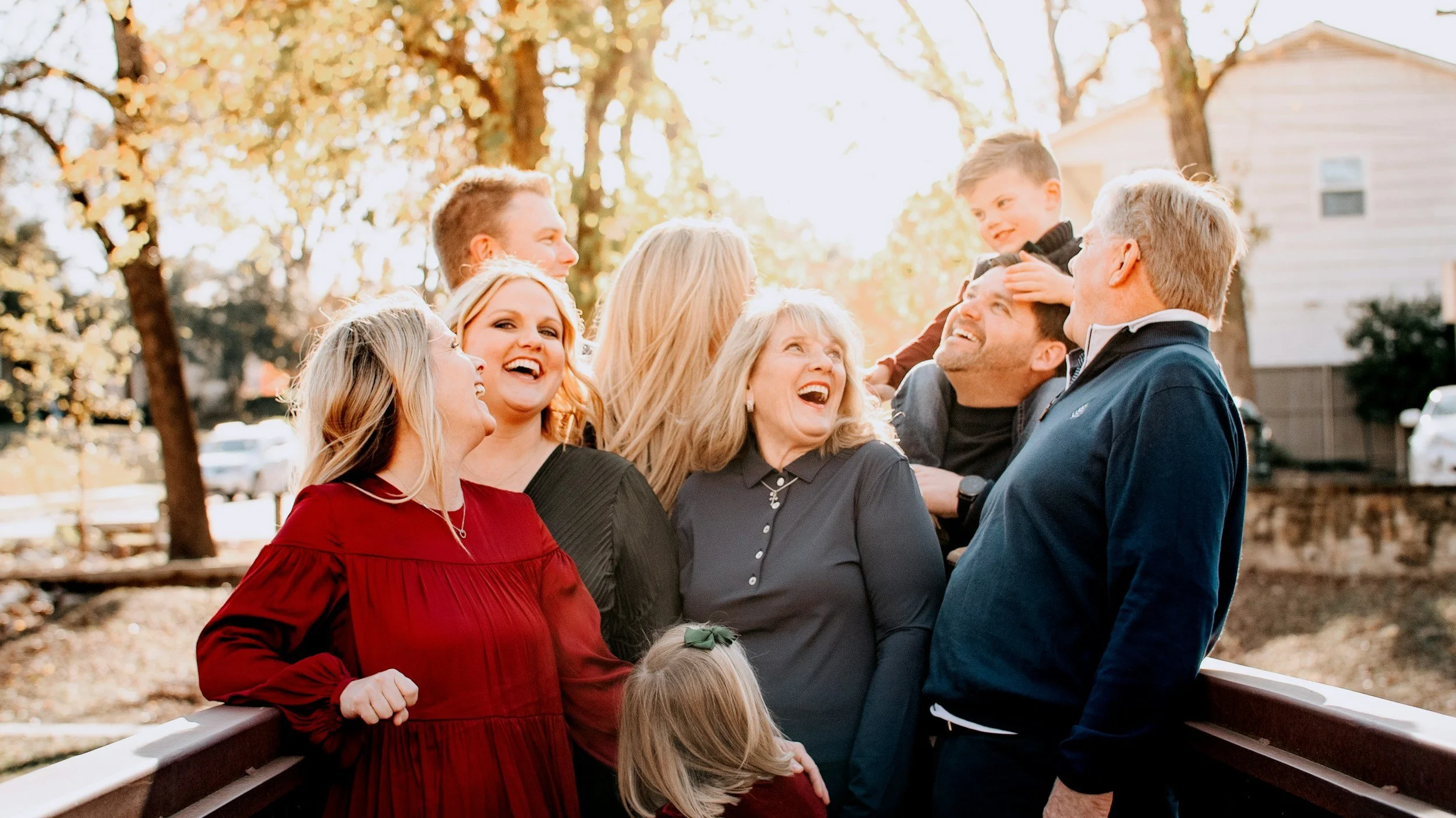
When two people fall in love and decide to build a life together, they are not just merging households. They are merging entire family systems — each with its own history, traditions, communication patterns, rules, loyalties, and ways of doing things.
One family has a Saturday morning routine. The other has never had one. One parent is more structured. The other is more flexible. One set of children grew up in a home where feelings were talked about openly. The other learned to keep things quiet.
And now everyone is supposed to live together and call it home.
That is a significant undertaking — not because either family is wrong, but because every person in the new household has to find their place within a structure that did not exist before. That process takes time, intention, and usually some professional support to navigate well.
Add in co-parenting relationships from previous partnerships, grief if a biological parent has passed or was never present, and the developmental needs of children at different ages and stages — and the complexity becomes clear.
Standard family counseling approaches can help. But blended family therapy requires a more layered approach that accounts for the full breadth of that history — not just what is happening in the house right now.
The Most Common Pain Points That Bring Blended Families to Therapy
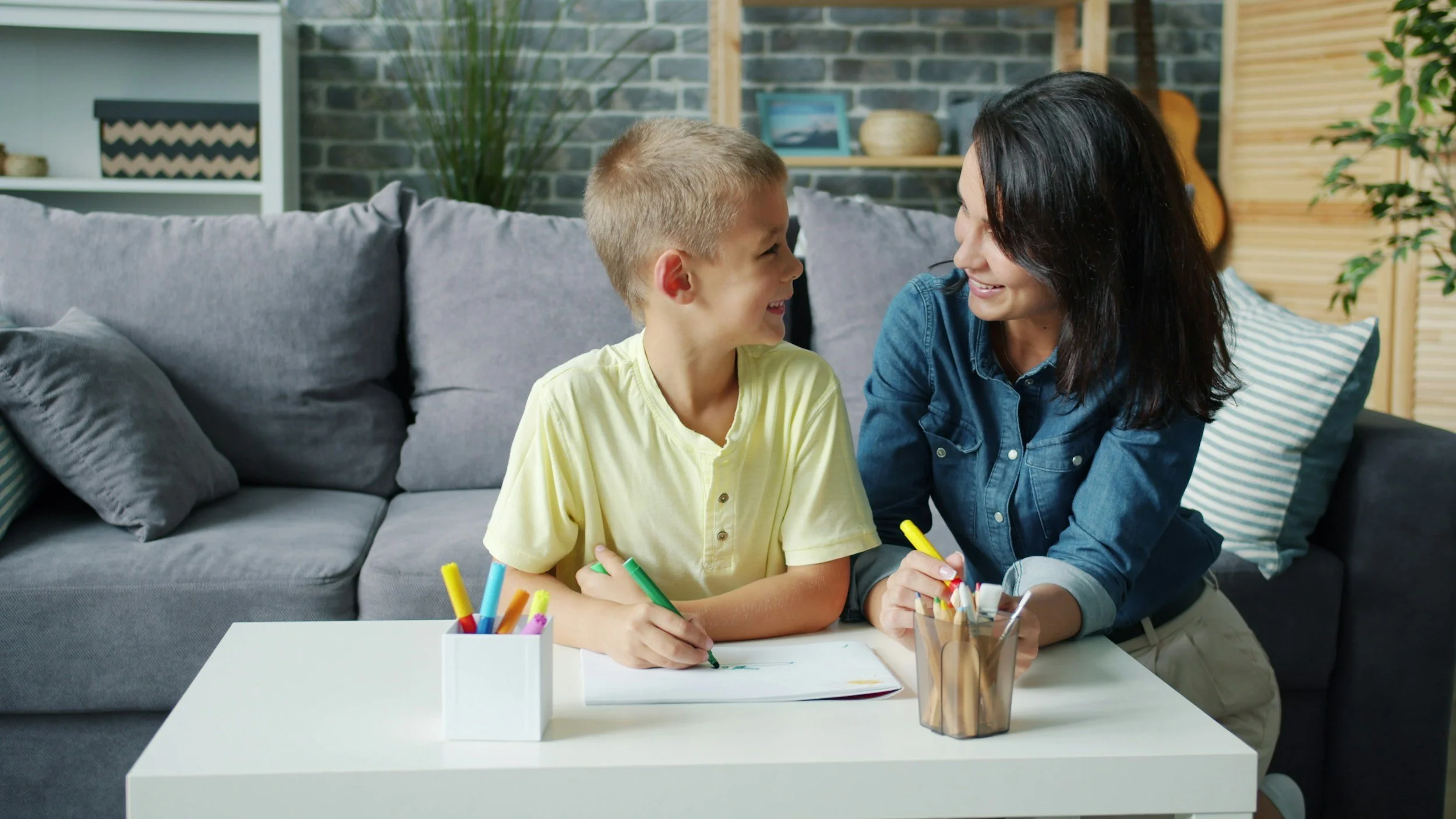
When a blended family walks through the door at BH Counseling Clinic, certain dynamics come up again and again.
Sibling competition for parental attention. This is one of the most painful and most common. A biological child watches their parent building a relationship with a stepchild — learning their interests, making them laugh, showing up in ways that feel new and invested. And underneath that, the biological child begins to feel like they are competing for their own parent's attention. They may not say it. They may act it out instead. But that fear — am I still enough for my own parent? — is the wound underneath many blended family conflicts.
Competing parenting styles. Two parents who were each primary decision-makers in their previous households now have to align on discipline, boundaries, expectations, and values. One may be more assertive. One may be more gentle. When those styles clash — especially in the presence of children who are watching closely — it creates inconsistency that children read as instability.
A stepparent trying to build a relationship while a stepchild resists. This is not defiance for its own sake. It is often loyalty — to a biological parent who is not present, or to a previous family structure the child is still grieving. The stepparent's genuine effort to connect can land as a threat rather than a gift. Understanding why is the work.
Children acting out. When the words do not come, the behavior does. Acting out in a blended family context is almost always communication — about confusion, about loss, about not knowing the rules of this new world they did not choose.
What Healthy Integration Actually Looks Like

There is no universal timeline for a blended family to find its footing. What I can tell you is that time alone is not what creates integration — intentional work is.
Healthy integration is measurable not in months but in small moments. The first time siblings choose to sit together voluntarily. The first time a child brings a problem to a stepparent. The first time a family dinner gets loud and funny instead of stiff and polite. The first time someone apologizes and means it — and the other person receives it.
The markers of progress I look for clinically are:
Children who feel comfortable speaking openly to at least one parent in the household
Parents who can hear a child's concern and adjust course rather than defend
Siblings who are beginning to understand each other's history — who see that the other child is not the competition, just another person trying to find their place
A couple who is aligned enough on the big decisions that the kids feel a consistent set of expectations
None of this happens all at once. But all of it is possible — and the small wins are real and worth celebrating when they come.
What Blended Family Therapy at BH Counseling Clinic Actually Looks Like
Because blended family dynamics are layered and complex, the therapeutic approach has to be flexible. At BH Counseling Clinic, blended family work typically involves a combination of:
Individual sessions — so each person, including children, has a space to be fully honest without an audience
Sibling sessions — to work on the relationship between children independent of parental dynamics
Parent sessions — to align parenting approaches and address the couple relationship that anchors the whole structure
Full family sessions — where the work of translation and connection happens together
Sometimes, depending on what is being addressed, these can be structured within a single session — a half hour with the children followed by a half hour with the full family. Other times they require separate appointments. We build the structure around what the family actually needs.
My role in these sessions is not to take sides. It is to watch, listen, and translate — what is being said out loud, what is being communicated through body language, what the tightening jaw line or the crossed arms or the averted eyes are saying that no one has words for yet. Every person in the room has a perspective worth understanding. Every person in the room deserves to feel heard.
The goal is that everyone — parents and children — comes to see each other more clearly. Not as obstacles to the life they wanted, but as people doing their best to navigate something genuinely hard.
To the Blended Family in Little Rock That Wants to Make This Work
To the couple reading this who loves each other and loves their children and is exhausted by how hard this is:
The difficulty is not a sign that you chose wrong. It is a sign that you are doing something real — something that requires time, patience, and more grace than any family fully has on their own.
Blended family therapy is not a last resort. It is a strategy — a way of building the communication structures, the mutual understanding, and the individual connections that do not happen automatically but absolutely can happen with the right support.
BH Counseling Clinic serves families across Little Rock and Central Arkansas, with in-person sessions in West Little Rock and telehealth available for families across the region. The free 15-minute consultation is a low-stakes first step to see if we are a good fit.
Schedule your free 15-minute consultation — in person or via telehealth →Call or text: (501) 283-7879
Frequently Asked Questions
Do all members of the blended family have to come to therapy? Not necessarily, and not all at once. We build the structure based on what the family needs. Sometimes individual work with one or two members is the right starting point before bringing everyone into the room together.
How long does blended family therapy typically take? There is no universal timeline. Progress is measured in specific, observable shifts in communication and connection — not in months. Some families see significant movement in a few months; others benefit from longer-term support through major transitions.
Does BH Counseling Clinic accept insurance? BH Counseling Clinic is in-network with Municipal Insurance (MHBF — Municipal Health Benefit Fund). Private pay options are also available, and we can provide a superbill for out-of-network reimbursement. Sessions available in person in West Little Rock and via telehealth across Central Arkansas. Learn more here.
Sources
American Association for Marriage and Family Therapy (AAMFT). (2015). AAMFT Code of Ethics. Alexandria, VA.
American Counseling Association (ACA). (2014). ACA Code of Ethics. Alexandria, VA.
Minuchin, S. (1974). Families and Family Therapy. Harvard University Press.
Papernow, P. L. (2013). Surviving and Thriving in Stepfamily Relationships. Routledge.
Visher, E. B., & Visher, J. S. (1996). Therapy With Stepfamilies. Brunner/Mazel.