
Raising Spiritually Healthy Kids in a Mentally Unhealthy World: A Christian Parent's Guide
Author: Britney Hardin, MBA, MS, LAC, LAMFT
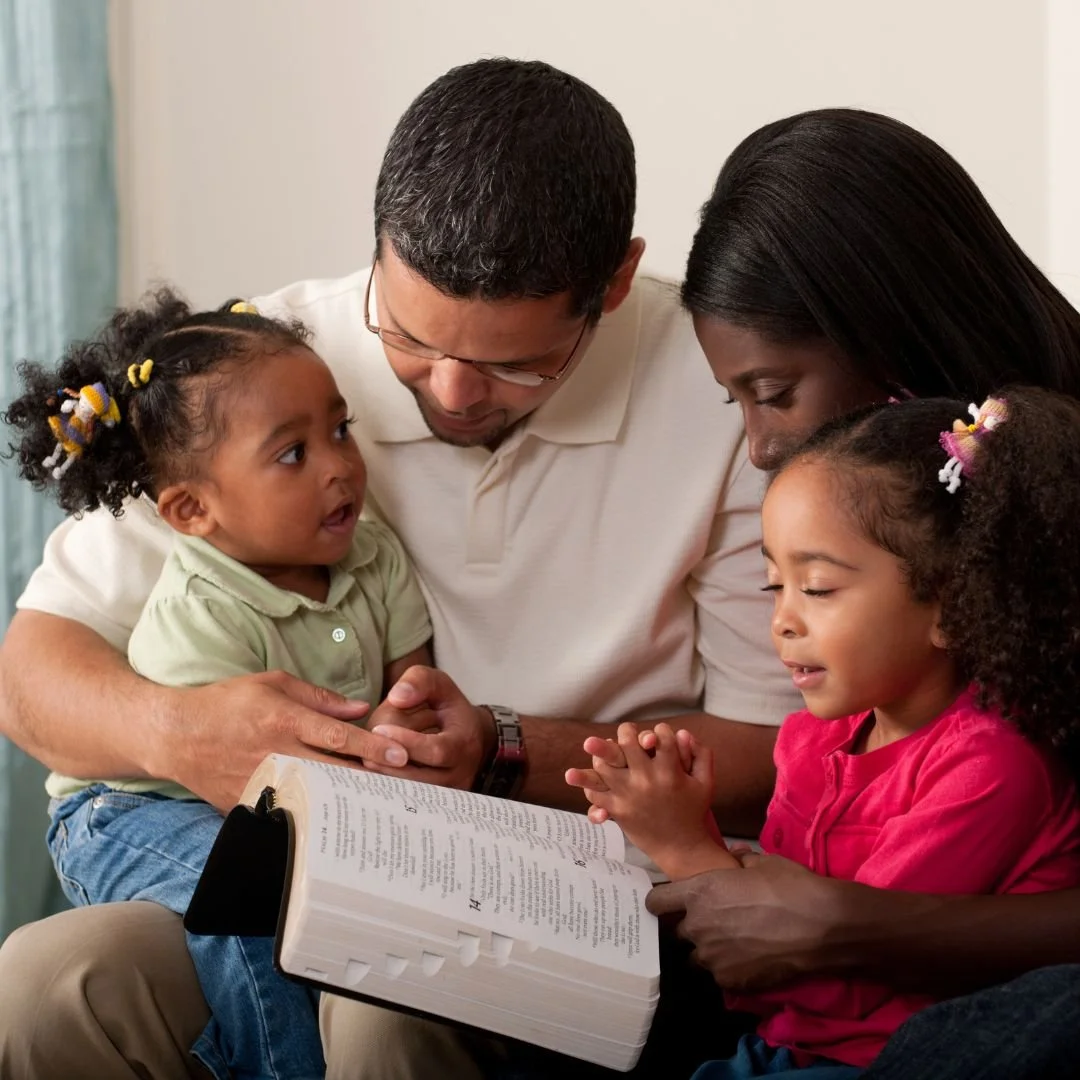
You take them to church. You pray over them. You try to model what faith looks like in a real, imperfect, everyday life. You do the things you were taught to do — and you still go to bed wondering if the world is louder than you are.
If that is the quiet fear you are carrying as a Christian parent in Little Rock, you are not alone. And you are not losing.
This post is a practical, clinical, and faith-grounded guide for raising children who are spiritually resilient in a world that is working overtime to disorient them.
What Spiritually Healthy Actually Means
Spiritual health in children is not about perfection. It is not about producing a kid who never questions, never doubts, never pushes back against what they were taught.
In its most basic and functional form, spiritual health in a child looks like three things working together:
Structure. They know what the family believes and why. There are values, boundaries, and expectations that are consistent and clearly held.
Accountability. When they step outside those values, the response is not shaming — it is correction, consequence, and restoration. They know the lines and know that crossing them comes with an honest response.
Open dialogue. They know they can ask questions. Hard questions. Questions that challenge what they were taught. And those questions will be met not with fear or punishment, but with curiosity and honest engagement.
When those three foundations are in place, children have a home base. A safe place to process what they are encountering in the world. And a relationship with their parents that is strong enough to hold the weight of their doubts.
The Noise Problem — And Why It Is Different Now
Christian parents have always navigated cultural pressure. What is genuinely different now is the volume and speed of the noise — and its increasingly sophisticated ability to appear credible.
Children and teenagers today are swimming in information — much of it contradictory, much of it emotionally loaded, and increasingly some of it AI-generated and nearly impossible to distinguish from real. A well-known figure can appear to say something outrageous — and it is a deep fake, generated in seconds, and spreading across platforms before anyone catches it.
In this environment, the most valuable skill you can give your child is not the right answer to every question. It is the process of discernment — how to fact-check, how to trace a claim to its source, how to pause before accepting what feels true.
And critically: how to bring the hard questions home
If your child knows they can come to you with the thing that confused them, the clip that upset them, the conversation at school that challenged what they believe — and that you will investigate it with them rather than shut it down — you become the voice they come back to. Even when other voices are louder in the moment.
You do not have to have all the answers. "That's a really good question — let's look at it together" is one of the most powerful things a Christian parent can say. It models intellectual humility, it reinforces the relationship, and it teaches the process of discernment in real time.
Signs Your Child May Be Struggling Spiritually
Not all spiritual struggle looks the same. Here are signs that a child or teenager may be wrestling internally with their faith — and may need more than the usual Sunday conversation:
Withdrawal from church activities. A child who was previously engaged — in youth group, worship, friendships within the church community — and is now reluctant, resistant, or avoidant. Not just a rough Sunday. A pattern.
Challenging faith-based conversations with a new edge. Questioning doctrine is normal and healthy. But when the questioning comes with cynicism, dismissiveness, or a new hostility toward things they once held dear, there is usually something underneath it — a wound, a confusion, or a voice they have been listening to that has not been brought into the open.
Changes in friend groups, presentation, or behavior. New influences leave visible marks. A shift in how a child dresses, who they spend time with, or how they carry themselves can signal that a new voice has entered the picture. This is not automatically cause for alarm — but it is worth curiosity.
Resistance to conversations that used to be easy. If your child was previously open with you and that openness has narrowed or disappeared, that gap is meaningful. It does not always mean they are turning away from faith. Sometimes it means they are carrying something they do not know how to bring to you yet.
How to Respond Without Pushing Them Further Away
When you notice these signs, the instinct can be to correct, confront, or tighten the boundaries. And sometimes that is necessary. But the most effective first response is almost always curiosity over confrontation.

"You mentioned you didn't agree with that scripture — tell me more about what you're thinking."
"You seem like you're working something out. I'd love to understand it with you. What would help?"
"I don't need you to have it figured out. I just want you to know you can bring it to me."
Lead in love. Leave the door open. Meet them where they are — not where you want them to be.
And if they are not ready to talk to you — that is okay. That is developmentally normal. The next question is: who else do they trust? A youth leader? An aunt or uncle? An older sibling? Sometimes the breakthrough happens through a different relationship, and your job as a parent is to make sure those trusted people are in place.
And if the struggle has reached a level that feels beyond what conversation can hold — if the withdrawal is deepening, the questioning is becoming destabilizing, or the pain underneath the spiritual struggle is beginning to affect their daily functioning — that is when a counselor comes in.
For a full breakdown of when to call a pastor versus a therapist, see: The Difference Between a Pastor and a Therapist: When to See Which One →
How Faith-Integrated Counseling Works for Children and Families

At BH Counseling Clinic, when I work with a child or teenager navigating a faith-related struggle, I always follow the client's lead.
I am a counselor, not a theologian. I create the safe space. I ask the questions. I help them name what they are feeling and process what they are carrying.
If a child has expressed that they want to bring scripture into the conversation, I will ask — "Do you know any scriptures that speak to what you're working through?" That places the biblical resource in their hands, in their words. I am not imposing a theological conclusion. I am creating space for them to bring their faith into the room and do something with it.
If the struggle involves theological questions that require a pastor's expertise — a doctrinal question, a faith community conflict, something that requires deep scriptural knowledge — I point them toward the right resource. And I help them process the feelings around that conversation, which is often where the real clinical work lives.
To the Christian Parent Who Is Doing All the Right Things
To the parent who is quietly terrified that the world is louder than they are:
It is louder. That is true. The noise is real. The access your children have to competing voices and contradictory messages is unprecedented in human history.
And your investment still matters more than any of it.
Because here is what I believe as both a clinician and a person of faith: if you train up your child in the way they should go — if you build that foundation of structure, accountability, and open dialogue — it stays with them. Even when they wander. Even when they question. Even when the noise gets louder than your voice for a season.
They will return. Like the prodigal. Not because you held them tighter, but because something you planted in them when they were small is still alive in them — even when they cannot see it.
Your child is probably not as far gone as you fear. They are wrestling. They are adapting. They are trying to claim a faith that is genuinely theirs, not just inherited — and that wrestling is part of the process.
Your job is not to silence the questions. It is to be the safest place those questions can go.
And if you need support in doing that — for your child, for your family, or for yourself — BH Counseling Clinic is here.
Schedule your free 15-minute consultation — in person or via telehealth →Call or text: (501) 283-7879
Frequently Asked Questions
At what age can children start faith-integrated counseling? BH Counseling Clinic serves clients ages 7 and up. The integration of faith into sessions is always guided by the client's expressed preferences and is never imposed.
What if my child doesn't want to talk about faith in therapy? That is completely valid. Faith-integrated therapy is an option — not a requirement. If a child prefers to work on their mental health without explicitly discussing faith, we honor that entirely.
Does BH Counseling Clinic work with the whole family? Yes. Family therapy, individual therapy for children and teenagers, and parent consultations are all available. We build the approach around what your family actually needs.
Does BH Counseling Clinic accept insurance? BH Counseling Clinic is in-network with Municipal Insurance (MHBF — Municipal Health Benefit Fund). Private pay options are also available, and we can provide a superbill for out-of-network reimbursement. Sessions available in person in West Little Rock and via telehealth across Central Arkansas. Learn more here.
Sources
American Counseling Association (ACA). (2014). ACA Code of Ethics. Alexandria, VA.
Captari, L. E., Hook, J. N., Hoyt, W., Davis, D. E., McElroy-Heltzel, S. E., & Worthington, E. L. (2018). Integrating clients' religion and spirituality within psychotherapy. Journal of Clinical Psychology, 74(11), 1938–1951.
Koenig, H. G. (2012). Religion, spirituality, and health: The research and clinical implications. ISRN Psychiatry, 2012.
Proverbs 22:6; Luke 15:11–32 (NIV)
Berk, L. E. (2018). Development Through the Lifespan (7th ed.). Pearson.