
How to Talk to Your Partner About Starting Couples Therapy
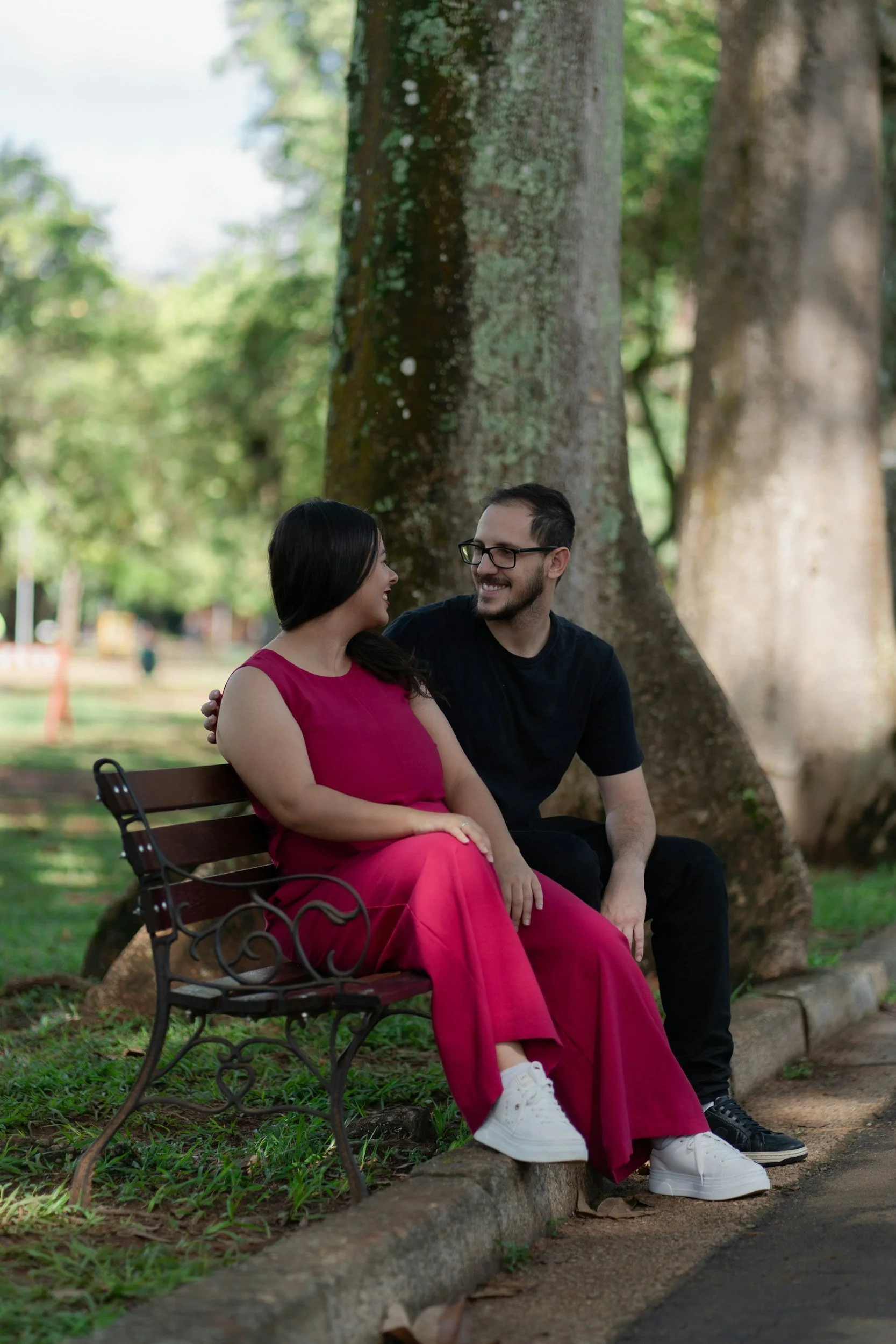
Starting the conversation about couples counseling doesn't have to feel like a confrontation. It can start in a moment of genuine connection.
There is a conversation that lives in the back of many relationships — quiet, circling, waiting for the right moment that never quite arrives.
Maybe you've felt it. The sense that something between you and your partner is stuck. Not broken, necessarily. But stuck. Like you keep arriving at the same place no matter which road you take to get there.
You want to bring it up. But you don't know how. You don't want it to turn into another argument. You don't want them to feel accused. You don't want them to shut down or get defensive or say "why do you always have to make things a big deal."
So you wait. And the distance grows — quietly, the way it always does.
If that describes where you are right now, this post is for you. And if you're the partner who was handed this link and isn't sure what to think about it — keep reading. There is something here for you too.
First: If You Do Not Feel Safe, Please Get Help
Before anything else, I want to say this clearly.
For some people, the idea of suggesting couples therapy to a partner is not just emotionally uncomfortable — it carries real risk. If you are in a relationship where your physical or emotional safety is a concern, please do not use this post as a guide for having that conversation.
Reach out to a counselor individually first. Call the National Domestic Violence Hotline at 1-800-799-7233. Or contact BH Counseling Clinic directly — I will meet you where you are and help you find the support that is right for your actual situation, which may be individual counseling before couples work is even on the table.
You deserve safety first. Always.
What the Resistance Actually Sounds Like
In my work with couples in Little Rock and Central Arkansas, I've heard the resistance to therapy in many forms. It usually doesn't sound like "I refuse." It sounds more like:
"We don't need a stranger in our business."
"What happens in this house stays in this house."
"If you'd just let it go, we'd be fine."
"I don't know why it's such a big deal."
"I don't like talking about my feelings."
"Therapy is for people who can't handle their own problems."
Underneath every one of those statements is something real — a fear of being exposed, a fear of failure, a belief that needing help means something is wrong with you. In Southern culture, and especially in faith communities across Arkansas, that belief runs deep. Strong families handle things internally. Real men don't need therapy. If we just pray harder, trust more, try harder.
I understand that worldview. I grew up around it. I've sat with it in session many times.
And I want to say gently but clearly: that belief, left unchallenged, is one of the most common reasons couples wait until the damage is severe before asking for help.
Needing outside perspective is not a sign of weakness. It is a sign of wisdom. Every high-performing professional, every elite athlete, every thriving leader has coaches, mentors, and advisors. A couples therapist is simply someone with education, training, and an outside view — who can see what is hard to see from the inside.
This Is Not an Admission of Failure. It Is an Act of Love.
The way you frame the conversation with your partner changes everything.
Couples therapy is not a verdict on the relationship. It is not a referendum on who is right. It is not a sign that the marriage is failing.
It is a decision that the relationship matters enough to invest in — the same way you invest in your health, your career, your children's education. The most successful couples I work with are not the ones who never struggled. They are the ones who decided to get support before the struggle became a crisis.
When you go to a trainer at the gym, you are not announcing that your body is broken. You are saying: I want to be stronger, and I want help getting there.
Couples counseling is the same thing.
Finding the Vulnerable Moment

Vulnerable moments don't need to be perfect — they just need to be real.
The timing of this conversation matters more than most people realize.
Never bring it up in the middle of a fight. Never right before bed when one of you is exhausted. Never in a moment when the noise of life is at full volume — kids in the next room, phones buzzing, dinner burning.
What you are looking for is what I call a vulnerable moment.
A vulnerable moment is not a manufactured conversation. It is a real one — the kind that happens when guards are down, when both people are present, when no one is listening to respond but to actually see the other person. It is the kind of moment where you can say something true and have it land softly, because the conditions are right for it to be heard.
These moments exist in every relationship, even the strained ones. A quiet drive. A morning before the house wakes up. A walk. A conversation that starts with something small and honest.
In that moment, try something like this:
"I've been struggling with some things I don't even fully know how to put into words. I don't know why certain things bother me the way they do, and I don't want to keep having the same conversations and getting nowhere. What would you think about us finding a therapist we both like — just to have someone outside of it help us figure out what we're missing?"
Notice what that does. It starts with your own vulnerability, not a list of their failures. It names the struggle without assigning blame. And it invites them into the process — a therapist we both like — rather than presenting therapy as something being done to them.
Include Your Partner in Choosing the Therapist

Including your partner in choosing a therapist increases their engagement from the very first session.
This is one of the most practical pieces of advice I can offer, and it is one of the most overlooked.
When one partner selects the therapist alone and presents it as a done deal, the other partner can feel like the decision has already been made without them — which often creates resistance before the first session even begins.
Instead, make the search collaborative. Look at profiles together. Read bios together. Watch intro videos if they're available. Let your partner have a voice in who you trust with your relationship.
At BH Counseling Clinic, every new couple begins with a free 15-minute consultation — both partners present, no commitment required. It is simply a conversation. You can ask questions, get a feel for the approach, and decide together whether this is the right fit.
That is a much smaller ask than "let's start therapy." And a much easier yes.
What If You're Not Sure How to Start?
Sometimes the conversation doesn't need a perfect opening line. Sometimes it starts with honesty about the difficulty itself.
"I don't even know how to bring this up without it turning into a fight. I feel like there are things between us I don't know how to talk about, and I don't know why."
That kind of honesty — the admission that you don't have the words — can itself be the opening. Because it is real. And real, however imperfect, opens doors that rehearsed speeches don't.
If there has been infidelity, a significant betrayal, or a loss of trust — the conversation looks different. Those situations carry a specific kind of weight, and the path forward requires a safe space where both partners can speak and be heard without the conversation collapsing under the pressure of it. That is precisely what a skilled couples therapist provides: a container strong enough to hold the hardest conversations.
A Note on Safety Screening — What Happens When You Call Alone
Sometimes one partner calls me before their partner knows they're calling. That is not uncommon, and it is completely okay.
When that happens, I listen carefully — not just to what is said, but to what hesitates. The pause before an answer. The phrase "we don't really talk about that." The moment when a client says "I'm not sure how they would feel about me talking to you about this."
Those moments tell me something important. And when they suggest that safety might be a concern, I don't push toward couples therapy. I help that person get the individual support they need first. Always.
Your safety is not a prerequisite to earning help. It is the foundation everything else is built on.
To the Partner Who Didn't Want to Come
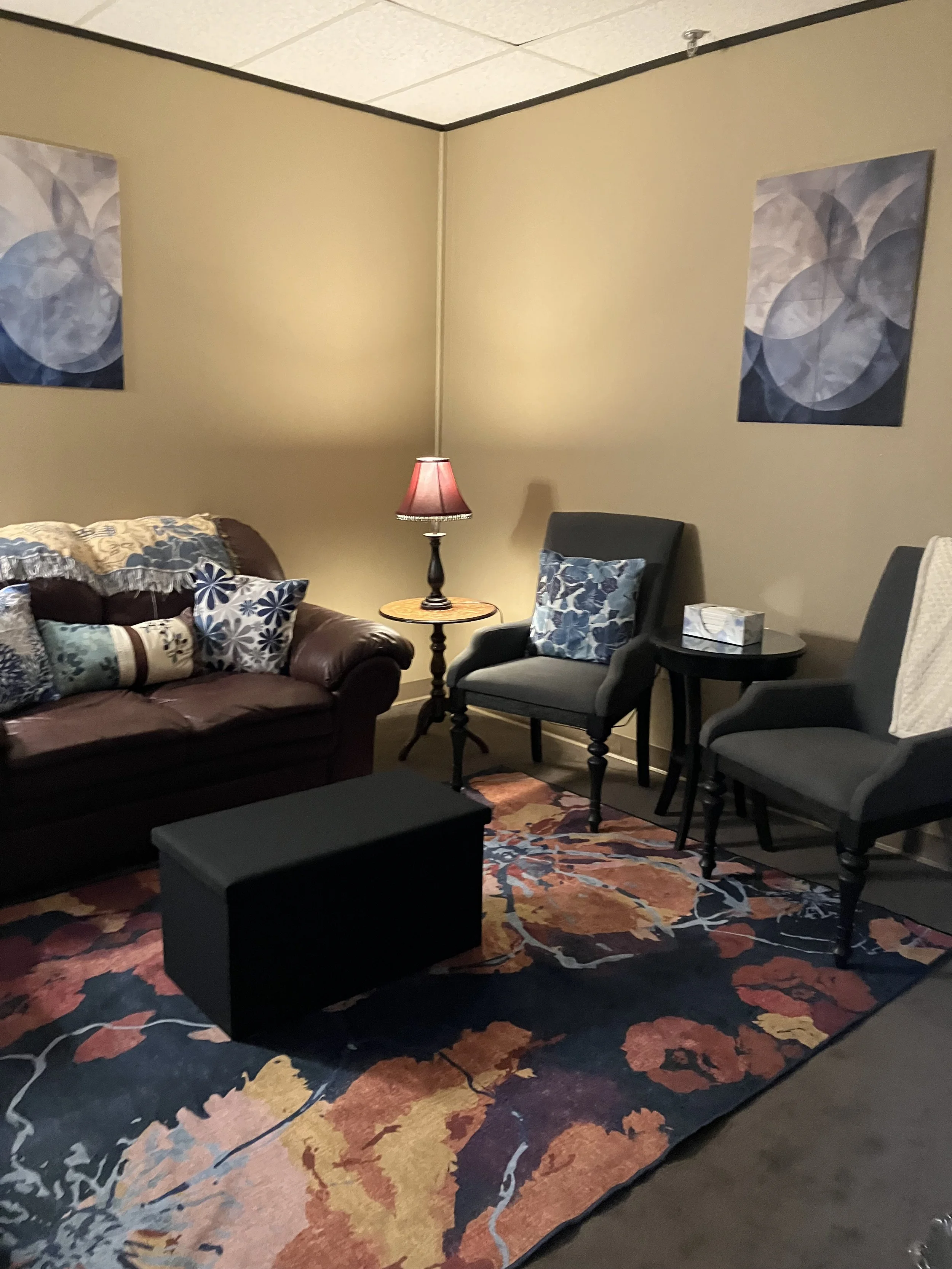
Every partner who walks through this door is seen, heard, and understood — not just the one who made the call.
If you were handed this post — or shown up to a session unsure, reluctant, or quietly convinced this was going to be 50 minutes of being told what you did wrong — I want you to hear this directly:
I see you too.
My job is not to take sides. It is to make sure both partners are seen, heard, and understood. Including the things you do that go unnoticed. Including the ways you show up that your partner has stopped registering because the conflict has taken up all the oxygen.
You will not be ambushed in this room. You will not be the villain in someone else's story. You will be a full person — with your own history, your own needs, your own perspective — and that perspective matters here.
If you came in reluctant and something has shifted by session three — that shift is yours. You did that. And it means something real is possible.
There Is Hope for Being Known
If this post has spoken to something in you, I want you to hear this:
There is hope for being truly understood in your relationship — with your faith at the center, your history respected, and your future taken seriously.
Couples counseling at BH Counseling Clinic is not about excavating what's broken. It is about building what is possible — the communication, the trust, the intimacy, the shared language that allows two people to face hard things without losing each other in the process.
That is worth the conversation. Even the uncomfortable one.
Ready to take the first step? Book your free 15-minute couples consultation at BH Counseling Clinic. Both partners are welcome. No commitment required. Just a conversation.
Request Your Free Consultation →
📍 900 S Shackleford Rd, Ste. 300, West Little Rock, AR 72211 📞 (501) 283-7879
Serving couples in Little Rock, West Little Rock, North Little Rock, Sherwood, Benton, and Bryant — in person and via telehealth.
Britney Hardin is a Licensed Associate Counselor (LAC) and Licensed Associate Marriage and Family Therapist (LAMFT) in Arkansas, specializing in couples, family, and faith-sensitive therapy. She is the founder of BH Counseling Clinic in West Little Rock, and in addition, mental health experience, she brings over a decade of experience in licensed ministry and 9 years in legal fiel experience.
References:
White, M., & Epston, D. (1990). Narrative Means to Therapeutic Ends. W. W. Norton & Company.
Gottman, J. M., & Silver, N. (2015). The Seven Principles for Making Marriage Work. Harmony.
Sprenkle, D. H., Davis, S. D., & Lebow, J. L. (2009). Common Factors in Couple and Family Therapy. Guilford Press.