
Mental Health Awareness Month and the Faith Community: What Every Believer Needs to Know
Author: Britney Hardin, MBA, MS, LAC, LAMFT
October is Mental Health Awareness Month.
And inside faith communities across Arkansas, something is shifting.
More pastors are talking about it. More churches are creating space for it. More believers are giving themselves permission to acknowledge that loving God and struggling mentally are not contradictions — that you can know scripture, show up to church every Sunday, and still be carrying something that prayer alone hasn't moved.
That shift matters. And this post is for the people inside that shift — the ones who are almost there, but not quite ready. The ones who are doing everything they know to do, and still hitting a wall they can't explain.
What Is Changing in Faith Communities Around Mental Health
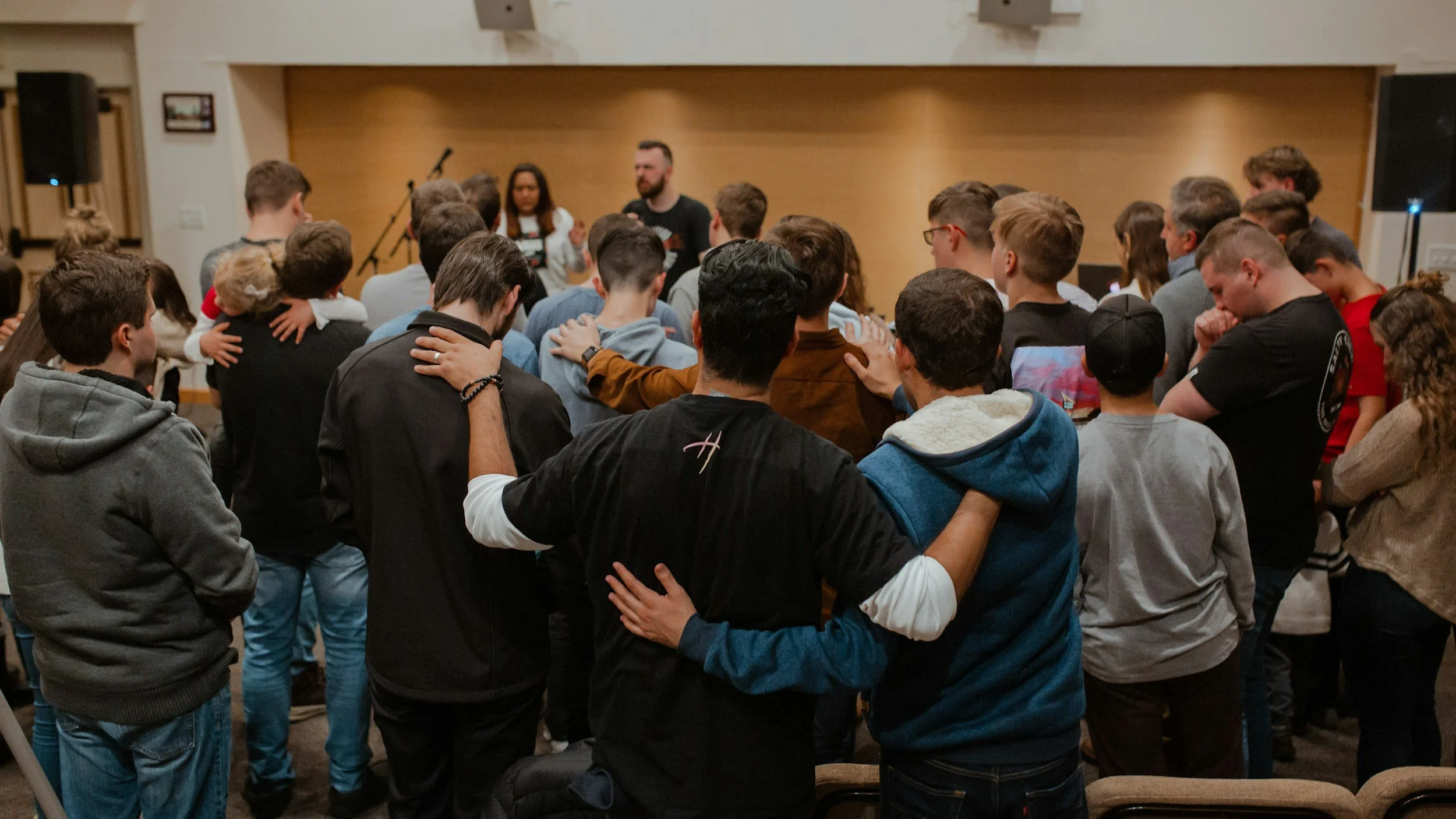
Over the past several years, there has been a growing awareness inside churches and faith communities about how mental health affects daily functioning — how we cope, how we operate, how we show up for ourselves, our families, and our communities when we are not okay.
Pastors and faith leaders across Arkansas are increasingly trusting mental health professionals — especially faith-based clinicians — to partner in caring for their congregations. That trust is growing because the field itself has grown. We understand more now about how the brain works, how past experiences shape present functioning, and how the patterns we develop — in response to pain, to fear, to loss, to seasons of sustained stress — don't simply resolve themselves through willpower or through wishing.
Mental health support is not a replacement for faith. It is not a competing system. For more and more faith communities in Arkansas, it is becoming what it was always designed to be: a collaborative partner to the pastoral care that churches already provide.
There is still stigma in some corners. That is real and worth acknowledging. But the trajectory is toward acceptance. And this month — Mental Health Awareness Month — is an opportunity to keep that momentum moving.
The Question That Belongs to a Therapist — Not a Pastor
Let me offer a framework that I believe will be genuinely helpful to both the people in the pew and the pastors who care for them.
Your pastor is equipped to help you with theological questions. Questions like: What does this scripture mean? How do I apply this to my life? How do I live out my faith in this season? How do I love this person who has hurt me? These are questions your pastor has been trained to walk alongside you through, and they are genuinely sacred work.
But there is a different kind of question. And it sounds like this:
I know what I believe. I believe it deeply. But for some reason, my mind and my emotions won't line up with what I believe — and I have tried everything. I've prayed. I've studied. I've talked to people I trust. And still. Something is not moving.
That is not a theological question. That is a clinical question. And it requires a different kind of expertise.
A common example I see in my practice: a client knows the scripture about rejoicing always. They know the difference between joy and happiness — that joy is a settled peace, not a constant emotional state. They believe it. But when I ask them what it feels like to find joy, they describe exhaustion. They describe effort that feels disproportionate to the moment. They describe getting there eventually, but it taking everything they have.
That is not a question for more scripture. That is a question for pattern work. For understanding why the mind and the emotions aren't cooperating with what the spirit already knows. That is the work that therapy is designed to do.
And the beautiful thing is: you don't have to choose. You can have your pastor and your therapist. Those relationships don't compete. They complement.
What a Partnership Between Faith and Mental Health Can Look Like

When a faith community embraces mental health care as a collaborative tool, the goal for the individual never changes: stay plugged in. Stay connected to your community. Stay rooted in your faith.
My role — as a faith-based therapist — is to come alongside that and fill in the gaps. To ask the questions that help us understand where the barrier started, what the pattern is, and what has been sustaining it. Not to import a different belief system into that person's life, but to use clinical expertise to help them understand what their own mind and body have been trying to tell them.
The goal is always the same: grow, overcome, and thrive. Reach the potential that is already there. Get past the wall that has been blocking the next step.
And confidentiality is maintained throughout. I am not reporting back to anyone. I am serving the person in the room. A referral from a pastor to a therapist is a handoff of care — not a handoff of information.
A Direct Word to Pastors and Church Leaders in Arkansas
If you are a pastor or church leader reading this — whether you found it through a search or someone in your congregation forwarded it to you — I want to speak to you directly.
If you are looking for someone who can serve your congregation members well — the ones who are stuck, the ones who know what they believe but can't seem to get past a barrier, the ones who have come to you and need something you recognize is beyond the scope of pastoral care — I would love to connect.
My heart is always to help the person in the room get to their next step. To keep them growing in their faith and in their life. I am not here to replace what you do. I am here to call in backup when backup is what's needed.
And if you want to know more before you make a referral — you are welcome to call me. Let's have a conversation. Let's build a partnership. I am happy to get to know you before you send someone my way, and I am happy to be a resource for your community.
Call or text: (501) 283-7879
To the Person in the Pew Who Is Reading This

To the person who has been in church, studying, praying, doing everything they know to do — and still feeling like something is blocking the next step:
You are not weak. You are not failing God. You do not lack faith.
You are someone who has hit a wall. And the fact that you've been trying everything you know is not a sign of defeat. It is a sign that you are serious about getting past it.
If your mind and your emotions are not lining up with what you believe, and it has been this way for a while, and you've tried everything in your toolkit — that is the sign. That is when you call in backup. That is when you schedule the Clarity Call and let someone with a different set of training and a different perspective come alongside you.
It might be a one-time conversation. It might be a few sessions to get some tools and some understanding. It might be a longer journey. But you won't know which one it is until you reach out — and you have nothing to lose from finding out.
You can do this entirely online if that's easier. You can call. You can text. If I don't answer, I will call you back. I promise.
Let's figure out what the next step is. Let's get you past the wall. Let's get you to the place where you are growing, overcoming, and thriving — and living out what God has already placed inside of you.
Schedule your free Clarity Call — in person or via telehealth → Call or text: (501) 283-7879
Frequently Asked Questions
Do I need a referral from my pastor to see a therapist? No. You can reach out directly and schedule a Clarity Call at any time. However, if your pastor or church leader wants to be part of your support system, that is always welcome — your care team is yours to build.
Will my therapist share what I say with my pastor or church? No. Confidentiality is a foundational ethical and legal obligation in mental health practice. What is discussed in session stays in session, with limited exceptions required by law (such as situations involving imminent harm). Your pastoral relationships and your therapeutic relationships are kept separate.
Is faith-based therapy different from Christian counseling? Faith-based therapy integrates your faith as a resource within a clinically sound therapeutic approach. At BH Counseling Clinic, I follow your lead — your faith is never imposed, but it is always welcomed and honored when you want to bring it into the work. Read more about faith-integrated therapy here →
Does BH Counseling Clinic accept insurance? BH Counseling Clinic is in-network with Municipal Insurance (MHBF — Municipal Health Benefit Fund). Private pay sessions are available at $100 per session. We can also provide a superbill for out-of-network reimbursement. Learn more here.
Sources
American Counseling Association (ACA). (2014). ACA Code of Ethics. Alexandria, VA.
American Association for Marriage and Family Therapy (AAMFT). (2015). AAMFT Code of Ethics.
Captari, L. E., Hook, J. N., Hoyt, W., Davis, D. E., McElroy-Heltzel, S. E., & Worthington, E. L. (2018). Integrating clients' religion and spirituality within psychotherapy. Journal of Clinical Psychology, 74(11), 1938–1951.
Koenig, H. G. (2012). Religion, spirituality, and health: The research and clinical implications. ISRN Psychiatry, 2012.
National Alliance on Mental Illness (NAMI). (2023). Faith and mental health. nami.org
Philippians 4:4; 1 Thessalonians 5:16 (NIV)