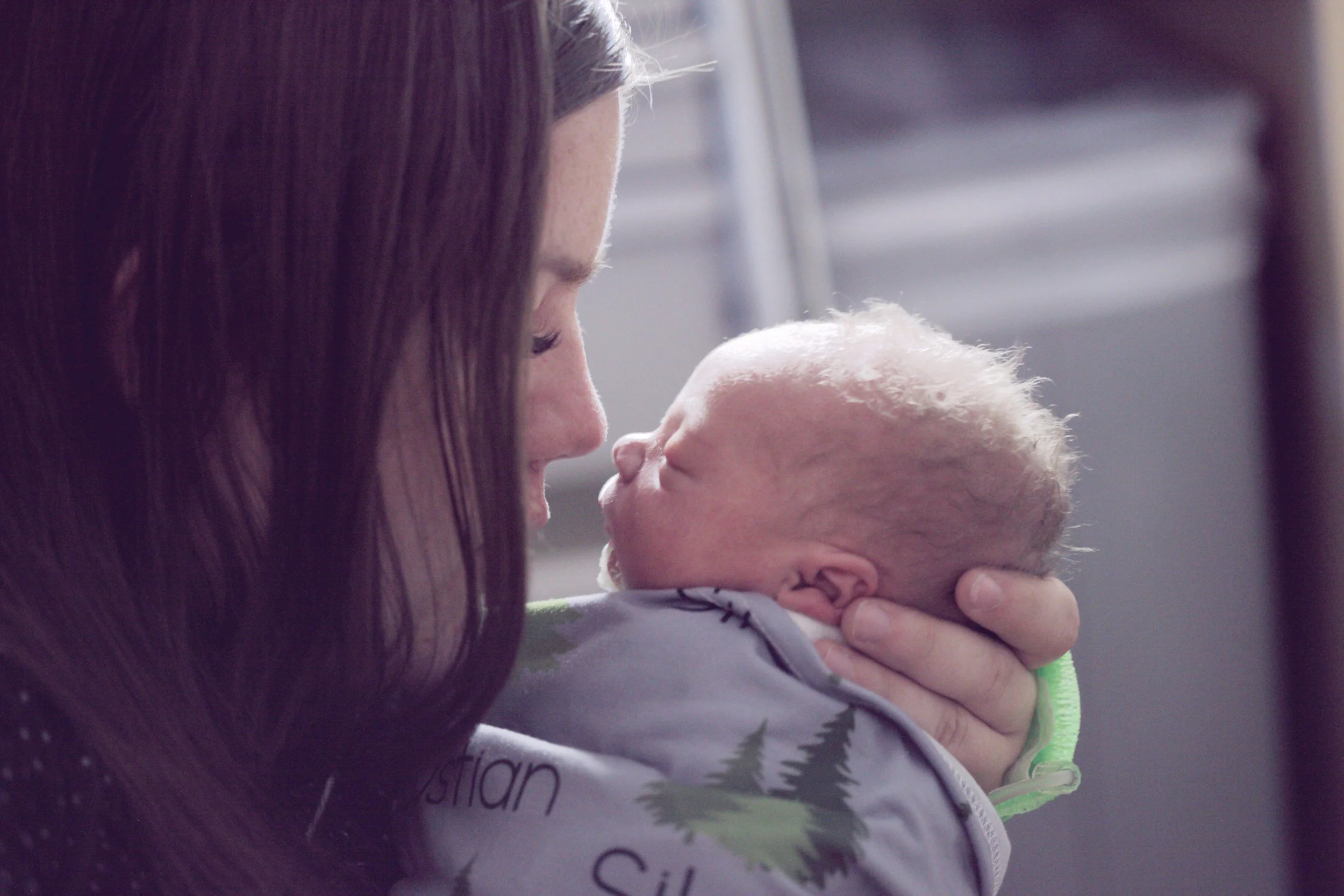
New Parenthood Identity Crisis: Marriage & Family Counseling in Little Rock
New parenthood in your family—and especially in Little Rock—can be joyful yet overwhelming. Common signs of an identity crisis include feeling lost, disconnected from your pre-parent self, and mourning the loss of spontaneity. Expert strategies include positive self-talk, reconnecting with personal interests, and seeking counseling if needed. Faith-based counseling may help you rediscover meaning and balance during this transformative life season.
Who Am I Now?
The arrival of a baby is often called the happiest moment of your life. While the joy is real, the emotional reality is that it is also a massive, overwhelming life transition—and it can trigger an identity crisis for both parents.
This identity crisis is a core challenge in Marriage and Family Therapy. The person you were before your baby arrived—the professional, the independent friend, the spontaneous partner—is suddenly gone, replaced by a 24/7 care provider.
The Crisis: The Loss of the 'Old Self'
New parenthood doesn't just add a role; it often deletes several others. This loss is a form of grief that is rarely acknowledged:
• Grief for Freedom: The loss of autonomy and the ability to make simple decisions (like when to shower) without complex planning.
• Grief for Career Identity: For the primary caregiver, the shift away from professional validation to the invisible labor of parenting can be jarring.
• Grief for the Partnership: The sudden shift from being partners to "co-managers" of a child. Intimacy, communication, and shared interests often take a backseat, leading to conflict.
The sudden shift from being partners to "co-managers" of a child. Intimacy, communication, and shared interests often take a backseat, leading to conflict.
The Emotional Toll on the Couple
The crisis is compounded when the shift is uneven, leading to two distinct challenges we frequently address in Little Rock couples counseling:
1. The Resentment Gap: The primary caregiver resents the working partner's perceived "freedom," while the working partner may feel resentful of being sidelined or reduced to a provider.
2. The Communication Breakdown: Exhaustion reduces communication to logistics (who handles the night feed, who stocks the diapers). Emotional connection and understanding fade, making the relationship feel like a business arrangement.
Reclaiming Your Identity, Together
As a Marriage and Family Counselor, I encourage parents to create space for their "Old Self" and "New Self" to coexist.
• Acknowledge the Grief: Allow yourself (and your partner) to genuinely mourn the loss of the old life. This creates compassion instead of resentment.
Shift focus from logistics back to connection.
• Schedule "Couple Time" That Matters: Shift focus from logistics back to connection. Can you dedicate 15 minutes a day for non-baby conversation?
• Practice Holistic Self-Compassion: We often hold new parents to an impossible standard. Our holistic approach emphasizes finding small, sustainable ways to care for your mind (letting go of the need for perfection) and body (getting 15 minutes of sunlight a day).
If the stress of new parenthood is straining your relationship or leaving you wondering who you are now, it’s a perfect time to seek support. BH Counseling Clinic provides a safe, supportive space for individuals and couples in Little Rock, AR, navigating this immense transition.
Don't navigate this alone. Contact us today to schedule your free consultation using the request appointment button below.
Is a Career Change in Your 30s Causing Anxiety? | Little Rock Therapy for Loss of Professional Identity
Facing a career change in your 30s? BH Counseling Clinic specializes in helping professionals in Little Rock manage anxiety, grief, and family pressure during this major transition.

The path to change can feel uncertain, but you don't have to walk it alone. Find clarity with BH Counseling Clinic.
Yes, the emotional toll is real. Losing your professional identity can trigger intense anxiety, grief, and self-doubt. Making a major career change in your 30s is a life-defining transition that brings not only logistical and financial questions but also a profound emotional journey. Many working professionals in Little Rock, Arkansas, find themselves grappling with complex feelings—uncertainty about the future, grief over leaving a former professional role, and pressure to succeed quickly in a new arena are common experiences.
At BH Counseling Clinic, we specialize in guiding adults through this turbulence, helping them find clarity and build resilience for the next chapter.
Navigating the Emotional Landscape of Career Transition
The transition requires more than just updating your resume; it requires addressing deep feelings tied to your identity.
That feeling of losing your professional identity? It's a real form of grief. We help you process the letting go and transform your mindset so you can accomplish your goals.
1. The Grief of Losing Professional Identity
Letting go of a long-held career can evoke a real sense of grief, similar to ending a significant relationship. Much of our self-esteem and social status is tied to what we do, so a career shift often feels like losing a part of ourselves. BH Counseling Clinic provides a non-judgmental space to process this loss.
2. Doubt, Comparison, and Regret
Stepping away from a familiar role can trigger doubt and regret, especially when seeing peers progressing in their established careers. Moments of envy are normal. It’s important to recognize these emotions without judgment—a process we support through evidence-based therapy focused on self-compassion.
3. Family and Financial Pressures
In your 30s, you may be managing family responsibilities, mortgage payments, and external expectations. These pressures can intensify the anxiety that comes with uncertain income or new demands. Addressing the relationship and family dynamics tied to your career change is a crucial part of our work here in Little Rock.
Practical Strategies for Managing Emotional Stress
While professional support is essential, integrating these daily strategies can help you maintain stability during the transition:
Build Emotional Awareness: Journaling about your emotions, tracking mood changes, and acknowledging grief are key steps toward healthy processing.
Maintain Structure and Routine: A clear structure in daily life—regular times for wake-up, meals, and exercise—helps maintain purpose through times of ambiguity.
Practice Self-Compassion: Focus on your reasons for seeking change and honor your resilience. Treat yourself with the same kindness you would offer a friend.
The Power of Professional Counseling at BH Counseling Clinic
Don't go through this transition alone. The fastest way through uncertainty is with dedicated, expert support. Local counselors at BH Counseling Clinic are equipped to help you leverage your strengths and values to ground your next steps.
We specialize in helping professionals in Little Rock to:
Clarify Direction: Define your goals and values for your new career path.
Address Anxiety: Utilize evidence-based therapies (like CBT or EMDR) to manage career-related fears, anxieties, and self-doubt.
Process Grief: Work through the emotional labor of letting go of your former professional identity.
Integrate Beliefs: Draw on your spiritual beliefs (if desired) to ensure your next career chapter aligns with your core values.
Change is difficult, but it leads to growth. Professional support in Little Rock can help you move through the emotional turbulence of career transition and into a more fulfilling chapter of your career story.
Ready to trade self-doubt for clarity?
Schedule your confidential, no-pressure consultation with BH Counseling Clinic today.
5 Signs You're Experiencing Post-Graduate Anxiety (and How to Handle It)
Feeling lost after graduation? Learn the 5 common signs of post-grad anxiety and how BH Counseling Clinic's holistic approach can help you find your footing. Free consults available.

Post-graduate anxiety can surface when the excitement of graduation fades and uncertainty about the future emerges.
The Post: Finding Your Footing in Little Rock
The confetti has settled, the cap and gown are put away, and the diploma is on the wall. For many young adults in Little Rock, that huge wave of relief is quickly replaced by a wave of anxiety. This is a normal, yet often paralyzing, reaction to losing the structure of academia and facing the "real world." It’s often called Post-Graduate Anxiety.
As a counselor who specializes in life transitions, I see this regularly.
Here are five signs this anxiety is impacting your life and how you can reclaim your footing.
1. The Paralysis of Infinite Choice
During college, your next steps were always clear: a course to take, a paper to write, a deadline to hit. Now? You might have too many options (jobs, cities, career paths) or feel like you have none at all. This lack of external structure leads to decision fatigue, causing you to feel paralyzed and unable to commit to anything—a hallmark of transition anxiety.
2. "Future-Faking" and Social Isolation
You scroll social media and everyone is thriving: landing the dream job, traveling the world, getting engaged. You start "future-faking," presenting an image of success while privately feeling inadequate. This comparison trap leads to withdrawing from friends and family because you feel ashamed that your reality doesn't match the highlight reel.
3. The Sudden Lack of Identity
If your identity was tied to your degree, your athletic team, or your campus leadership role, that structure is gone. You might find yourself asking, "Who am I now?" This existential stress is a form of grief for your past self. We see this often in new graduates who feel a profound loss of purpose.
4. Physical Symptoms and Disrupted Routine
Anxiety is holistic—it doesn't just stay in your mind. You may be experiencing unexplained headaches, poor sleep, digestive issues, or a constant feeling of low-grade tension. This is your body holding the stress of the transition.
5. Hyper-Fixation on "Catching Up"
You feel a constant, self-imposed pressure to be further along than you are. You worry you should be earning more, saving more, or traveling more. This hyper-fixation often comes with deep feelings of guilt for enjoying downtime.
Holistic Steps to Reclaim Your Ground
At BH Counseling Clinic, we work with you to move from paralyzed to purposeful. Our holistic approach ensures we address all parts of you:
• Mind: Challenge the "shoulds" and comparison traps fueling the anxiety.
• Body: Introduce simple breathwork or movement to release physical tension.
• Spirit (Optional): Explore your core values and belief systems to anchor your new identity.
Ready to move from overwhelmed to grounded?
If you are a young adult in Little Rock struggling with this transition, we offer accessible, client-led therapy focused on building resilience. Book your free 15-minute consultation today. Let's talk about the specific roadmap for your next chapter.
Therapy for Life Transitions: Why Change Feels So Hard
Therapy for Life Transitions
“Feeling overwhelmed lately but can’t quite explain why? You might be in a life transition—and you're not alone.” I work with children, adolescents, young adults, parents, and adults navigating life transitions—because change, even good change, can be hard.
3 Signs You Might Be In A Transition That’s Affecting Your Mental Health:
You’re more anxious or emotional than usual — even if nothing bad has happened.
You’re questioning your identity, relationships, or purpose more than usual.
Your old routines don’t feel like they fit anymore.
Life transitions manifest in various forms, such as moving to a new city, starting a new job, or experiencing personal events, living independently, experiencing a divorce, getting married, becoming a parent, blending families, dealing with grief, health changes, career shifts, and graduating.
These transitions can be both exciting and overwhelming, and their impact on mental well-being is crucial.
Understanding life transitions is essential for managing the process effectively, as they involve letting go of old values, relationships, or beliefs to embrace new ones. Coping skills, such as support networking, cognitive restructuring, problem-solving, and stress management, mediate the transition's course and emotional intensity.
Each transition brings its own set of challenges, requiring unique coping strategies. Stress can induce symptoms like anxiety, fear, loneliness, and physical issues, so it is crucial to manage stress effectively to prevent its negative impact on well-being.
8 Ways To Manage Life Transitions:
Journaling
Mindfulness
Therapy
Exploring a New Hobby
Building a Support System
Improving Sleep Hygiene
Practicing Healthy Eating Habits
Practicing Self-Care
Research has shown that life transitions are distinct shifts from one phase of life to another, marked by identifiable beginnings, turning points, and endings. During these transitions, individuals build upon earlier coping skills to navigate the process effectively.
In summary, effective coping skills, positive attitudes, and a commitment to change empower individuals to manage life transitions successfully, reducing emotional distress and fostering personal growth. By incorporating these suggested coping mechanisms into your life, you can navigate transitions more effectively and build resilience.
Life transition therapy can play a crucial role in helping individuals adjust to these changes in a positive and productive way.
How Counseling Can Help?
A trained and experienced mental health provider can help support individuals going through a transitional time by providing emotional support and validation, identifying strengths and resources, developing coping strategies, goal-setting and future planning, and using different counseling approaches. Some approaches that counselors can use include Cognitive Behavioral Therapy (CBT), Solution-focused therapy, Narrative therapy, and mindfulness-based therapy.
Some Ways Counselors Support Clients Through Transitions:
Tailoring counseling techniques to individual needs
Encouraging self-discovery and growth
Providing long-term support and follow-up
Overcoming career change anxiety
Finding emotional stability after divorce
Adapting to retirement and a new lifestyle.
Life Transitions is an opportunity to Overcome, Grow, and Thrive.
Start Your Journey Today
Ready to take the first step with your first “yes.” Book a free consultation online here.