
Anxiety in Women After 30: Why It Hits Differently and What Actually Helps
Author: Britney Hardin, MBA, MS, LAC, LAMFT
You have been pushing through for years. You tell yourself you will deal with it when things slow down — when the project wraps, when the kids are older, when life settles into something more manageable.
But things never slow down. And deep down, you know they will not.
If you are a woman in your 30s in Little Rock and anxiety has become the background noise of your life — louder than it ever was in your 20s and harder to outrun — this post is for you. Because what you are experiencing is real, it is common, and it is not something you have to keep managing alone.
Why Anxiety After 30 Feels Different
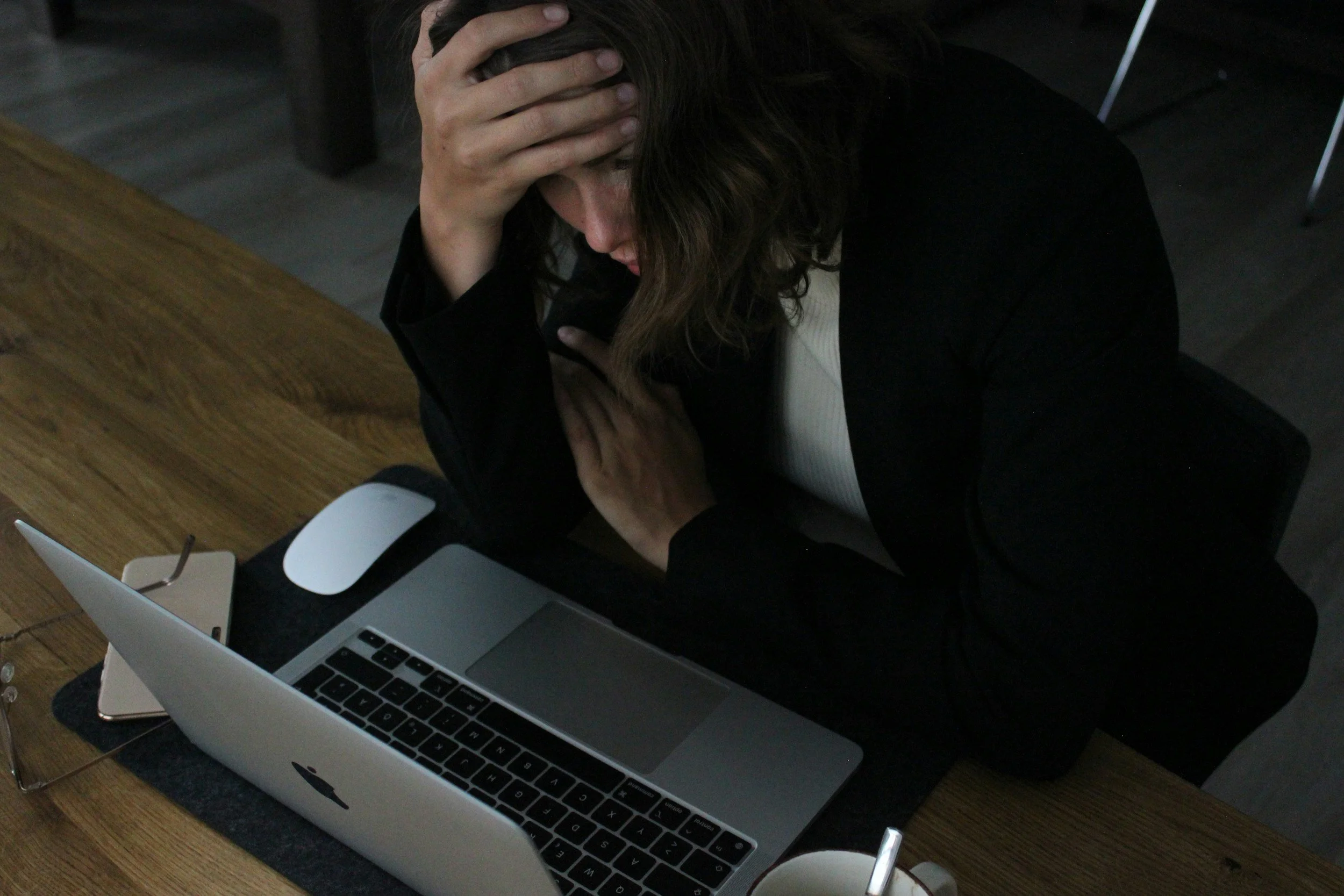
When a woman reaches her 30s, something shifts — and it is not just hormones.
There is a societal expectation that comes with turning 30. A kind of cultural pressure that says: you have been alive long enough now, you should have it figured out. The grace that was extended in your 20s — the allowance to still be figuring things out, to still be in process — quietly disappears. And what replaces it is an expectation that you have arrived.
For many women, especially millennials, there is an additional layer. You grew up watching parents who either started their families very young or who built their careers and lives in their 30s. Either way, there was a picture. And that picture created an expectation — conscious or not — of who you were supposed to be and what you were supposed to have by now.
When the reality of your life does not match that picture, anxiety fills the gap.
The Compounding Pressure of Your 30s
Beyond the milestone pressure, the circumstances of this life stage have a way of stacking on top of each other in ways that create a kind of compounded anxiety that is genuinely different from anything earlier.
There is career pressure — the expectation to either be visibly successful or to have a clear, accelerating path toward it. There is financial pressure — the American dream checklist of the house, the family, the stability. There is the pressure to be the entrepreneurial woman blazing her own trail, or the devoted mother holding everything together, or ideally some combination of both, done excellently.
And then the body starts changing. Metabolism slows. Things that used to work stop working. Sleep becomes less restorative. Aches and pains appear that were not there before. The body requires more effort to maintain — right when life is demanding the most from it.
That double-edged sword — I have to keep pushing to meet my goals, but now it takes more effort just to sustain — is where the anxiety intensifies. The overanalysis starts. The questions compound. Am I doing enough? Am I enough? Why is this so much harder than it used to be? And underneath those questions is usually a standard that is not just high — it is unrealistic. It is a moving target that was never designed to be reached.
What It Looks Like — And Why You've Been Explaining It Away
Here are the most common anxiety symptoms I see in women after 30 — and the stories they tell themselves about why it is not really a problem:
Racing thoughts that never fully stop. Your mind runs at a hundred miles an hour. You attribute it to being busy, being stressed, having a lot on your plate. Which is all true — but the mind running this fast, this constantly, is not just stress. It is a nervous system that has lost its ability to downshift.
Sleepless nights — or sleep that does not restore. You get the hours, but you do not feel rested. You chalk it up to stress and keep going. But the body is telling you something that the schedule is not making space to hear.
Escapism disguised as self-care. When the exhaustion gets to a certain level, executive function fatigue sets in — and the response is not real rest. It is scrolling. Binge-watching. Anything that requires nothing from you but also gives nothing back. This is not restoration. It is avoidance. And it quietly pulls you further from the goals that are driving the anxiety in the first place.
None of these symptoms are character flaws. They are signals from a system that has been running too hard for too long.
What Treatment Actually Looks Like

Every woman is different, and treatment is always tailored to the person and the season. But some of the most effective tools I use with women navigating anxiety after 30 include mindfulness, somatic work, and breathing techniques — not because they are trendy, but because what is missing most is the pause.
If the to-do list never ends, the body, mind, and emotions never get to stop. They never get to reset. And a nervous system that never resets cannot sustain.
We start small. We are not talking about two-hour retreats or major schedule overhauls. We start with 30 seconds. A breath. A deliberate pause. A moment where the agenda is nothing. Because when we create that space — even a small one — that is when the shift begins.
The goal is not symptom management. The goal is lifestyle and mindset shifts that create sustainability. So you can reach your goals — and actually be present when you get there. Actually enjoy the win before you sprint toward the next one. Actually participate in the life you are building rather than rushing through it.
That is what healing from anxiety after 30 looks like. Not giving things up. Changing your relationship with the pace.
Are You Happy?
To the woman who always says I'll deal with it when I reach this next goal — who has been pushing through, white-knuckling, telling herself she is strong enough and she can handle it:
I hear you. I see you. And I want to ask you something directly.
When was the last time you celebrated a win — really celebrated it, not just checked it off and moved on? When was the last time you took a day and did not feel guilty for it? When was the last time you paused — not because you had a breakdown, not because you crashed, but just because you wanted to stop for a moment and breathe?
If you cannot remember, this is for you.
Anxiety after 30 works like a laser pointer. You chase it. You get close. And just as you reach it, it moves. The goal shifts. The standard adjusts. And you start running again without ever stopping long enough to enjoy where you are.
You may have the credentials. The success. The accolades. But if you cannot pause long enough to enjoy any of it — if you cannot be present with your family, your work, your life — I have to ask: what is the goal? When have you arrived?
This is not a criticism. It is a check-in. And it is one I make with so much care — because the cost of staying in this pattern is real. It is physical, emotional, mental, and spiritual. The body keeps the score. And so does the heart.
The change I am inviting you toward is not giving anything up. It is learning to do what you love — and actually enjoy it. To reach your goals and be present in them. To build a life that is not just impressive, but actually felt.
You can start now. Not when things slow down. Now.
Schedule your free 15-minute consultation — in person or via telehealth →Call or text: (501) 283-7879

Frequently Asked Questions
Is anxiety after 30 hormonal or situational? Often both. Hormonal shifts in your 30s can amplify anxiety symptoms, and they interact with situational pressures in ways that compound the experience. A thorough assessment helps identify what is driving your specific presentation — and the most effective approach to address it.
Do I have to have a formal anxiety diagnosis to benefit from therapy? No. Many women I work with do not meet the clinical criteria for an anxiety disorder but are experiencing significant anxiety symptoms that are affecting their quality of life. Therapy is for anyone who wants support — diagnosis or not.
Does BH Counseling Clinic accept insurance? BH Counseling Clinic is in-network with Municipal Insurance (MHBF — Municipal Health Benefit Fund). Private pay options are also available, and we can provide a superbill for out-of-network reimbursement. Sessions are available in person in West Little Rock and via telehealth across Arkansas. Learn more here.
Sources
American Counseling Association (ACA). (2014). ACA Code of Ethics. Alexandria, VA.
American Psychiatric Association. (2022). Diagnostic and Statistical Manual of Mental Disorders (5th ed., text rev.). https://doi.org/10.1176/appi.books.9780890425787
Neff, K. D. (2011). Self-compassion, self-esteem, and well-being. Social and Personality Psychology Compass, 5(1), 1–12.
Porges, S. W. (2011). The Polyvagal Theory: Neurophysiological Foundations of Emotions, Attachment, Communication, and Self-Regulation. Norton.
Van der Kolk, B. (2014). The Body Keeps the Score: Brain, Mind, and Body in the Healing of Trauma. Viking.