
Coping vs. Healing: Understanding the Difference in Holistic Care

When you are stressed by high anxiety, relationship conflict, or a difficult life transition, your first instinct is to feel better right now. You look for quick fixes—a new routine, a quick distraction, or a weekend getaway. These are forms of coping, and they are necessary.
However, if you find yourself constantly reaching for the next coping mechanism without ever feeling truly grounded, you may be using temporary relief to avoid healing.
At BH Counseling Clinic in Little Rock, AR, our commitment to holistic care is about guiding you past surface-level coping toward deep, sustainable healing that integrates your Mind, Body, and Spirit.
Here is the essential difference between coping and healing, and why we insist on transformation.
1. Coping: Managing the Symptoms (Temporary Relief)
Coping mechanisms are the immediate strategies you use to survive a moment of emotional distress. They are your emotional "band-aids."
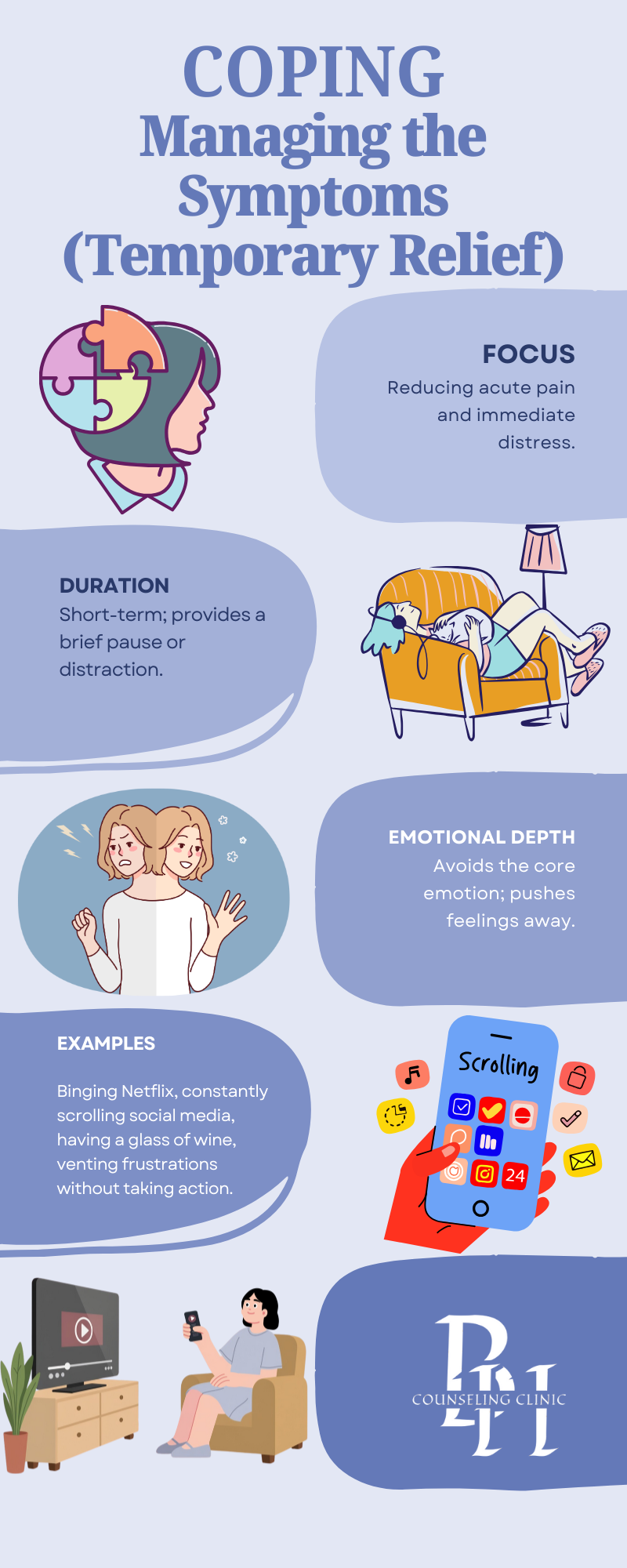
The Counselor's Perspective: Coping is necessary for survival. You cannot process trauma while in a panic attack. We teach healthy coping skills (like deep breathing or Vagus Nerve stimulation) to buy you time. However, if coping becomes your only strategy, you never address the root cause, leading to chronic anxiety and exhaustion.
2. Healing: Addressing the Root (Sustainable Change)
Healing is the profound, intentional work of understanding and repairing the underlying source of your pain. It is the journey toward lasting change.
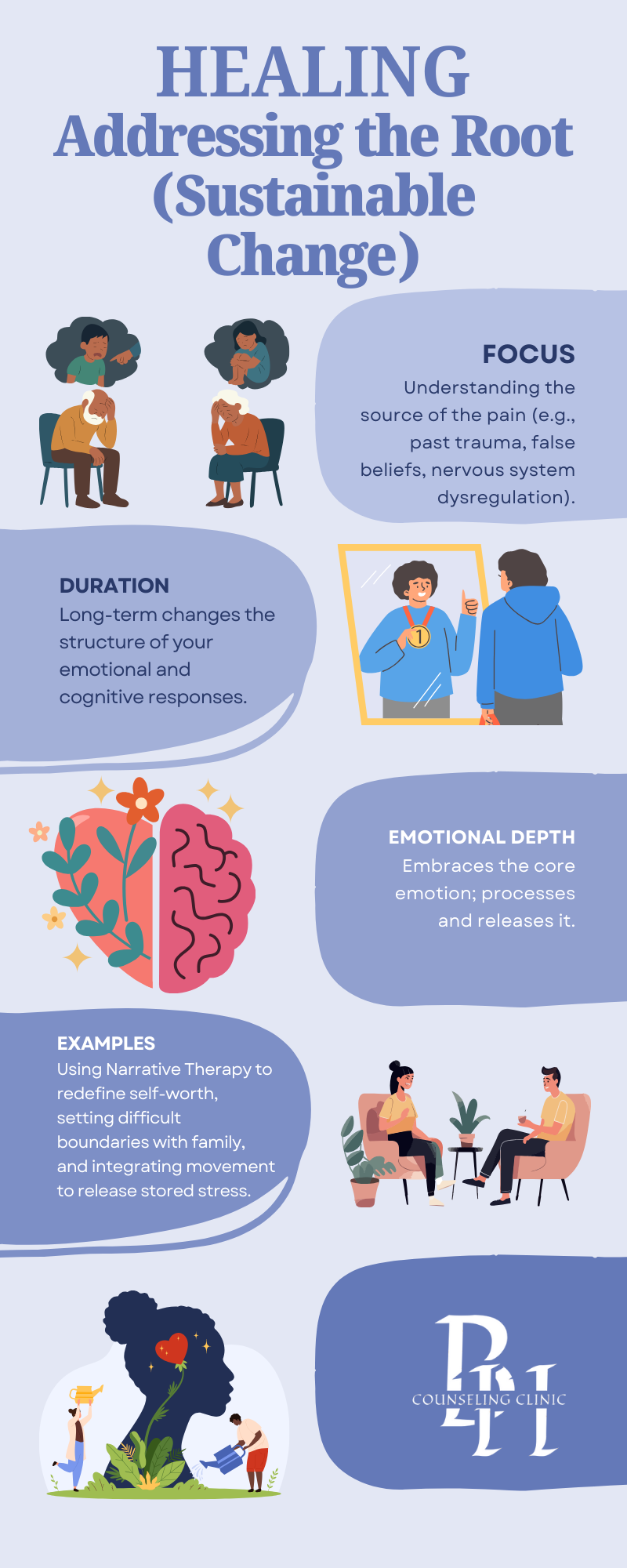
The Holistic Difference: Healing requires integrating all three parts of yourself: the Mind (understanding the trauma), the Body (releasing the stored tension), and the Spirit (reconnecting to purpose). When one area is neglected, true healing stalls.
3. Why You Need Both for Life Transitions
When navigating a complex transition (like divorce or a career change), you need a balanced approach:
Use Coping: To get through the day-to-day anxiety and stress (e.g., grounding yourself with a Three-Breath Anchor before a hard conversation).
Pursue Healing: To change the reason the transition is causing so much pain (e.g., processing the grief of the loss of the old life and establishing your new, confident identity).
Ready for Transformation in Little Rock?
If you feel like you are perpetually coping—constantly managing stress but never finding peace—it's time to shift your focus to deep healing.
BH Counseling Clinic is dedicated to providing specialized, holistic, and accessible therapy to help Little Rock adults and families move beyond the surface. We provide the expert guidance and safe space needed to confront the root causes of your distress.
Stop coping, start healing. Book your free 15-minute consultation today to begin your journey toward lasting change.
References
Yalom, I. D. (2002). The Gift of Therapy: An Open Letter to a New Generation of Therapists and Their Patients. Harper Perennial.
Levine, P. A. (2015). In an Unspoken Voice: How the Body Releases Trauma and Restores Goodness. North Atlantic Books.
Frankl, V. E. (2006). Man's Search for Meaning. Beacon Press.