
Emotional Literacy: Learning to Name What You're Really Feeling

Emotional literacy helps Little Rock adults understand stress, anxiety, and life transitions more clearly.
How often have you been asked how you feel and automatically replied, "Fine," or "Stressed"?
For many adults navigating the demands of career, family, and major life transitions, our emotional vocabulary shrinks. We lump complex feelings like fear, shame, and exhaustion under generic labels. This lack of precision—what we call low emotional literacy—is one of the biggest barriers to true mental wellness.
As a counselor who practices holistic therapy, I believe that learning to precisely name what you're really feeling is the first, most crucial step toward sustainable healing. At BH Counseling Clinic in Little Rock, AR, we teach clients to expand their emotional vocabulary to gain clarity, set better boundaries, and deepen their relationships.
1. Why Low Emotional Literacy Hinders Healing
If you can't name an emotion, you can't regulate it. When you only feel "stressed," your mind doesn't know where to direct its energy, so the overwhelm persists.
The Emotional Overload: Naming a strong emotion reduces its intensity. Research shows that putting feelings into words (a process called affect labeling) calms the amygdala—the brain's emotional center (Source: Neuroscience research on affect labeling).
The Vagus Nerve Connection: Low emotional literacy keeps your nervous system on high alert because you are receiving vague, undefinable distress signals. Precisely naming the feeling sends a clear signal, initiating a return to the "rest and digest" state.
2. Expanding Your Emotional Dictionary
Your goal isn't to be a feelings expert, but to move beyond the big, general feelings to the specific, actionable ones.
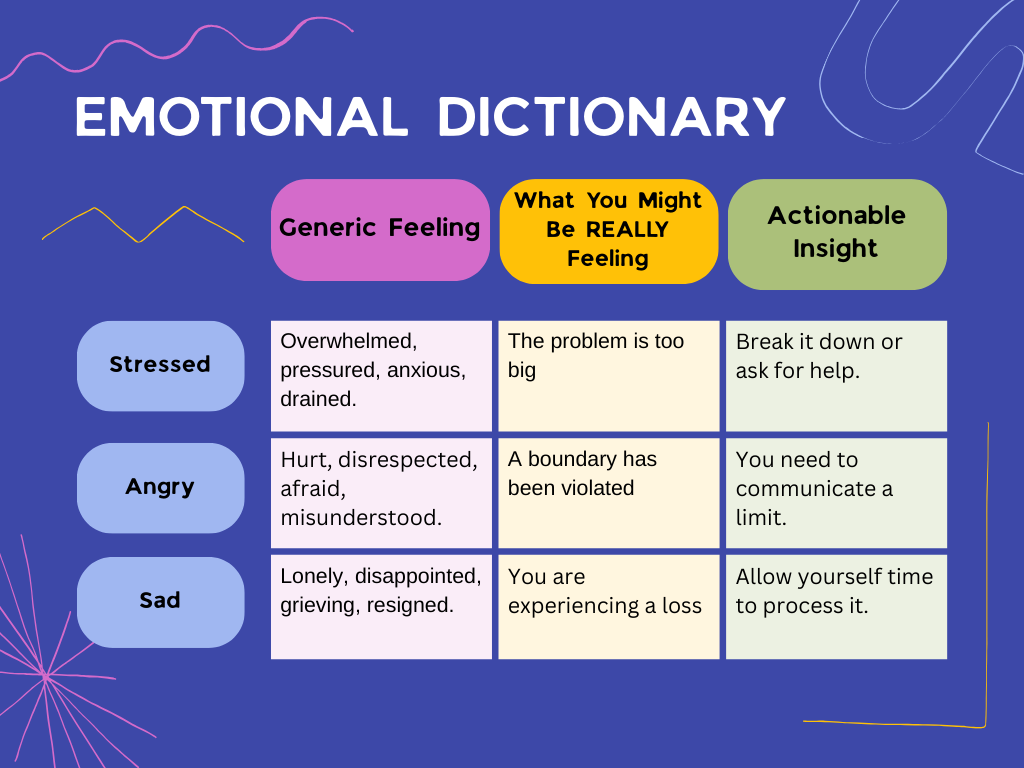
Specific emotions lead to specific solutions. Emotional literacy improves mental health clarity.
3. Emotional Literacy as a Tool for Transition
Emotional literacy is particularly vital when navigating complex life transitions (like a breakup or a career change) because the feelings are often mixed (e.g., excitement and fear).
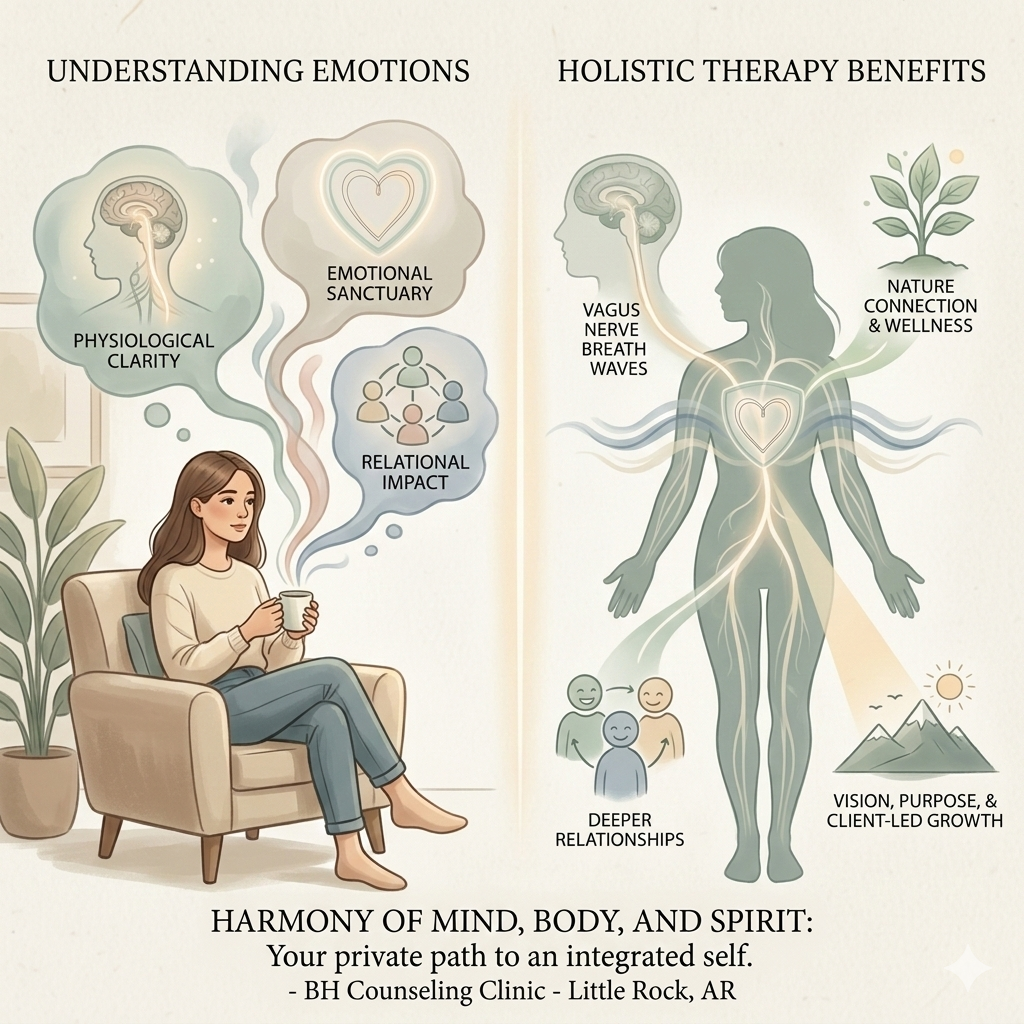
Naming emotions calms the brain and regulates the nervous system.
Setting Boundaries: In relationships (a core focus in MFT), being able to say, "When you interrupt me, I feel disrespected (anxiety) rather than just angry (generic)," opens the door for genuine repair and clear boundaries.
Self-Compassion: When you correctly identify your emotion (e.g., "I am feeling shame over the job loss, not worthless"), you can apply targeted self-compassion to the core issue, leading to deeper healing (Source: Kristin Neff’s Self-Compassion research).
Spiritual Clarity (Optional): When you can name feelings like doubt or spiritual dryness, you can address them openly, integrating them with your faith journey rather than suppressing them out of guilt.
Ready to Speak the Language of Your Feelings?

Therapy in Little Rock helps you understand your emotions so you can set boundaries and feel grounded again.
If your emotional life feels like a confusing black box, learning emotional literacy is the key to unlocking clarity, stability, and confidence.
BH Counseling Clinic provides the specialized, holistic, and accessible therapy you need to expand your inner vocabulary and navigate your Little Rock life with greater self-awareness.
Stop feeling "fine" and start feeling real. Book your free 15-minute consultation today to learn the language of your emotions.
References
Lieberman, M. D., Eisenberger, N. I., Crockett, M. J., Tom, S. M., Pfeifer, J. H., & Way, B. M. (2007). Putting feelings into words: affect labeling disrupts amygdala activity in response to affective stimuli. Psychological Science, 18(5), 421–428.
Neff, K. (2011). Self-Compassion: Stop Judging Yourself and Start Embracing Who You Are. William Morrow.
Gottman, J. M., & Silver, N. (2015). The Seven Principles for Making Marriage Work: A Practical Guide from the Country’s Foremost Relationship Expert. Harmony.