
The Vagus Nerve: Simple Body-Based Techniques to Calm Your Nervous System
Author: Britney Hardin, MBA, MS, LAC, LAMFT
When you feel overwhelmed by a life transition, your anxiety doesn't just stay in your head—it floods your body. Your heart pounds, your breath quickens, and you feel that familiar knot in your stomach.
This powerful, whole-body reaction is controlled by your Vagus Nerve (Latin for "wandering nerve"). It's the longest nerve in your body, running from your brainstem all the way down to your colon, acting as the main pathway between your mind and your body. Crucially, it governs your body’s "rest and digest" system.
As a counselor who practices holistic therapy, I know that talk therapy alone is sometimes not enough. You must regulate the nervous system first. At BH Counseling Clinic in Little Rock, AR, we teach clients these simple, body-based techniques to access the Vagus Nerve and quickly shift from panic to peace.
Understanding Your Nervous System
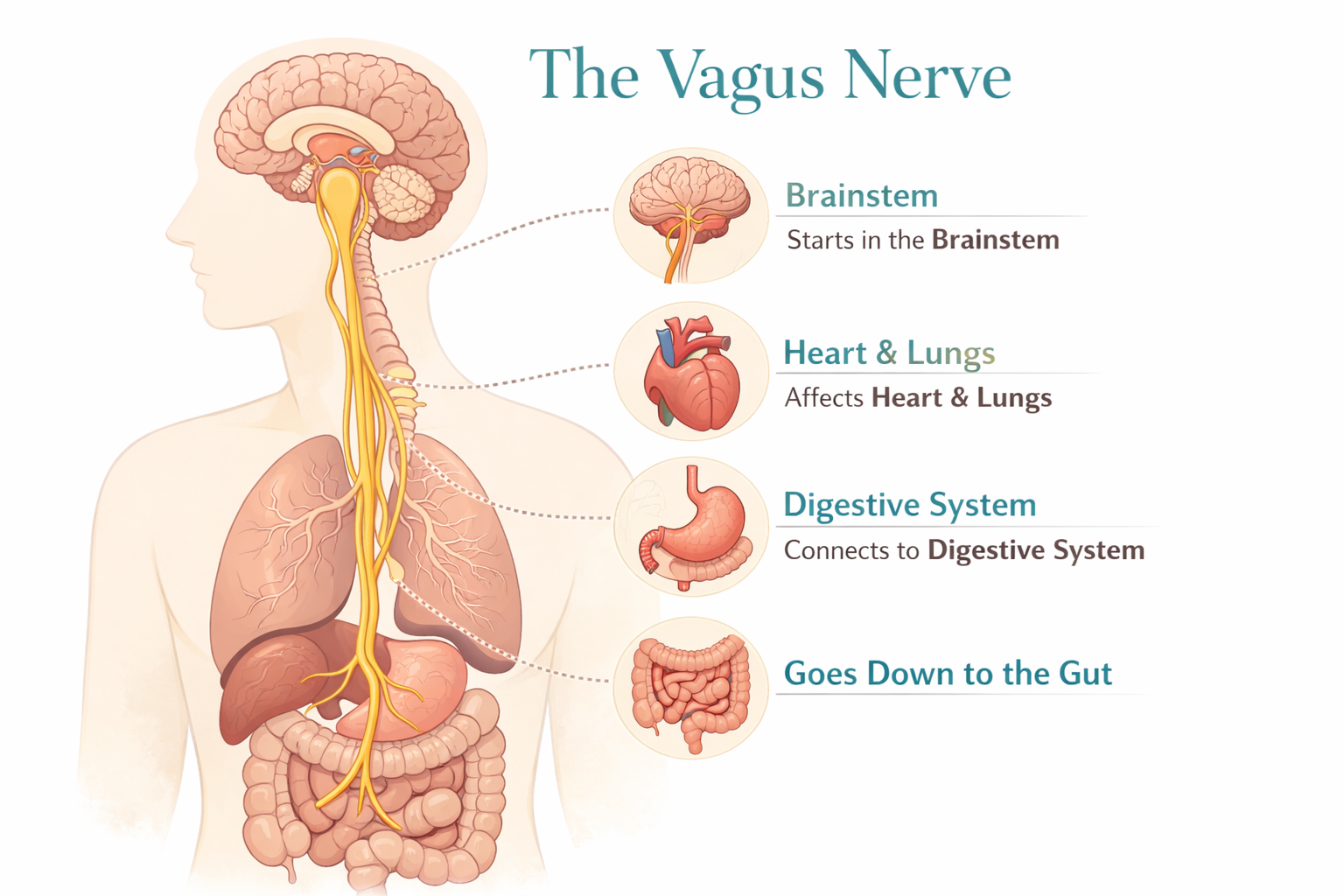
The Vagus Nerve is key to understanding why stress feels physical:
Sympathetic State ("Fight or Flight"): When you're stressed (e.g., job loss anxiety, relationship conflict), your Vagus Nerve signals a threat, activating your stress response.
Parasympathetic State ("Rest and Digest"): Vagal tone refers to the nerve's ability to quickly pull you out of the stress state and return you to calm. Strong vagal tone means high resilience.
The goal is to strengthen this vagal tone, making your nervous system more flexible.
Tool 1: The Hum & Sing (Vocal Vibration)

Singing in car before a difficult phone call, or when trying to calm down before sleep is one of the easiest ways to stimulate the Vagus Nerve.
One of the easiest ways to stimulate the Vagus Nerve is through your vocal cords, as the nerve runs right next to them.
The Technique: Sit up straight and take a slow, deep breath. As you exhale, make a loud, sustained humming sound (like "mmmmm") or sing a low note. Sustain the vibration for the entire exhale.
Why It Works: The low-frequency vibration mechanically stimulates the Vagus Nerve, sending a direct signal to the brain that you are safe (Source: Neuroscience and Polyvagal Theory research).
When to Use It: In the car during heavy Little Rock traffic, before a difficult phone call, or when trying to calm down before sleep.
Tool 2: The Cold Water Splash (Temperature Regulation)
Sudden, intense changes in temperature are a quick way to shock the Vagus Nerve into shifting the nervous system state.

The Technique: Go to the sink and splash ice-cold water directly onto your face, paying special attention to the area around your eyes and temples. Hold the sensation for 10-15 seconds.
Why It Works: This triggers the "mammalian dive reflex," which instantly slows the heart rate and shifts the system from high alert to calm (Source: Physiological studies on the dive reflex).
When to Use It: During an acute panic attack or moments of high emotional intensity. It’s an immediate reset button.
Tool 3: The Slow, Measured Breath (Respiration Rate)
While all breathing is important, controlled, slow breathing specifically targets the Vagus Nerve by prolonging the exhale.
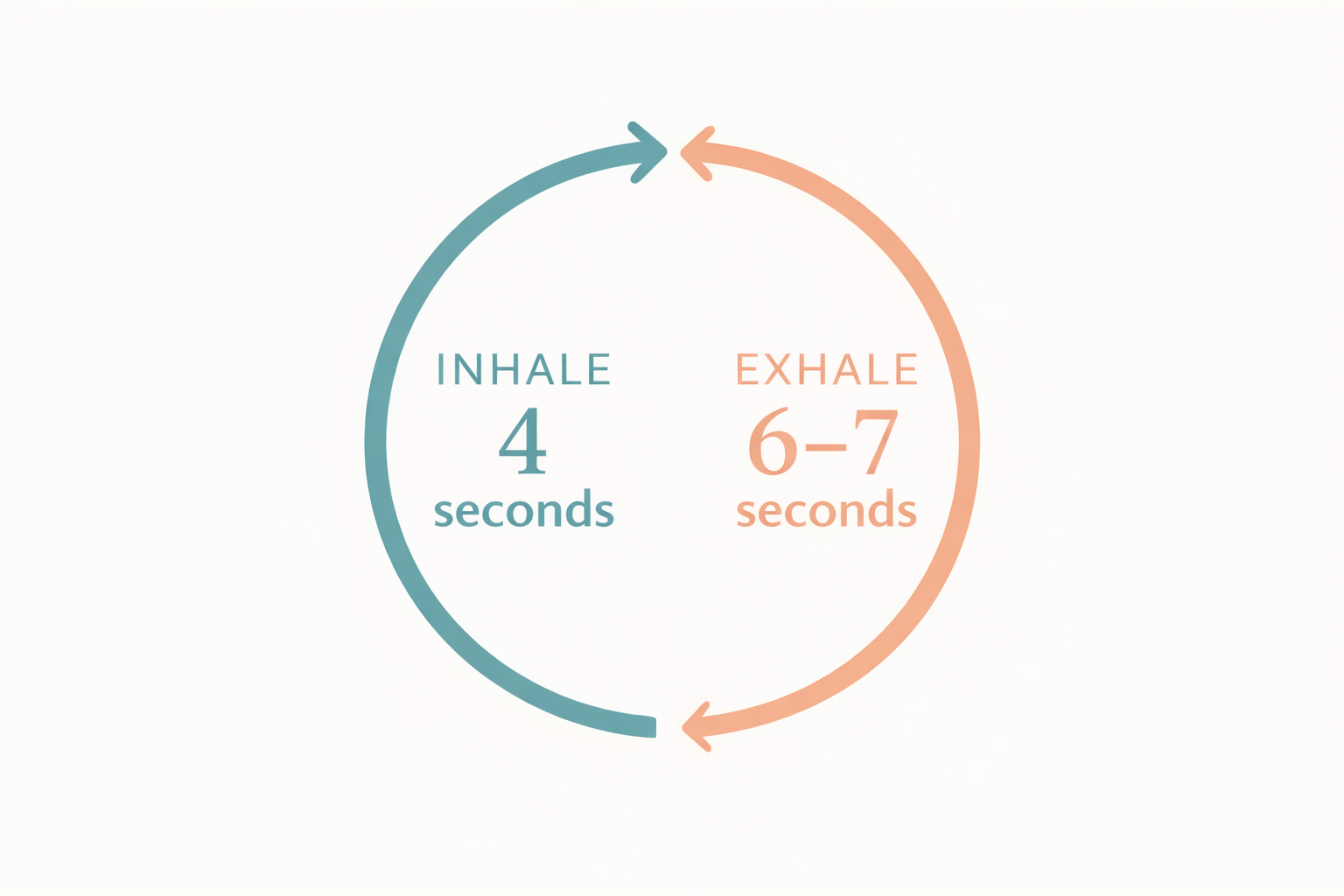
The Technique: Inhale slowly through your nose for a count of 4. Exhale slowly through pursed lips (as if blowing through a straw) for a count of 6 or 7. Repeat for 90 seconds.
Why It Works: The extended exhale is the primary signal to the Parasympathetic Nervous System to activate. It is a fundamental mechanism for reducing heart rate variability and improving vagal tone.
When to Use It: During moments of general anxiety, before a big decision, or as a daily practice for stress prevention.
Ready to Regulate Your Well-Being?
If the emotional weight of your life transition is showing up as chronic physical anxiety, it's time to integrate these body-based tools into your healing journey.
At BH Counseling Clinic in Little Rock, AR, our holistic, client-led therapy combines mind work with these physical techniques to create resilience that lasts.
Take control of your nervous system, not just your thoughts. Book your free 15-minute consultation today to start regulating your journey to peace.
FAQs
What is the vagus nerve and how does it affect anxiety?
The vagus nerve connects the brain to the heart, lungs, and digestive system. When activated properly, it helps shift the body from fight-or-flight mode into a calm, regulated state.
How can I quickly calm my nervous system during anxiety?
Techniques such as slow exhale breathing, humming, and cold water exposure stimulate the vagus nerve and reduce physical anxiety symptoms within minutes.
Does therapy help regulate the nervous system?
Yes. Holistic therapy combines cognitive techniques with body-based nervous system regulation to build long-term resilience.
References
Porges, S. W. (2011). The Polyvagal Theory: Neurophysiological Foundations of Emotions, Attachment, Communication, and Self-regulation. W. W. Norton & Company.
Ogden, P., Minton, K., & Pain, C. (2006). Trauma and the Body: A Sensorimotor Approach to Psychotherapy. W. W. Norton & Company.
Lehrer, P. M., & Woolfolk, R. L. (2007). Principles and Practice of Stress Management (3rd ed.). Guilford Press.
Britney Hardin, MBA, MS, LAC (A2503009), LAMFT (F2510001) is the founder of BH Counseling Clinic in West Little Rock, Arkansas. She holds dual specialization in General Counseling and Marriage and Family Therapy from John Brown University and brings over a decade of licensed ministry experience to her clinical practice. Supervised by Wade Fuqua (Arkansas License M1508006).