

Discipline vs. Grace: Finding Balance in Your Growth Journey
Are you stuck between being too hard on yourself or not holding yourself accountable at all? Discover how balancing discipline and grace can help you grow without burnout, shame, or staying stuck.

Too much discipline without grace often leads to burnout and exhaustion.
Author: Britney Hardin, MBA, MS, LAC, LAMFT
Most people approach growth with one mindset:
“I just need more discipline.”
More structure.
More consistency.
More self-control.
And while discipline is important—it’s only half of the equation.
Because for many of the clients I work with, especially those navigating anxiety, burnout, or major life transitions, discipline quickly turns into something else:
Perfectionism. Pressure. Shame.
At BH Counseling Clinic in Little Rock, Arkansas, we take a different approach:
Sustainable growth requires both discipline and grace.
If you’re noticing burnout, shame cycles, or feeling stuck, it may be helpful to understand the signs you may need a therapist.
When Discipline Turns Into Self-Punishment
On the surface, discipline looks like commitment.
But underneath, many clients are experiencing something very different.
It often sounds like:
• “I should be doing more.”
• “I can’t mess this up.”
• “I have to stay on track no matter what.”
And it shows up like this:
• Creating endless checklists just to feel “enough”
• Turning mistakes into punishment or “penance”
• Holding themselves to unrealistic standards
• Feeling exhausted from constantly trying to measure up
There may even be moments of success—where everything is working and others notice.
But when something goes wrong?
They don’t let it go.
Instead, they spiral into self-criticism—and sometimes even self-sabotage.
The standard becomes so high, it’s impossible to sustain (high-achievers).
When Grace Becomes Avoidance

Grace without discipline can leave you feeling stuck without direction.
On the other side, some clients lean heavily into grace—but without discipline.
This can sound like:
• “I’m human, I don’t need to be perfect.”
• “I’ll get to it later.”
• “It’s not that serious.”
And while self-compassion is important, without structure it can lead to:
• Lack of accountability
• Difficulty maintaining routines
• Frustration in relationships
• Feeling stuck without clear direction
Some may compare themselves to highly disciplined people and think:
• “They’re too intense”
—or—
• “They have it all together, I don’t even know where to start”
And often, they don’t fully see the impact—only that they’re “getting by.”
The Balance: Discipline and Grace

Real growth happens when discipline and grace work together.
Real growth doesn’t happen in extremes.
It happens in the middle.
Discipline gives you direction.
Grace allows you to stay on the journey.
At BH Counseling Clinic, this is where we help clients shift:
What This Balance Looks Like in Real Life
When clients begin to integrate both discipline and grace, the change is noticeable.
They start to:
• View mistakes as opportunities, not failures
• Ask: “What contributed to this?” instead of “What’s wrong with me?”
• Recognize and interrupt shame spirals
• Shift their internal narrative in real time
• Feel more present instead of stuck in overthinking
• Develop a clearer sense of identity and direction
Instead of being driven by pressure or avoidance…
they begin to move forward with intention and awareness.
Learning tools like simple breathwork techniques for anxiety can help you regulate your body before shifting your mindset.
A Real Example of This Shift

Growth starts with awareness, reflection, and intentional change.
A client came in feeling stuck in a cycle of shame and constant concern about how others viewed them.
Their thoughts were dominated by doubt, pressure, and comparison.
Through our work, we focused on:
• Building self-awareness
• Exploring past and present patterns
• Reframing how they interpreted mistakes and feedback
Over time, they began to:
• Discover their goals and identity
• Experience more confidence at work
• Improve relationships with their family
The shift wasn’t just behavioral—it was internal.
They moved from shame-driven discipline
to intentional growth with grace.
How to Start Practicing Discipline with Grace
This is where real, practical change happens.
Here are tools I often use with clients:
1. Daily Check-Ins (Build Awareness)
Pause and ask:
• What am I feeling right now?
• What contributed to today’s outcome?
• What do I need moving forward?
Awareness is the first step toward change.
2. Reframe the Narrative
Instead of:
“I messed up.”
→ Try: “What can I learn from this?”
Instead of:
“I can’t do this.”
→ Try: “I can’t do this yet.”
This is the power of yet.
3. Shift from Fixed to Growth Mindset
Fixed mindset:
“Failure means I’m not good enough.”
Growth mindset:
“Failure is feedback—it helps me improve.”
Example:
• “I’m not creative” → “I’m not creative yet”
• “I’m bad at this job” → “This feedback will help me grow”
4. Reset Without Quitting
Missing a day doesn’t mean starting over.
Grace says:
“Start again today.”
Discipline says:
“Stay committed to the goal.”
You need both.
5. Reflect with Purpose (Not Shame)
Look back to learn—not to dwell.
Ask:
• What worked?
• What didn’t?
• What can I do differently today?
Growth happens when reflection leads to action.

When you find balance, growth feels sustainable—not overwhelming.
Faith-Based Perspective (Optional Integration)
For many clients, this balance also reflects a deeper truth:
You are called to grow—but not condemned for being human.
Discipline aligns with effort and responsibility.
Grace aligns with forgiveness and compassion.
Together, they create a foundation for peace, resilience, and sustainable growth.
Final Thought: Growth Shouldn’t Feel Like Punishment
If your growth journey feels exhausting, overwhelming, or discouraging…
It may not be a lack of effort.
It may be a lack of balance.
You don’t need to choose between discipline or grace.
You need both.
Once you’re ready to take the next step, learning how to choose the right therapist for you can make all the difference.
Ready to Find Balance in Your Growth?
At BH Counseling Clinic in Little Rock, we help clients:
• Break free from perfectionism and shame cycles
• Build structure that actually works
• Develop self-awareness and emotional regulation
• Grow with clarity, confidence, and purpose
At BH Counseling Clinic, we offer therapy in Little Rock, Arkansas designed to help clients move from burnout to balanced growth.
Book your free 15-minute consultation today and start building a growth process that is both structured and sustainable.
References
Neff, K. (2011). Self-Compassion: Stop Judging Yourself and Start Embracing Who You Are. William Morrow.
Prochaska, J. O., & DiClemente, C. C. (1983). Stages and processes of self-change of smoking: Toward an integrative model of change. Journal of Consulting and Clinical Psychology, 51(3), 390–395.
Pargament, K. I. (2013). Spiritually Integrated Psychotherapy: Understanding and Addressing the Sacred. Guilford Press.
Britney Hardin, MBA, MS, LAC (A2503009), LAMFT (F2510001) is the founder of BH Counseling Clinic in West Little Rock, Arkansas. She holds dual specialization in General Counseling and Marriage and Family Therapy from John Brown University and brings over a decade of licensed ministry experience to her clinical practice. Supervised by Wade Fuqua (Arkansas License M1508006).

The Power of Breathwork: Simple Practices to Use When You're Stuck
When you feel stuck—mentally, emotionally, or physically—it’s not just in your head. Your body is holding the stress. In this guide, you’ll learn simple, therapist-backed breathwork techniques to calm your nervous system, reduce anxiety, and help you move forward with clarity.
Have you ever felt stuck—but couldn’t explain why?
Not just mentally…
but physically, emotionally, and even spiritually.
Many of the clients I work with describe it like this:

Feeling stuck isn’t just mental—your body is holding the stress.
• “I’m not motivated.”
• “I know I want more, but I don’t have the energy.”
• “I’m always busy, but I never feel caught up.”
• “I feel burned out and frozen at the same time.”
For some, it looks like constantly being on the go—never getting off the roller coaster.
For others, it feels like shutdown—knowing what needs to be done but feeling unable to move.
Here’s what most people don’t realize:
That “stuck” feeling isn’t just mental—it’s happening in your body.
Why You Feel Stuck (And Why Thinking Harder Doesn’t Help)

Shallow breathing keeps you in stress—deep breathing signals safety.
When you’re overwhelmed, anxious, or burned out, your body shifts into a stress response.
Your breathing becomes:
• Shallow
• Rapid
• Held high in your chest
This signals to your brain:
“We’re not safe yet.”
And when your nervous system feels unsafe, your brain struggles to:
• Think clearly
• Make decisions
• Regulate emotions
This is why so many people try to “think their way out” of stress—and feel frustrated when it doesn’t work.
I see this often with clients who:
• Make lists and set goals
• Push themselves to keep going
• Try to stay productive
• Ignore tension in their body
• End up overwhelmed or doom-scrolling
They’re using logic to solve what is actually a nervous system issue.
Breathwork: Your Nervous System’s Reset Button
As a counselor at BH Counseling Clinic in Little Rock, I take a holistic approach to therapy—because real change doesn’t just happen in your thoughts. It happens in your body, too.
One of the most effective tools I use with clients is breathwork.
Why?
Because your breath is directly connected to your nervous system through the vagus nerve—your body’s built-in calming system.

Your breath is the fastest way to reset your nervous system.
The Key Rule:
Longer exhales signal safety.
When you slow and lengthen your breath, you tell your body:
→ “You can come out of fight-or-flight.”
→ “You are safe enough to relax.”
And when that happens, everything starts to shift.
What I See When Clients Use Breathwork
The changes are often noticeable—even in session.
Physically:
• Shoulders drop
• Breathing slows
• Body tension releases (sometimes instantly)
Emotionally:
• Less reactive
• More open and present (develops over time)
Mentally:
• Clearer thinking
• Better decision-making (varies by person)
Internally:
• Increased awareness
• Stronger mind-body connection
It’s not about forcing change—it’s about creating the conditions for change.
A Real Example: From Stuck to Regulated
A client came in feeling anxious, stressed, and stuck in a cycle they couldn’t break.
They knew what they should be doing—but couldn’t get themselves to do it.
We introduced simple breathwork.
During the session, I watched their shoulders drop.
Their speech slowed.
Their anxiety visibly reduced.
Over time, they became more aware of their triggers.
Their muscle tension decreased.
Their anxiety became more manageable.
They weren’t just coping—they were learning how to regulate their body and move forward with clarity.
Simple Breathwork Practices You Can Use Anywhere
These are practical tools you can start using immediately—whether you’re at home, at work, or in the middle of a stressful moment.
1. The 4-7-8 Breath (For Anxiety & Sleep)
Best for: calming your body quickly
• Inhale through your nose for 4
• Hold for 7
• Exhale slowly through your mouth for 8
Repeat 4 times.
2. Square Breathing (For Overwhelm & Focus)
Best for: grounding in high-stress moments
• Inhale for 4
• Hold for 4
• Exhale for 4
• Hold for 4
Repeat for 1–2 minutes.
3. Vagal Hum Breath (For Freeze & Shutdown)
Best for: coming out of emotional shutdown
• Take a deep breath
• Exhale slowly while humming “MMMMM”
• Feel the vibration in your chest and throat
This vibration directly stimulates your vagus nerve—helping your body feel safe again.
Who Breathwork Helps Most (And When It Feels Hard)
Especially helpful for:
• High-functioning anxiety
• Burnout and chronic stress
• Trauma and emotional overwhelm
• Faith-based clients seeking mind-body-spirit alignment
May feel challenging at first for:
• People who feel restless or “can’t sit still”
• Those disconnected from their body
• People who feel skeptical or unsure
That’s okay.
Breathwork can be adapted.

Breathwork can be simple—even something you do alongside your child.
I often help clients:
• Turn it into simple, engaging exercises
• Use it with their children
• Integrate it into daily routines
It’s not one-size-fits-all—it’s flexible and practical.
When Breathwork Isn’t Enough
Breathwork is powerful—but it’s not meant to replace deeper work.
It creates the internal stability needed for:
• Processing emotions
• Changing thought patterns
• Navigating life transitions
If you’re feeling consistently stuck, overwhelmed, or burned out, it may be time to explore deeper support.
If you’re unsure, you can start here:
→ “How Do I Know If I Need a Therapist?”
And when you’re ready:
→ “How to Choose the Right Therapist for You”
Final Thought: Unstick Your Mind by Unsticking Your Breath

When your body is calm, your mind can finally think clearly.
You don’t have to keep forcing your way through stress.
You don’t have to stay stuck in cycles of overthinking, burnout, or shutdown.
Sometimes, the most powerful place to start…
is your breath.
Ready to Go Deeper?
At BH Counseling Clinic, therapy is designed to help you:
• Regulate your nervous system
• Understand your patterns
• Gain clarity and direction
• Move forward with confidence
Book your free 15-minute consultation today and start learning how to use tools like breathwork to support your healing, growth, and next season of life.
References
Porges, S. W. (2011). The Polyvagal Theory: Neurophysiological Foundations of Emotions, Attachment, Communication, and Self-regulation. W. W. Norton & Company.
Lehrer, P. M., & Woolfolk, R. L. (2007). Principles and Practice of Stress Management (3rd ed.). Guilford Press.
Levine, P. A. (2015). In an Unspoken Voice: How the Body Releases Trauma and Restores Goodness. North Atlantic Books.

How to Choose the Right Therapist for You
Choosing a therapist can feel overwhelming—especially if you’ve tried therapy before and it didn’t help. The truth is, not every therapist is the right fit for every person. In this guide, you’ll learn exactly what to look for, what to avoid, and how to find a therapist who truly understands you and helps you make real progress.

Finding the right therapist starts with feeling understood and safe.
Choosing a therapist can feel overwhelming.
You might be wondering:
“How do I know who’s actually right for me?”
With so many options available, it’s easy to feel stuck or unsure where to start. And for many people, past experiences—or even assumptions about therapy—can make the decision even harder.
At BH Counseling Clinic, one of the most common things I hear from clients is:
“I didn’t realize therapy could feel like this.”
The truth is, finding the right therapist can completely change your experience—and your outcomes.
Common Mistakes People Make When Choosing a Therapist

Feeling overwhelmed is often the first sign it’s time to seek support.
Before we talk about what to look for, it’s important to understand what often goes wrong.
Here are some of the most common mistakes I see:
Choosing Based on Availability Alone
While scheduling matters, choosing the first available therapist doesn’t always lead to the best fit.
Not Checking Specialization
Not every therapist works with the same concerns. If you’re dealing with anxiety, relationship challenges, or life transitions, you want someone experienced in those areas.
Expecting Instant Results
Therapy is a process. Growth takes time, consistency, and willingness to engage.
Ignoring the Importance of Connection
This is one of the biggest factors.
Many people don’t:
• Read therapist bios
• Ask about their approach
• Request a consultation
• Share past negative experiences
• Communicate goals or concerns
But these steps matter.
Therapy is not just about credentials—it’s about fit.
What to Look for in the Right Therapist

Clarity starts with understanding your thoughts, emotions, and patterns.
So what actually makes a therapist the right one for you?
From my clinical experience, these are the factors that matter most:
1. You Feel Safe and Understood
You should feel like you can show up honestly without fear of judgment.
2. Communication Style Aligns with You
Some therapists are more direct. Others are more reflective. The right fit will match how you process and communicate.
3. Their Approach Matches Your Needs
Whether it’s structured tools, emotional processing, or faith-based integration—you want an approach that works for you.
4. Cultural or Faith Alignment (If Important to You)
For many clients, having a therapist who understands their values, background, or faith makes a significant difference.
5. You’re Getting Practical Tools
Therapy should go beyond venting. You should leave sessions with insight and something you can apply.
6. Real-Life Factors Fit Your Lifestyle
This includes:
• Schedule availability
• Financial considerations
• Location or telehealth options
• Word-of-mouth recommendations
All of these impact consistency—and consistency drives results.
What a “Good Fit” Actually Feels Like

The right environment can help you feel safe, open, and ready to grow.
Many people don’t know what to expect when therapy is working.
Here’s what clients often say when they’ve found the right therapist:
• “I finally feel understood.”
• “I can be honest without fear.”
• “This feels different than past therapy.”
• “I’m actually making progress.”
• “You actually explain things.”
• “I didn’t know therapy could be more than venting.”
That last one is important.
Therapy should not feel like you’re just talking in circles.
It should feel like you’re moving forward.
A Real Example of Finding the Right Fit

The right therapist helps you move from stuck to thriving.
A client once came in feeling anxious and overwhelmed during a major life transition.
They had tried therapy before, but it felt like repeated venting sessions with no real progress.
In our first session, we slowed things down.
We grounded, reduced immediate stress, and clarified their goals and vision for progress.
From there, we focused on practical steps and tools to manage anxiety and move forward.
Over time, they were able to:
• Reduce overwhelm
• Gain clarity
• Focus on next steps
• Thrive in their transition
The difference wasn’t just therapy—it was the right approach and fit.
When It’s Okay to Switch Therapists
This is something many people need to hear:
You always have the right to change therapists.
Even if someone is qualified, they may not be the right fit for you.
Here are signs to pay attention to:
• You don’t feel heard after multiple sessions
• You’re not seeing progress over time
• You feel judged or misunderstood
• There’s no clear direction or tools being offered
If you’ve tried to communicate your needs and nothing changes, it’s okay to explore other options.
Finding the right therapist is about your growth, not staying in something that isn’t working.
Final Thoughts: The Right Therapist Changes Everything
Choosing a therapist isn’t about finding someone perfect.
It’s about finding someone who:
• Understands you
• Meets you where you are
• Provides tools that actually work
• Helps you move forward
The right fit can take therapy from feeling frustrating or unclear…
to something that is empowering, structured, and life-changing.

Choosing the right therapist is about fit—not just availability.
Ready to Find the Right Fit?
At BH Counseling Clinic, therapy is designed to be collaborative, personalized, and practical.
Whether you’re navigating anxiety, relationship challenges, or a major life transition, you deserve support that actually helps you grow.
Schedule a consultation today and take the first step toward finding the right fit for you.

How Do I Know If I Need a Therapist?
It’s one of the most common questions people ask before reaching out:
“Do I actually need therapy… or should I be able to handle this on my own?”
If you’ve had that thought, you’re not alone.
At BH Counseling Clinic, many clients come in unsure if their struggles are “serious enough” for counseling. Often, they’ve been carrying things on their own for a long time before reaching out.
The reality is — therapy isn’t just for crisis.
It’s for clarity, growth, and learning how to navigate life in a healthier way.
Let’s break down how to recognize when it might be time.

Wondering if you need therapy often starts with feeling overwhelmed, stuck, or unsure where to turn.
It’s one of the most common questions people ask before reaching out:
“Do I actually need therapy… or should I be able to handle this on my own?”
If you’ve had that thought, you’re not alone.
At BH Counseling Clinic in Little Rock, many clients come in unsure if their struggles are “serious enough” for counseling. Often, they’ve been carrying things on their own for a long time before reaching out.
The reality is — therapy isn’t just for crisis.
It’s for clarity, growth, and learning how to navigate life in a healthier way.
Let’s break down how to recognize when it might be time.
Common Thoughts That Signal You May Need Therapy

Many people delay therapy because they feel like they should be able to figure it out alone.
Most people don’t start with a clear decision to seek counseling.
They start with internal tension that sounds like:
• “I should be able to handle this on my own.”
• “I’ve tried everything and nothing is working.”
• “I don’t feel like myself anymore.”
These thoughts are important.
They often show that:
You’ve been trying to cope independently
What used to work isn’t working anymore
Something internally has shifted
And that’s usually where support becomes helpful.
Subtle Signs You Might Need a Therapist (That People Often Miss)

The signs you need therapy aren’t always obvious—but they show up in patterns over time.
From a clinical perspective, there are patterns I consistently see in clients before they realize they need help.
You don’t have to be in crisis to benefit from therapy.
Here are some of the most common signs:
1. Avoidance Is Becoming Your Go-To
You find yourself putting things off, avoiding conversations, or distracting yourself just to get through the day.
2. You Feel Emotionally Numb or Disconnected
You’re not necessarily overwhelmed — but you don’t feel fully present either.
3. You’re High-Functioning… but Exhausted

You can be high-functioning on the outside and still feel completely exhausted on the inside.
On the outside, everything looks fine.
On the inside, you’re burnt out, tired, and constantly pushing through.
4. You Keep Repeating the Same Patterns
Especially in relationships — different people, same outcome.
5. You’re More Irritable or Withdrawn Than Usual
Small things feel bigger. You may be pulling away from people or feeling easily frustrated.
If you recognize yourself in even one or two of these, it’s worth paying attention.
“It’s Not That Bad Yet” — The Most Common Delay
One of the biggest reasons people wait to start therapy is this belief:
• “It’s not that bad yet.”
• “I should be able to fix this myself.”
• “I don’t have time or money.”
Here’s the truth:
By the time you’re questioning whether you need therapy…
something is already asking for your attention.
Therapy isn’t about waiting until things fall apart.
It’s about addressing things before they do.
What Actually Changes When You Start Therapy

Therapy provides a space to process, understand, and move forward with support.
Many people are unsure what therapy will really do for them.
From my experience, here’s what begins to shift when clients engage in the process:
Increased Awareness
You start understanding your thoughts, emotions, and patterns more clearly.
Emotional Regulation
Instead of feeling overwhelmed or shut down, you learn how to respond with intention.
Clearer Decision-Making
You gain confidence in your choices instead of second-guessing everything.
Healthier Relationships
You communicate better, set boundaries, and recognize patterns sooner.
Reduced Anxiety
You learn tools to manage overthinking and stress in everyday life.
Stronger Identity and Sense of Purpose
You begin to feel more grounded in who you are and where you're going.
Therapy isn’t just about talking — it’s about transformation.
I once worked with a young adult who came in feeling overwhelmed and unsure of what to do next in life.
They had tried therapy before but left feeling unheard.
They described feeling stuck, stressed, and disconnected from themselves.
Using a person-centered approach, I focused on creating a space where they felt understood first — not rushed or “fixed.”
From there, we used practical tools rooted in cognitive behavioral therapy to help them focus on the present and manage daily responsibilities.
Over time, they gained clarity, reduced their stress, and were able to confidently step into their next season of life.
That’s what therapy should feel like:
being supported while you figure things out — not judged for not having it all together.
When You Should Not Wait to Start Therapy
There are certain moments when I strongly encourage people not to wait.
If you are noticing that you feel:
• Stuck
• Burnt out
• Constantly tired
• Irritable or frustrated
• Restless emotionally, mentally, or even spiritually
It’s time to pause and check in.
Because something has shifted.
And it’s extremely difficult to fully understand that shift on your own — especially while you’re in it.
Therapy provides a space for someone to step into that confusion with you, helping you see what’s really going on and how it’s impacting your life as a whole.
If you are concerned about the first session, check out the blog, “What to expect in your first session in Arkansas”
If you’re searching for a therapist in Little Rock, Arkansas, understanding these signs can help you decide when it’s time to reach out.
Therapy Is Not Just About Coping — It’s About Thriving
Mental health counseling, from a holistic perspective, is about:
• Growing
• Overcoming
• Healing
• Thriving
It’s about becoming more aligned with who you are and how you want to live.
You don’t have to have everything figured out before you start.

Therapy helps you move from feeling stuck to stepping into clarity and confidence.
Final Thoughts: You Don’t Have to Do This Alone
If you’ve been questioning whether you need therapy, that question itself matters.
You don’t need a crisis to justify support.
You just need a willingness to explore what’s going on and take a step toward something better.
Ready to Take the Next Step?
At BH Counseling Clinic in Little Rock, AR, counseling is designed to meet you where you are — whether you're navigating a faith crisis, anxiety, relationship challenges, or a major life transition.
You don’t have to figure it out alone.
Schedule your first session today and start gaining clarity, confidence, and direction for your next season of life.

What Types of Counseling Are Available — And How to Know What’s Right for You
If you’ve ever searched for a therapist, you’ve probably asked: “What types of counseling are even available?”
The answer can feel overwhelming. Individual therapy, family therapy, faith-based counseling, CBT, person-centered therapy — the options seem endless, and most websites list them without explaining what they actually mean for your real life.
Life transitions can feel overwhelming, but counseling can provide clarity, support, and practical tools for navigating change.
If you’ve ever searched for a therapist, you’ve probably asked: “What types of counseling are even available?”
The answer can feel overwhelming. Individual therapy, family therapy, faith-based counseling, CBT, person-centered therapy — the options seem endless, and most websites list them without explaining what they actually mean for your real life.
At BH Counseling Clinic, I work with young adults navigating major life transitions, parents and blended families trying to create stability, and faith-based clients who want care that respects their spiritual values. Over the years, I’ve learned that people aren’t just looking for a “type” of counseling — they’re looking for an approach that finally helps them feel understood and make progress.
Here’s a practical guide to the main types of counseling available — and how they may support you.
Individual Counseling

Individual counseling creates a safe space to process emotions, develop coping strategies, and gain clarity about your next steps.
Individual therapy is the most common form of counseling. You meet one-on-one with a therapist to work through personal challenges, emotional struggles, and life transitions.
This type of counseling is especially helpful if you are:
• Feeling anxious, overwhelmed, or mentally exhausted
• Navigating a breakup, move, career shift, or season of grief
• Struggling with identity, purpose, or direction
• Experiencing relationship conflict but want to work on yourself first

Many people seek counseling for anxiety, burnout, and overthinking during major life transitions.
Many young adults I see come in feeling stuck in what I call a “life fog.” They know something isn’t working, but they can’t put it into words. Individual counseling creates space to slow down, sort through the noise, and develop practical tools to move forward.
My Clinical Approach
I often integrate:
Person-Centered Therapy — This approach focuses on helping clients feel deeply heard and understood without judgment. Many people come to me after past therapy experiences where they felt rushed, dismissed, or misunderstood. Creating emotional safety is always the starting point.
Cognitive Behavioral Therapy (CBT)— CBT helps you identify unhelpful thought patterns, emotional triggers, and behaviors that keep you stuck. But therapy shouldn’t feel like a textbook exercise. I translate CBT into practical, everyday tools that make sense for your personality and lifestyle.
One client, a young adult navigating a major life transition, came to therapy feeling overwhelmed and directionless. They had tried therapy before but left feeling unheard. Through a person-centered approach, I created space for their story without pressure or assumptions. Using CBT techniques, we focused on present-moment awareness and manageable daily priorities. Over time, they gained clarity, reduced stress, and confidently stepped into their next season of life.
That’s the power of individualized care: therapy that fits you, not a one-size-fits-all formula.
Family Counseling

Family counseling helps improve communication, resolve conflicts, and strengthen relationships within the household.
Family counseling focuses on improving communication, resolving conflict, and strengthening relationships within the family system. This can include parents and children, blended families, or households experiencing major change.
Family therapy is helpful when:
• Communication feels tense or ineffective
• Blended family dynamics create stress
• Parenting approaches feel misaligned
• A major transition is impacting the household
• Conflict keeps repeating without resolution
Rather than placing blame on one person, family therapy looks at patterns, roles, and emotional dynamics. When one person grows, the entire system can shift.
In my work with families, I often help parents understand the emotional needs beneath behaviors, improve communication tools, and rebuild connection. Especially in blended families, therapy provides a neutral space where each member feels seen and valued.
Faith-Based Counseling

Faith-based counseling integrates spiritual values with evidence-based mental health care.
Faith-based counseling integrates spiritual values into the therapeutic process for clients who want that support. This is not about pressure or preaching — it’s about alignment.
Faith-informed counseling can help when:
• You’re wrestling with spiritual guilt or shame
• You feel disconnected from your faith during difficult seasons
• You want therapy that respects your beliefs
• Life transitions are challenging your sense of purpose
Many clients want to explore how their faith intersects with mental health but fear being judged or misunderstood. My approach allows clients to decide how much spiritual integration they want. For some, faith is central to every conversation. For others, it’s simply a supportive foundation.
Healing is most sustainable when it aligns with your core values.
The Most Important Factor: Fit
Here’s what many people don’t realize:
The “type” of counseling matters less than whether the therapist understands you.
I’ve worked with many clients who previously tried therapy but didn’t experience progress. Often, they weren’t resistant to therapy — they just hadn’t found an approach tailored to how they think, communicate, and process emotions.
My philosophy is simple:
Meet clients where they are.
Find tools that fit how they operate.
Translate growth into their language.
Therapy should feel like a collaborative process, not a clinical checklist.
How to Choose the Right Counseling for You

Counseling helps people move from feeling stuck to stepping confidently into their next season of life.
If you’re unsure where to start, ask yourself:
• Do I want to focus on personal growth? → Individual counseling
• Are relationship dynamics affecting daily life? → Family counseling
• Do I want spiritual values included in care? → Faith-based counseling
• Am I navigating a major life transition? → Individual counseling with transition-focused support
You don’t have to have everything figured out before starting. Clarity often comes through the process, not before it.
Final Thoughts
Seeking counseling is not a sign of weakness — it’s a decision to grow intentionally.
The right type of counseling provides:
• Emotional clarity
• Practical coping tools
• Healthier relationships
• Confidence in life transitions
• Alignment between mental health and personal values
Most importantly, it provides a space where you feel seen, heard, and supported.
If you’re navigating change, feeling overwhelmed, or simply ready for growth, counseling can help you move from surviving to thriving — one step at a time.
Ready to Take the Next Step?
If you’re navigating anxiety, relationship challenges, or a major life transition, you don’t have to figure it out alone.
At BH Counseling Clinic, counseling is designed to meet you where you are and help you build practical tools for real life.
Whether you're seeking individual counseling, family support, or faith-informed care, therapy can help you gain clarity, strengthen relationships, and move forward with confidence.
Schedule your first appointment today and start building the next chapter of your life with support.
Emotional Literacy: Learning to Name What You're Really Feeling
How often have you been asked how you feel and automatically replied, "Fine," or "Stressed"?
For many adults navigating the demands of career, family, and major life transitions, our emotional vocabulary shrinks. We lump complex feelings like fear, shame, and exhaustion under generic labels. This lack of precision—what we call low emotional literacy—is one of the biggest barriers to true mental wellness.
As a counselor who practices holistic therapy, I believe that learning to precisely name what you're really feeling is the first, most crucial step toward sustainable healing. At BH Counseling Clinic in Little Rock, AR, we teach clients to expand their emotional vocabulary to gain clarity, set better boundaries, and deepen their relationships.

Emotional literacy helps Little Rock adults understand stress, anxiety, and life transitions more clearly.
How often have you been asked how you feel and automatically replied, "Fine," or "Stressed"?
For many adults navigating the demands of career, family, and major life transitions, our emotional vocabulary shrinks. We lump complex feelings like fear, shame, and exhaustion under generic labels. This lack of precision—what we call low emotional literacy—is one of the biggest barriers to true mental wellness.
As a counselor who practices holistic therapy, I believe that learning to precisely name what you're really feeling is the first, most crucial step toward sustainable healing. At BH Counseling Clinic in Little Rock, AR, we teach clients to expand their emotional vocabulary to gain clarity, set better boundaries, and deepen their relationships.
1. Why Low Emotional Literacy Hinders Healing
If you can't name an emotion, you can't regulate it. When you only feel "stressed," your mind doesn't know where to direct its energy, so the overwhelm persists.
The Emotional Overload: Naming a strong emotion reduces its intensity. Research shows that putting feelings into words (a process called affect labeling) calms the amygdala—the brain's emotional center (Source: Neuroscience research on affect labeling).
The Vagus Nerve Connection: Low emotional literacy keeps your nervous system on high alert because you are receiving vague, undefinable distress signals. Precisely naming the feeling sends a clear signal, initiating a return to the "rest and digest" state.
2. Expanding Your Emotional Dictionary
Your goal isn't to be a feelings expert, but to move beyond the big, general feelings to the specific, actionable ones.
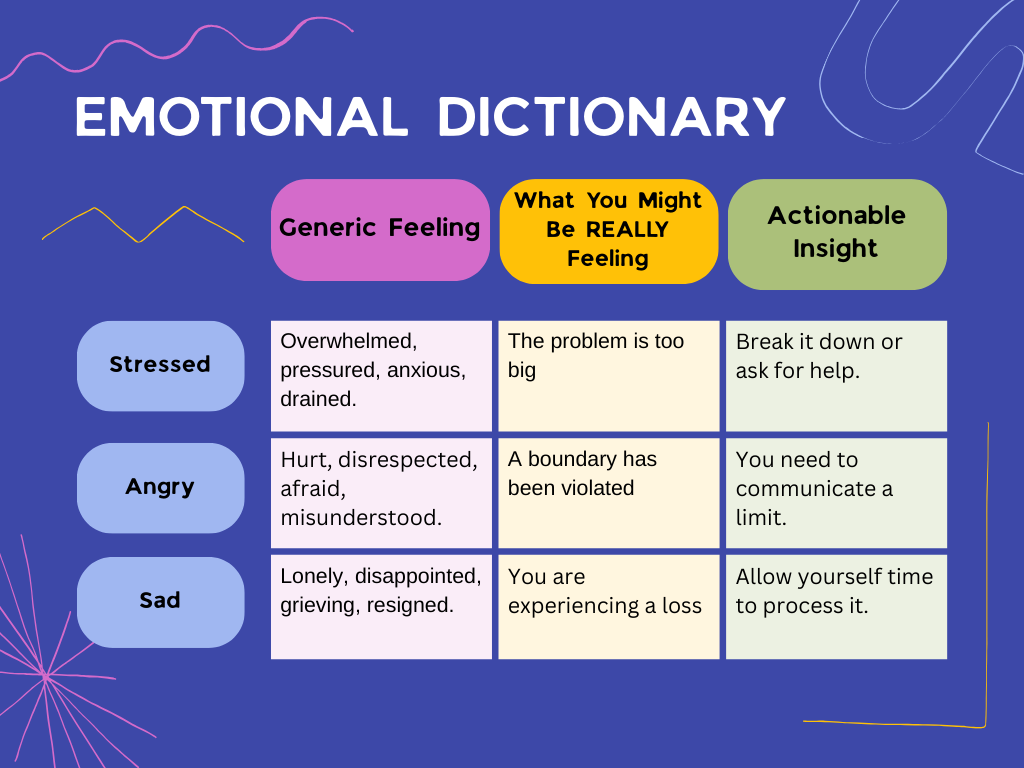
Specific emotions lead to specific solutions. Emotional literacy improves mental health clarity.
3. Emotional Literacy as a Tool for Transition
Emotional literacy is particularly vital when navigating complex life transitions (like a breakup or a career change) because the feelings are often mixed (e.g., excitement and fear).
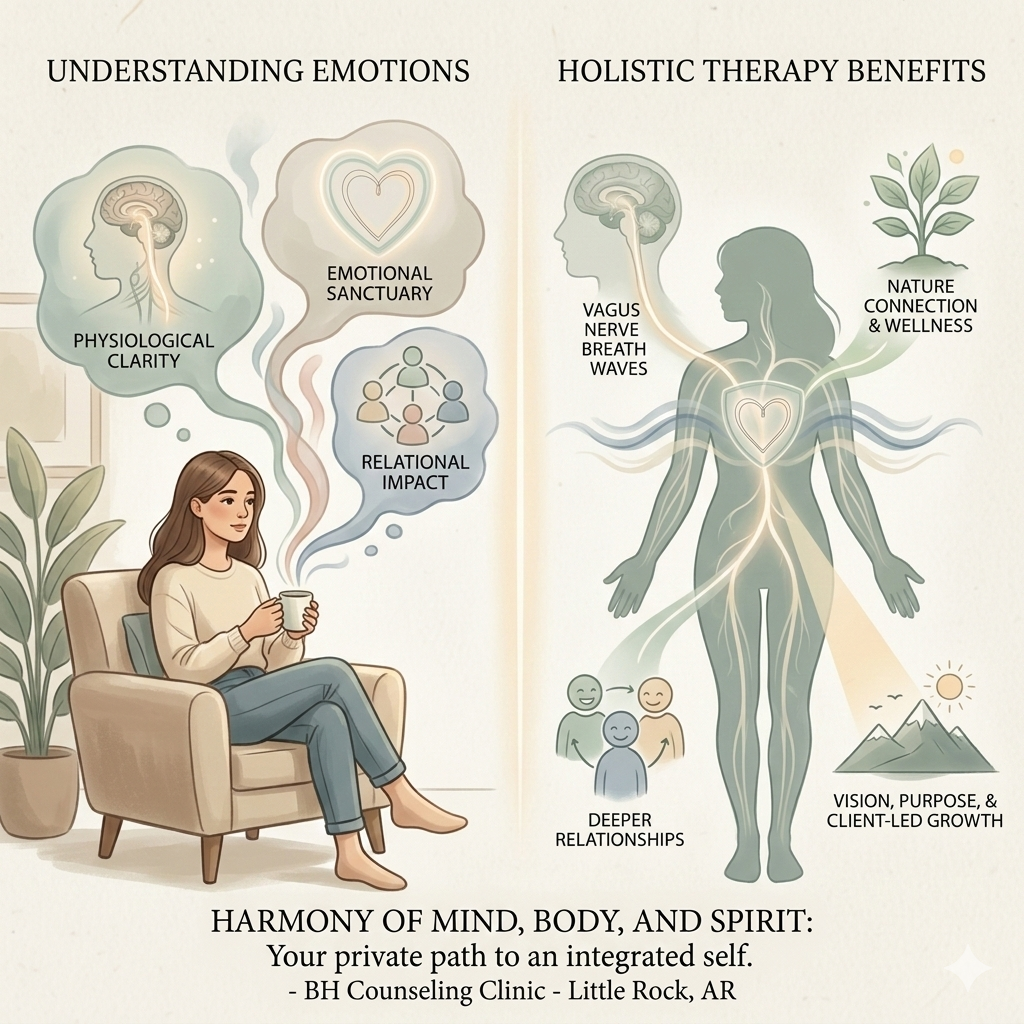
Naming emotions calms the brain and regulates the nervous system.
Setting Boundaries: In relationships (a core focus in MFT), being able to say, "When you interrupt me, I feel disrespected (anxiety) rather than just angry (generic)," opens the door for genuine repair and clear boundaries.
Self-Compassion: When you correctly identify your emotion (e.g., "I am feeling shame over the job loss, not worthless"), you can apply targeted self-compassion to the core issue, leading to deeper healing (Source: Kristin Neff’s Self-Compassion research).
Spiritual Clarity (Optional): When you can name feelings like doubt or spiritual dryness, you can address them openly, integrating them with your faith journey rather than suppressing them out of guilt.
Ready to Speak the Language of Your Feelings?

Therapy in Little Rock helps you understand your emotions so you can set boundaries and feel grounded again.
If your emotional life feels like a confusing black box, learning emotional literacy is the key to unlocking clarity, stability, and confidence.
BH Counseling Clinic provides the specialized, holistic, and accessible therapy you need to expand your inner vocabulary and navigate your Little Rock life with greater self-awareness.
Stop feeling "fine" and start feeling real. Book your free 15-minute consultation today to learn the language of your emotions.
References
Lieberman, M. D., Eisenberger, N. I., Crockett, M. J., Tom, S. M., Pfeifer, J. H., & Way, B. M. (2007). Putting feelings into words: affect labeling disrupts amygdala activity in response to affective stimuli. Psychological Science, 18(5), 421–428.
Neff, K. (2011). Self-Compassion: Stop Judging Yourself and Start Embracing Who You Are. William Morrow.
Gottman, J. M., & Silver, N. (2015). The Seven Principles for Making Marriage Work: A Practical Guide from the Country’s Foremost Relationship Expert. Harmony.

Coping vs. Healing: Understanding the Difference in Holistic Care
When you are stressed by high anxiety, relationship conflict, or a difficult life transition, your first instinct is to feel better right now. You look for quick fixes—a new routine, a quick distraction, or a weekend getaway. These are forms of coping, and they are necessary.
However, if you find yourself constantly reaching for the next coping mechanism without ever feeling truly grounded, you may be using temporary relief to avoid healing.

When you are stressed by high anxiety, relationship conflict, or a difficult life transition, your first instinct is to feel better right now. You look for quick fixes—a new routine, a quick distraction, or a weekend getaway. These are forms of coping, and they are necessary.
However, if you find yourself constantly reaching for the next coping mechanism without ever feeling truly grounded, you may be using temporary relief to avoid healing.
At BH Counseling Clinic in Little Rock, AR, our commitment to holistic care is about guiding you past surface-level coping toward deep, sustainable healing that integrates your Mind, Body, and Spirit.
Here is the essential difference between coping and healing, and why we insist on transformation.
1. Coping: Managing the Symptoms (Temporary Relief)
Coping mechanisms are the immediate strategies you use to survive a moment of emotional distress. They are your emotional "band-aids."
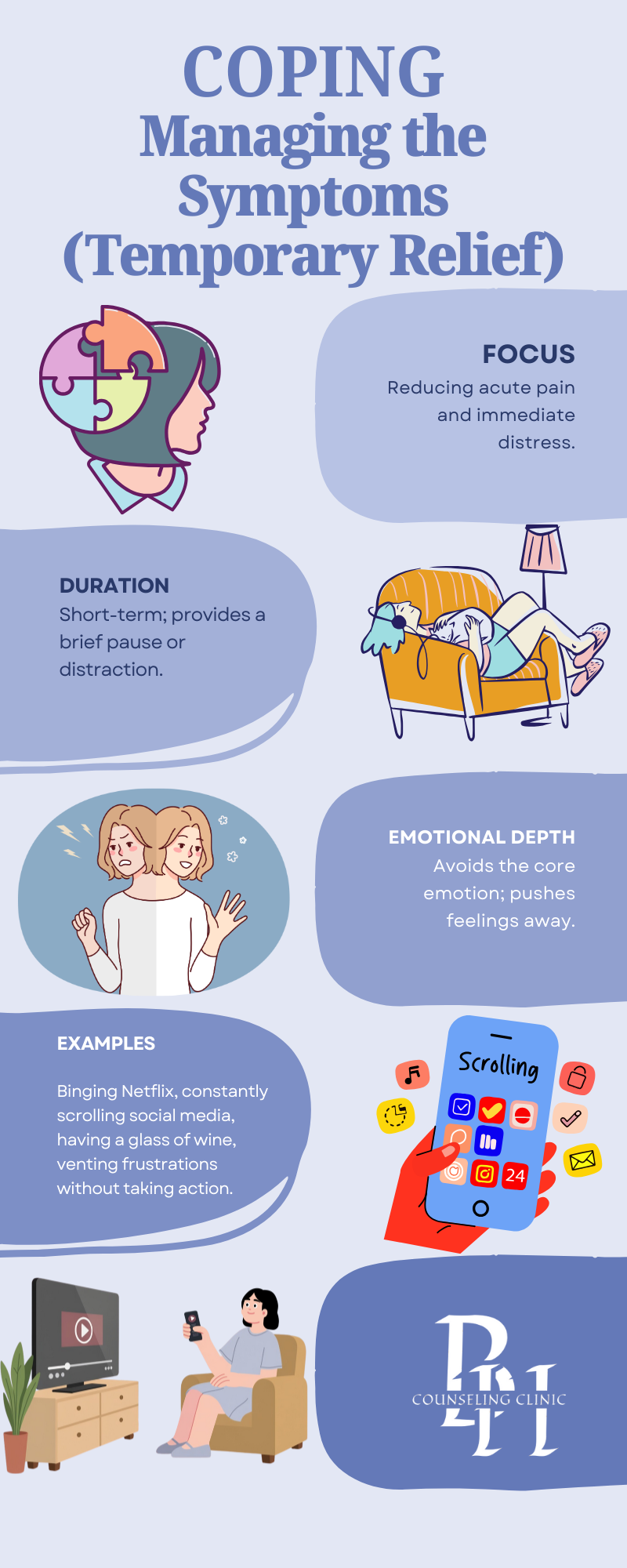
The Counselor's Perspective: Coping is necessary for survival. You cannot process trauma while in a panic attack. We teach healthy coping skills (like deep breathing or Vagus Nerve stimulation) to buy you time. However, if coping becomes your only strategy, you never address the root cause, leading to chronic anxiety and exhaustion.
2. Healing: Addressing the Root (Sustainable Change)
Healing is the profound, intentional work of understanding and repairing the underlying source of your pain. It is the journey toward lasting change.
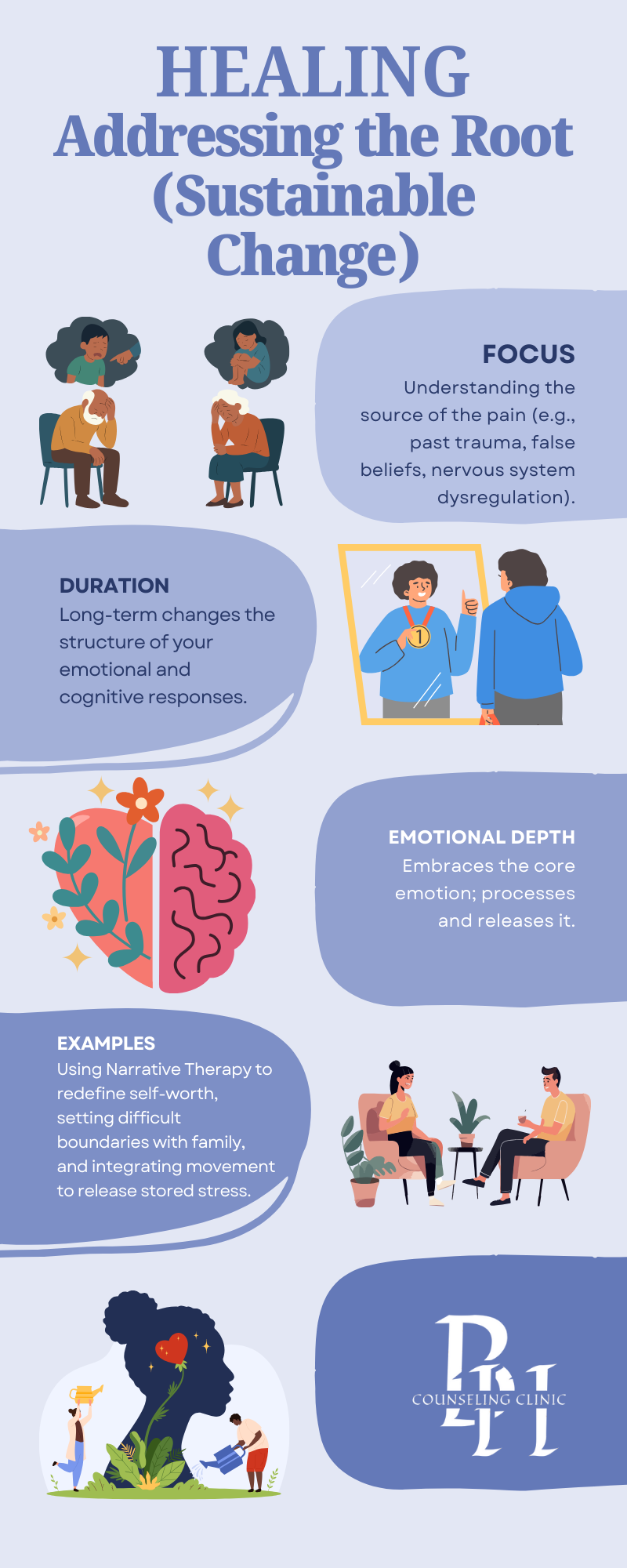
The Holistic Difference: Healing requires integrating all three parts of yourself: the Mind (understanding the trauma), the Body (releasing the stored tension), and the Spirit (reconnecting to purpose). When one area is neglected, true healing stalls.
3. Why You Need Both for Life Transitions
When navigating a complex transition (like divorce or a career change), you need a balanced approach:
Use Coping: To get through the day-to-day anxiety and stress (e.g., grounding yourself with a Three-Breath Anchor before a hard conversation).
Pursue Healing: To change the reason the transition is causing so much pain (e.g., processing the grief of the loss of the old life and establishing your new, confident identity).
Ready for Transformation in Little Rock?
If you feel like you are perpetually coping—constantly managing stress but never finding peace—it's time to shift your focus to deep healing.
BH Counseling Clinic is dedicated to providing specialized, holistic, and accessible therapy to help Little Rock adults and families move beyond the surface. We provide the expert guidance and safe space needed to confront the root causes of your distress.
Stop coping, start healing. Book your free 15-minute consultation today to begin your journey toward lasting change.
References
Yalom, I. D. (2002). The Gift of Therapy: An Open Letter to a New Generation of Therapists and Their Patients. Harper Perennial.
Levine, P. A. (2015). In an Unspoken Voice: How the Body Releases Trauma and Restores Goodness. North Atlantic Books.
Frankl, V. E. (2006). Man's Search for Meaning. Beacon Press.

Using Narrative Therapy to Re-Write the Stories You Tell Yourself
Every challenge you face—whether it's the grief of a breakup, the anxiety of a new career, or the stress of new parenthood—comes with a story…. Narrative Therapy is particularly powerful for life transitions because they often force you to adopt a new, unfamiliar identity. Whether you are navigating an empty nest, a divorce, or a career shift, this process gives you the pen to write the story of your new self.

Narrative Therapy in Little Rock, Arkansas helps adults separate their identity from anxiety, shame, and perfectionism — and re-author a stronger life story.
Every challenge you face—whether it's the grief of a breakup, the anxiety of a new career, or the stress of new parenthood—comes with a story.
Often, when we are overwhelmed by a life transition, that story becomes dominated by the Problem: "I am a failure," "I am unlucky," or "I am too anxious to succeed." This narrative becomes so powerful that it shapes how you see yourself and limits your ability to change.
As a counselor who practices holistic therapy, I use Narrative Therapy as a powerful tool to help clients in Little Rock, AR, separate their identity from their problems and re-write their story from one of struggle to one of strength.
1. The Core Idea: You Are Not the Problem

Narrative Therapy, developed by Michael White and David Epston, helps Little Rock clients externalize anxiety and perfectionism instead of internalizing shame.
Narrative Therapy, developed by Michael White and David Epston, is based on a revolutionary idea: The person is not the problem; the problem is the problem.
Externalizing the Problem: We help you see the "Problem" (e.g., Anxiety, Perfectionism, Shame) as a separate entity that has tried to boss you around. Instead of saying, "I am anxious," we encourage the language, "Anxiety is trying to convince me I can't handle this."
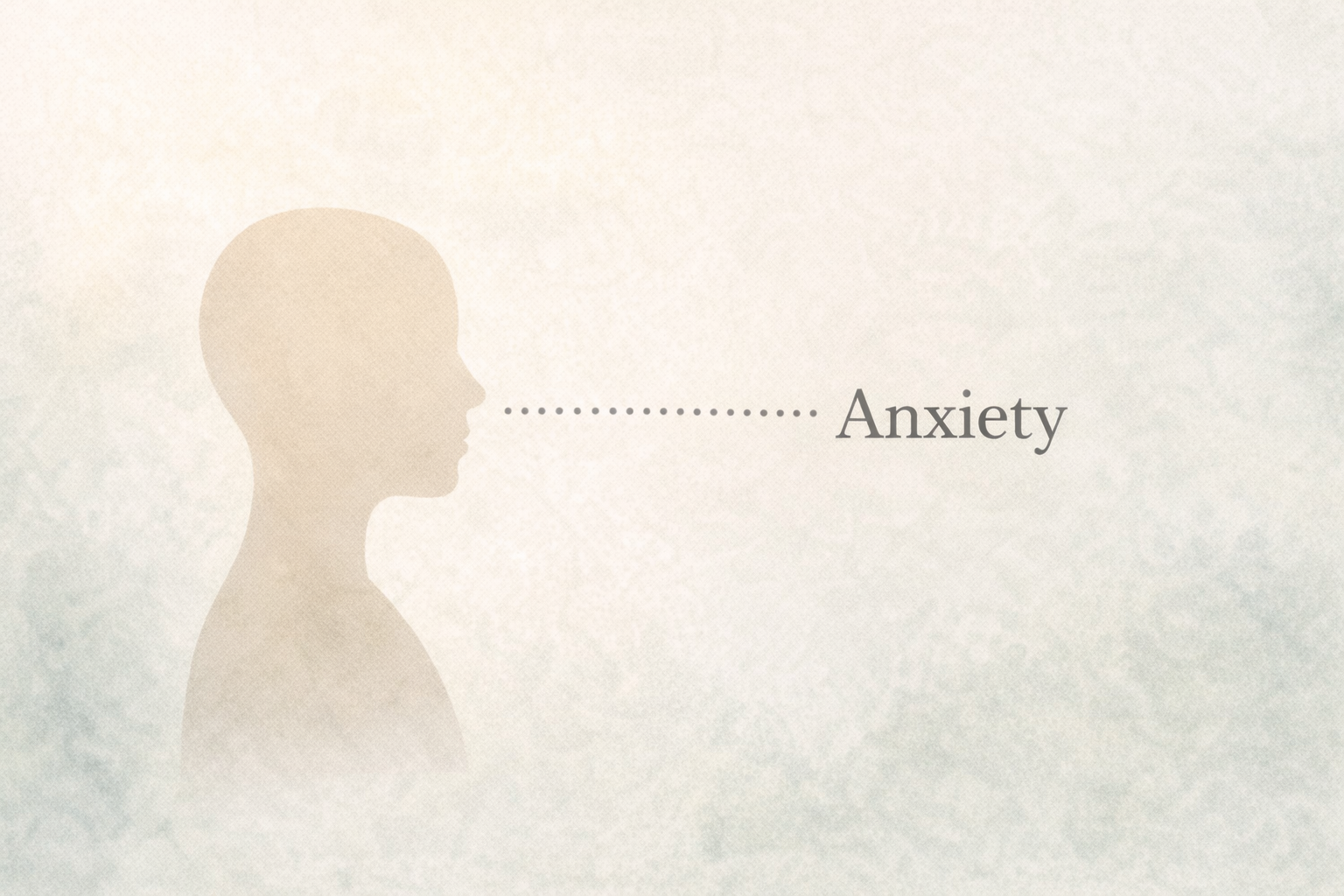
Externalizing anxiety reduces shame and increases self-compassion in narrative therapy sessions in Little Rock, AR.
The BH Advantage: Externalizing the problem instantly reduces shame and guilt. It allows you to feel compassion for yourself and see the problem as something you can fight, not something you are.
2. Finding the "Unique Outcomes" (The Hidden Strengths)

Narrative therapy in Little Rock uncovers hidden resilience during life transitions like divorce, career shifts, and new parenthood.
A "Problem Story" tends to leave out all the moments when you fought back or succeeded. Narrative Therapy focuses on excavating these forgotten moments, which we call Unique Outcomes.
The Process: We ask questions like:
"Tell me about a time when Anxiety tried to stop you from applying for that job, but you did it anyway. What skills did you use then?"
"Before Depression convinced you to stay home, what were the three things you loved doing in Little Rock?"
The Goal: By giving attention to these moments of resilience, we build an alternative, stronger, and more accurate story of who you really are—someone with courage, capability, and worth.
3. Re-Authoring Your Future Story
The final phase of Narrative Therapy is helping you become the author of your own future.
Defining the Preferred Narrative: We guide you in articulating the qualities and values you want to define your next chapter: "I am a resilient person who prioritizes peace over perfection," or "I am a loving partner who communicates needs clearly."
Integrating the Whole Self: For clients who desire faith-based support, this re-authoring process can include integrating spiritual values or purpose into the new narrative, creating a strong anchor for the future.
4. An Empowering Tool for Life Transitions
Narrative Therapy is particularly powerful for life transitions because they often force you to adopt a new, unfamiliar identity. Whether you are navigating an empty nest, a divorce, or a career shift, this process gives you the pen to write the story of your new self.
BH Counseling Clinic is dedicated to providing specialized, accessible, client-led therapy to help Little Rock adults and families find power in their personal narratives.
You are the author of your life. Start re-writing your story today. Book your free 15-minute consultation to begin.
References
White, M., & Epston, D. (1990). Narrative Means to Therapeutic Ends. W. W. Norton & Company.
Monk, G., Winslade, J., Crocket, K., & Epston, D. (1997). Narrative Therapy in an Age of Globalization. Guilford Press.
American Psychological Association (APA) guidelines on promoting client agency and self-determination in therapy.

The Role of Movement (Not Just Exercise) in Processing Emotional Overwhelm
When you are hit with emotional overwhelm—whether from high-functioning anxiety, relational conflict, or a major life transition—your body often locks up. You feel stuck, frozen, or restless. You might tell yourself to "calm down," but your emotions refuse to follow. This is because emotional overwhelm is a full-body experience. Stress and unprocessed emotions are stored as tension and rigidity in the nervous system. You cannot simply think your way out of a body that feels like it’s screaming.

Emotional overwhelm isn’t just in your thoughts — it lives in your body.
At BH Counseling Clinic in Little Rock, Arkansas, we use movement-based and somatic techniques to help adults release stored stress and anxiety.
When you are hit with emotional overwhelm—whether from high-functioning anxiety, relational conflict, or a major life transition—your body often locks up. You feel stuck, frozen, or restless. You might tell yourself to "calm down," but your emotions refuse to follow.
This is because emotional overwhelm is a full-body experience. Stress and unprocessed emotions are stored as tension and rigidity in the nervous system. You cannot simply think your way out of a body that feels like it’s screaming.
As a counselor who practices holistic therapy, I often guide clients toward movement—not intense, high-impact exercise—but simple, intentional action designed to discharge emotional energy. At BH Counseling Clinic in Little Rock, AR, we believe the body is a powerful partner in healing.
1. Why Movement is Necessary for Emotional Release
Movement is your nervous system's way of completing the stress cycle.
The Stress Cycle: When you encounter a threat (a looming deadline, a tough conversation, a job loss), your body prepares for fight or flight. If you sit still and suppress the emotional energy, it stays trapped in your muscles and fascia, leading to chronic anxiety and tension (Source: The Neurobiology of Trauma and Stress).
Movement helps complete the stress cycle by signaling safety to the nervous system.
Somatic therapy in Little Rock supports anxiety regulation at the body level.
Movement Completes the Cycle: Simple, rhythmic movement (like walking or gentle stretching) signals to your Vagus Nerve and nervous system that the threat has passed, allowing the body to return to the "rest and digest" state.
2. Techniques to Discharge Emotional Energy
You don't need a gym membership to process overwhelm. You need intention. Here are simple, body-based techniques we recommend:
The Shake-Out: When anxiety spikes, stand up and gently shake your hands, arms, and legs for 60 seconds. This is a natural, biological way to release residual stress energy, often seen in animals after a near-miss.

Simple nervous system reset: 60 seconds of shaking can help discharge stored stress energy.
Somatic anxiety tools available at BH Counseling Clinic in Little Rock.
The Rhythmic Walk: Walk with the intention of releasing tension. Focus on the simple, rhythmic pattern of your feet hitting the ground. Try walking the Big Dam Bridge or a local Little Rock trail and allow your mind to passively observe the environment rather than actively worry.

A rhythmic walk across the Big Dam Bridge in Little Rock or even a local field can help regulate anxiety and complete the stress cycle.
Movement is medicine for the nervous system.
Conscious Grounding: When feeling floaty or anxious, stand with both feet firmly planted. Gently sway your body side-to-side or rock slightly forward and back. This reconnects your mind to the physical certainty of the ground beneath you.

Grounding techniques reconnect the mind and body during anxiety spikes.
Holistic therapy in Little Rock integrates body awareness for emotional regulation.
3. Integrating Movement into Your Transition

Shared movement — like evening walks — can reduce family tension and improve emotional connection in Little Rock households.
Movement is a crucial tool for managing the physical symptoms of major life transitions (e.g., the restless energy of a career change, the exhaustion of new parenthood).
Boundary Against Perfectionism: For clients with high-functioning anxiety, we emphasize that this movement is self-care, not a performance metric. The goal is emotional discharge, not burning calories.
Family Connection (MFT): Movement can be integrated into family life. Simple, shared movement—like an evening walk together—can reduce family tension and improve non-verbal communication.
Spiritual Connection (Optional): Movement can be a form of moving meditation, allowing for quiet reflection and spiritual grounding outside of a structured setting.
Ready to Move Through Your Overwhelm?
If you're in Little Rock, AR, and feel like your body is holding onto stress you can't talk your way out of, the solution lies in integrating movement into your healing.

BH Counseling Clinic provides the specialized, holistic, and accessible therapy you need to understand your body's signals and build an integrated approach to resilience.
Don't stay stuck in the emotional freeze. Book your free 15-minute consultation today to learn how to move toward peace.
References
Mate, G. (2011). When the Body Says No: Understanding the Stress-Disease Connection.Wiley.
Levine, P. A. (2015). In an Unspoken Voice: How the Body Releases Trauma and Restores Goodness. North Atlantic Books.
Van der Kolk, B. A. (2014). The Body Keeps the Score: Brain, Mind, and Body in the Healing of Trauma. Penguin Books.

Person-Centered Therapy: Why Your Story Leads the Way in Our Sessions
In life, we often feel like we're being led by external forces—a demanding job, rigid family expectations, or the relentless pressure of a major life transition. When you finally seek therapy, the last thing you need is another expert telling you how you should feel or what you must do. At BH Counseling Clinic in Little Rock, AR, our foundational therapeutic philosophy is Person-Centered Therapy (PCT). This is not just a technique; it is a commitment to the belief that you are the expert on your own life.

At BH Counseling Clinic, we believe you are the expert on your own life. Our client-led therapy model supports adults navigating life transitions with autonomy and clarity.
In life, we often feel like we're being led by external forces—a demanding job, rigid family expectations, or the relentless pressure of a major life transition. When you finally seek therapy, the last thing you need is another expert telling you how you should feel or what you must do.
At BH Counseling Clinic in Little Rock, AR, our foundational therapeutic philosophy is Person-Centered Therapy (PCT). This is not just a technique; it is a commitment to the belief that you are the expert on your own life.
As a counselor specializing in Life Transitions, I see my role not as the director of your healing, but as a genuine, compassionate guide who walks beside you. Here is a deep dive into why your story, your pace, and your goals are the most important elements in our sessions.
1. The Core Principle: You Hold the Answers
Person-Centered Therapy, founded by Dr. Carl Rogers, rests on the belief in the client's capacity for self-direction and growth (Source: Carl Rogers's On Becoming a Person).
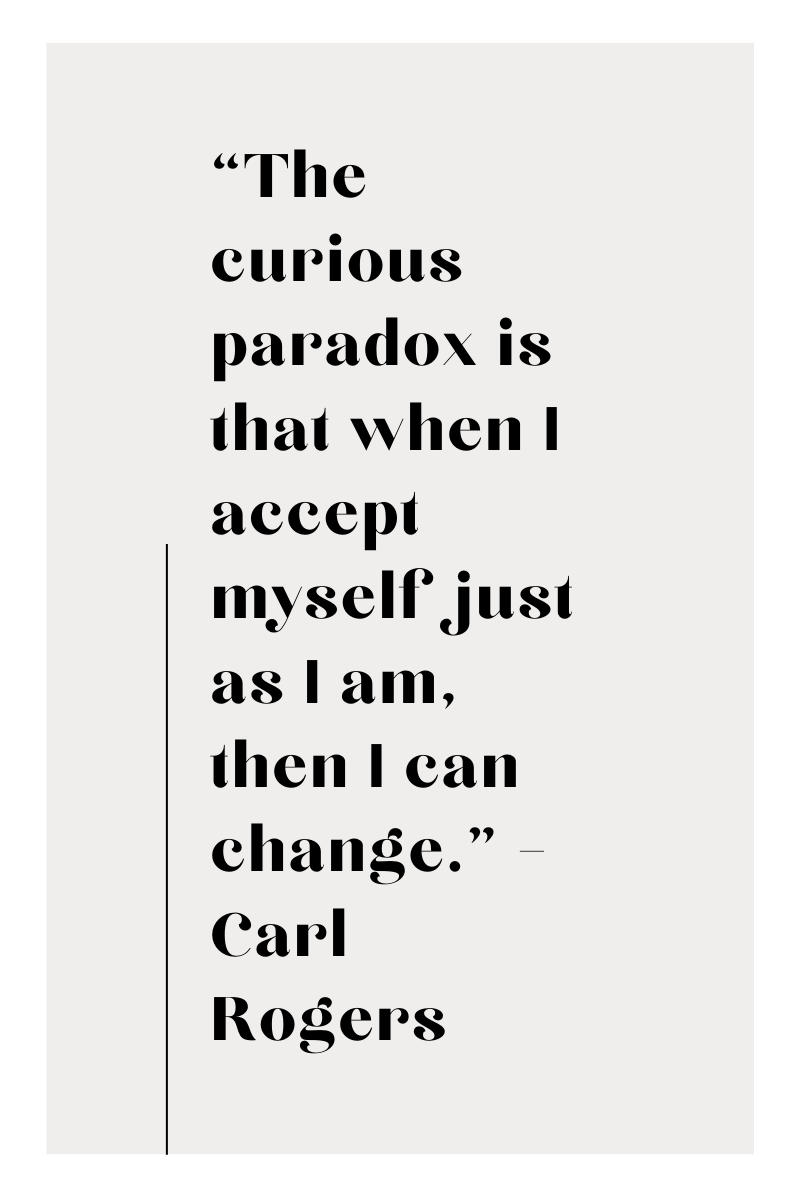
Person-Centered Therapy, founded by Carl Rogers, emphasizes self-direction, unconditional positive regard, and authentic therapeutic relationships.
The Power of Self-Actualization: You possess an innate tendency to move toward wholeness and healing. Our job is simply to remove the obstacles (like anxiety, self-doubt, or limiting beliefs) that are blocking that natural process.
The Therapist's Role: I am not here to diagnose you or fix you. I am here to provide a safe, non-judgmental environment where you can rediscover your own inner wisdom and strength.
2. The Three Essential Ingredients for Growth
In PCT, effective therapy relies on the counselor consistently offering three core conditions:
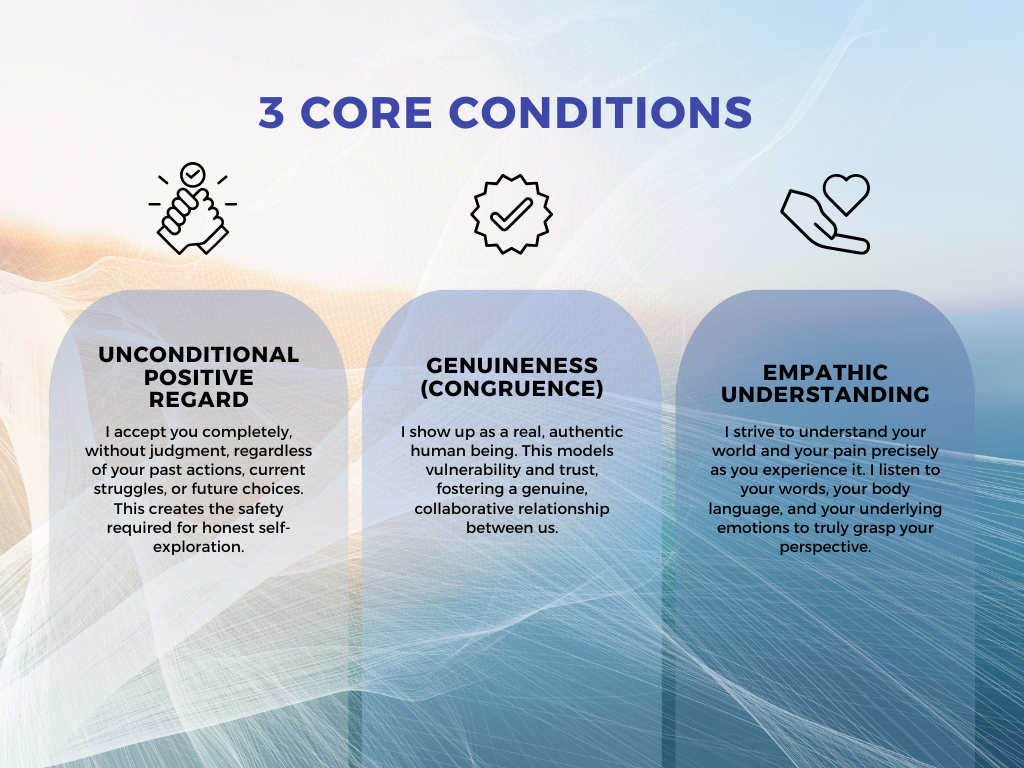
The three essential conditions of Person-Centered Therapy create safety and empower self-directed growth for adults in Little Rock navigating anxiety and life transitions.
Unconditional Positive Regard: I accept you completely, without judgment, regardless of your past actions, current struggles, or future choices. This creates the safety required for honest self-exploration.
Genuineness (Congruence): I show up as a real, authentic human being. This models vulnerability and trust, fostering a genuine, collaborative relationship between us.
Empathic Understanding: I strive to understand your world and your pain precisely as you experience it. I listen to your words, your body language, and your underlying emotions to truly grasp your perspective.
When these three ingredients are present, the client is empowered to make profound, self-directed changes.
3. Why PCT is Ideal for Life Transitions

Life transitions in Little Rock — including divorce, career shifts, and identity changes — require therapy that restores personal agency and clarity.
Life transitions—like divorce, job loss, or identity shifts—often make people feel powerless. PCT flips that script:
Reclaiming Agency: When the world feels out of control, PCT reinforces your personal agency: You set the pace.You choose the topic. You define success. This is incredibly stabilizing during chaotic times.
Holistic Integration: By honoring your unique narrative, we organically integrate the Mind, Body, and Spirit components of our holistic model, ensuring that the changes you make are authentic to your personal values and purpose.
Ready to Let Your Story Lead?
If you're seeking therapy that respects your autonomy, validates your experience, and trusts your inner wisdom, the Person-Centered Approach at BH Counseling Clinic is the perfect fit.
We are dedicated to providing client-led, accessible, holistic therapy to help Little Rock adults and families navigate change with clarity and self-confidence.
Your healing journey is unique, and it begins with your voice. Book your free 15-minute consultation today to start your story.
References
Rogers, C. R. (1961). On Becoming a Person: A Therapist's View of Psychotherapy.Houghton Mifflin.
Kirschenbaum, H., & Henderson, V. L. (Eds.). (1989). The Carl Rogers Reader. Houghton Mifflin.
American Psychological Association (APA) guidelines on ethical practice and client autonomy.

Setting Spiritual Boundaries: Integrating Faith and Mental Wellness
For many people, faith is the bedrock of their life, offering immense comfort and community. Yet, when faced with mental health challenges like anxiety, depression, or a major life transition, faith can sometimes become complicated. At BH Counseling Clinic in Little Rock, AR, we offer a space where you can integrate your spiritual journey with your mental wellness journey without sacrificing either.

At BH Counseling Clinic, we help adults and families integrate their spiritual beliefs with evidence-based therapy. You don’t have to choose between prayer and professional support.
For many people, faith is the bedrock of their life, offering immense comfort and community. Yet, when faced with mental health challenges like anxiety, depression, or a major life transition, faith can sometimes become complicated.
You might hear well-meaning advice like, "Just pray harder," or "You shouldn't feel anxious if you have faith." This pressure can lead to shame, guilt, and a dangerous split between your spiritual life and your emotional well-being.
As a counselor with experience in faith-based integration (upon request), I know that true spiritual health requires healthy boundaries. At BH Counseling Clinic in Little Rock, AR, we offer a non-judgmental space where you can integrate your spiritual journey with your mental wellness journey without sacrificing either.
1. Why Spiritual Health Requires Boundaries

Faith-integrated therapy in Little Rock can help separate self-worth from spiritual performance.
A spiritual boundary is a limit you set to protect your emotional and mental health from unhealthy religious expectations or external judgment.
Separating Self-Worth from Performance: Many faith traditions can inadvertently link self-worth to spiritual performance (e.g., how often you volunteer, how much you pray). When you are struggling with anxiety or depression, you may feel like you are "failing" spiritually.
The BH Approach: We help you set boundaries against this performance mindset. We guide you to anchor your worth in an unconditional, internal sense of value, separating your spiritual identity from your current emotional state. You are worthy of care, regardless of how "well" you are doing.
2. Integrating Faith and Mental Wellness in Therapy
Our approach ensures that any faith integration is always client-led and never imposed. If you request this specialization, we use faith and spirituality as a unique source of strength and meaning in your healing journey.
Using Faith as an Anchor: During a difficult life transition (like job loss or divorce), we explore how your faith narratives can provide hope, comfort, and purpose when external circumstances feel chaotic. This is the Spiritcomponent of our holistic model.
Challenging Spiritualized Guilt: We help you identify and challenge messages from your faith community that might be fueling shame or preventing you from seeking professional help. We validate the need for both prayer and professional intervention (Source: Pargament's research on religious coping).

Integrated therapy supports both spiritual identity and emotional regulation.
3. Setting Boundaries with Your Community

Marriage and Family Therapy tools can help couples and families in Little Rock communicate spiritual coping needs with clarity and respect.
Navigating mental health within a faith community requires communication and courage.
Communication Tool: Practice clear, simple phrases to protect your emotional space:
"I appreciate your prayer, and I am also seeing a counselor to help me with the clinical steps of anxiety management."
"Thank you for the advice, but right now I need quiet support, not solutions."
The MFT Perspective: We can use our Marriage & Family Therapy tools to help couples or families communicate their differing spiritual coping needs respectfully, ensuring faith is a source of unity, not division.
Ready to Reconcile Faith and Feelings?
You do not have to choose between your faith and your mental health. In fact, when integrated healthily, they become a powerful source of resilience.

BH Counseling Clinic is here to support Little Rock adults and families who wish to explore this integration. We provide specialized, holistic, accessible therapy that honors your beliefs while prioritizing your emotional well-being.
Take the next step toward whole-person spiritual and mental wellness. Book your free 15-minute consultation today to discuss your unique needs.
References
Pargament, K. I. (2013). Spiritually Integrated Psychotherapy: Understanding and Addressing the Sacred. Guilford Press.
Barnett, J. E., & Lazarus, A. A. (2014). Financial Success in Mental Health Practice: Essential Tools and Strategies for Practitioners. American Psychological Association.
Park, C. L., & Folkman, S. (1997). Meaning in the context of stress and coping. Review of General Psychology, 1(1), 115-144.

Why We Believe in Treating the Mind, Body, and Spirit Simultaneously
We believe true, resilient healing—especially when navigating difficult life transitions—must address the Mind, Body, and Spirit simultaneously. If you've been to therapy before and felt like something was missing, it may be because only one pillar was addressed. At BH Counseling Clinic, we are dedicated to helping Little Rock adults and families find complete wellness.
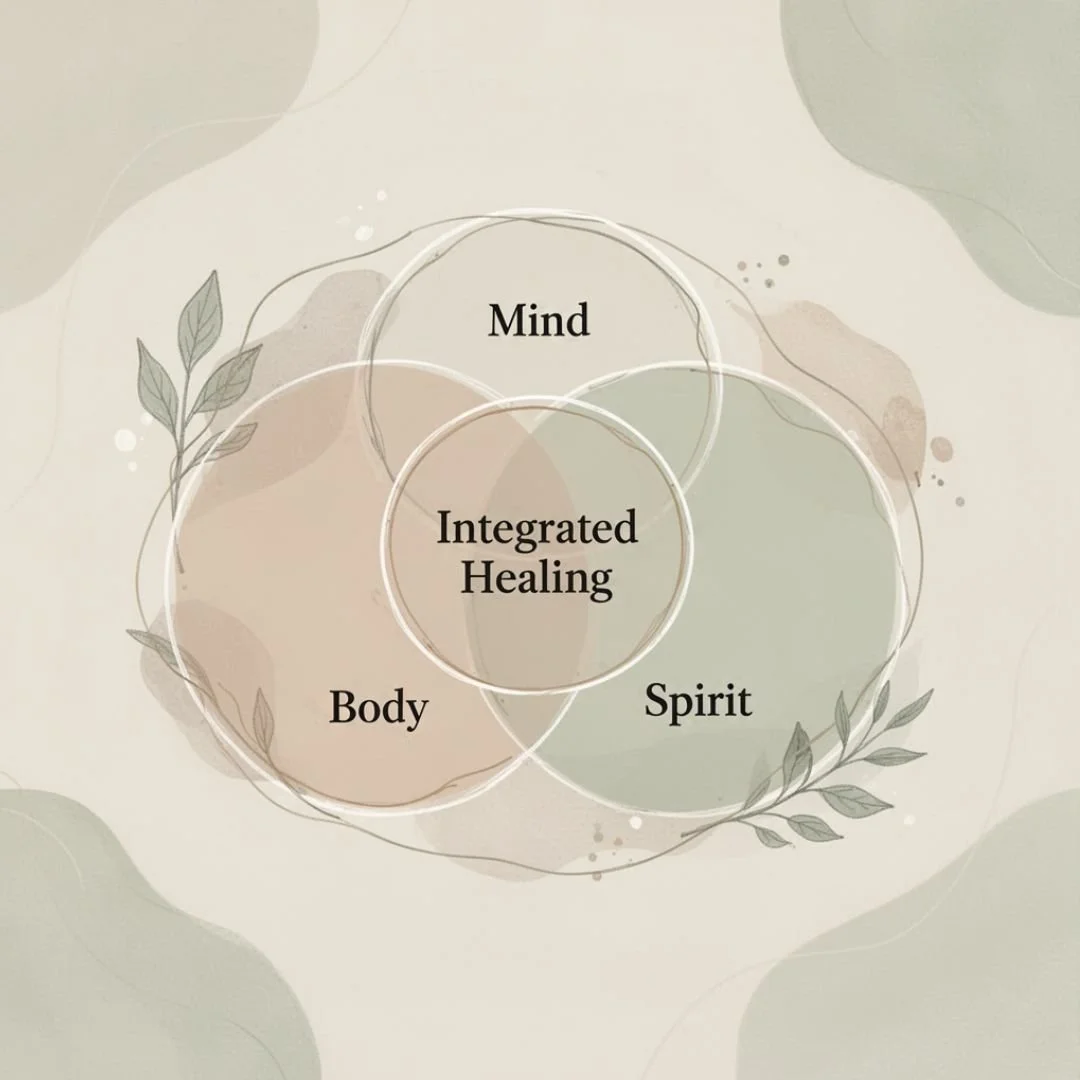
True healing isn’t one-dimensional. At BH Counseling Clinic in Little Rock, AR, we help adults and families address anxiety, life transitions, and emotional stress through an integrated Mind–Body–Spirit approach.
Because lasting change requires the whole person.
When most people think of counseling, they think of the Mind—talking through thoughts, emotions, and memories. While this is crucial, it’s only one-third of the puzzle.
At BH Counseling Clinic in Little Rock, AR, our philosophy is rooted in the conviction that you are not a collection of separate parts; you are an interconnected whole. We believe true, resilient healing—especially when navigating difficult life transitions—must address the Mind, Body, and Spirit simultaneously.
This holistic approach is why our clients move beyond temporary coping skills and find deep, lasting transformation. Here is why we insist on this integrated model.
1. The Flaw of the "Mind-Only" Approach
Treating only the mind is often insufficient because the body and spirit hold critical information and influence.
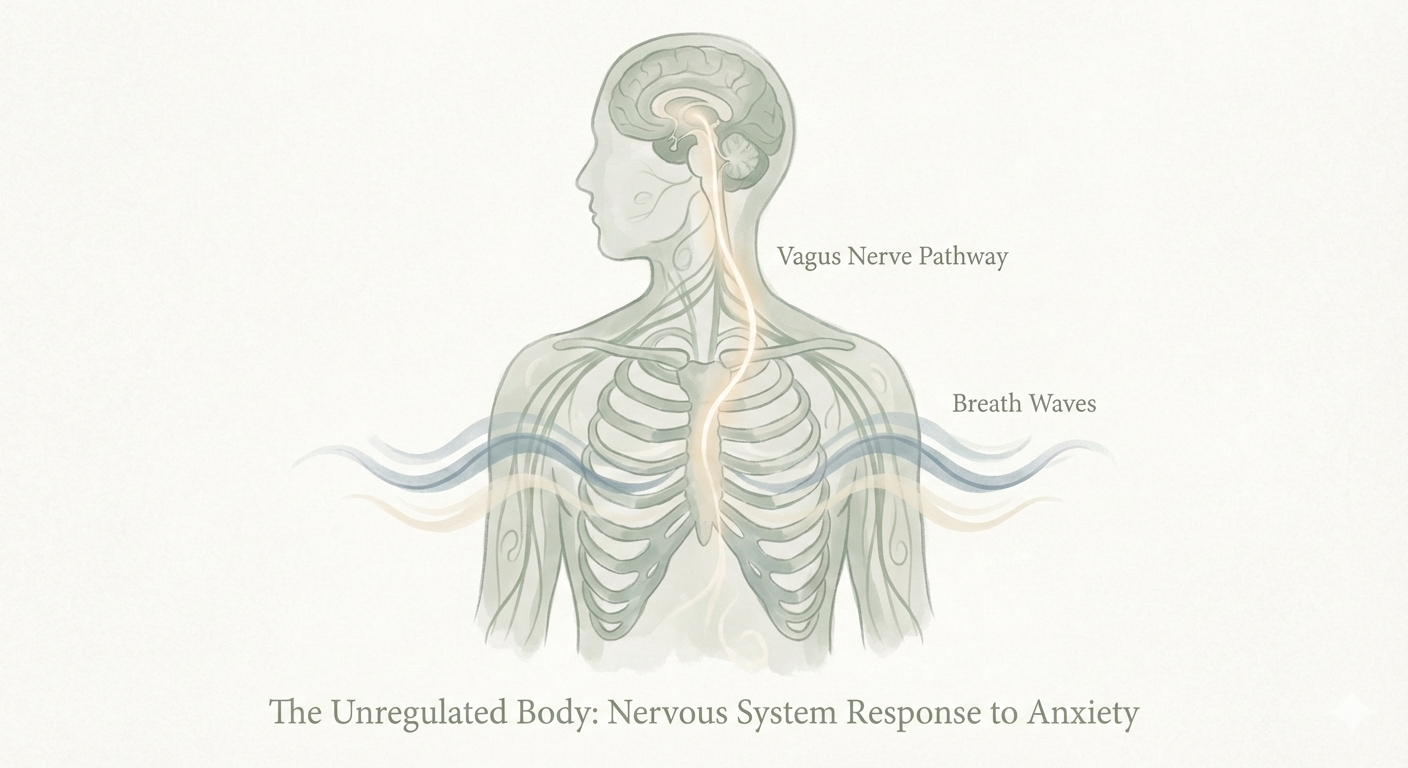
At BH Counseling Clinic in Little Rock, we integrate somatic therapy techniques to calm the nervous system and reduce stress at its source.
The Unregulated Body: If your mind is anxious, your body is in fight-or-flight (high cortisol, shallow breath). Talking about anxiety while your body is constantly stressed is like driving a car with the parking brake on. You won't get far.
The Missing Purpose: If your spirit (sense of purpose and values) is disconnected, any mental clarity you achieve feels empty or unstable. Without a strong "Why," the "How" often breaks down under pressure.
2. The Role of Each Pillar in Healing
Our simultaneous approach ensures no part of your struggle or strength is overlooked:

For many clients in Little Rock, healing deep anxiety or burnout requires reconnecting with core values—not just managing symptoms.
Mind: The Pilot and Interpreter
Function: Processes logic, identifies thought distortions (like the anxiety of high-functioning perfectionism), and guides goal setting.
Therapeutic Focus: Using CBT to challenge negative narratives and Narrative Therapy to redefine your story of transition.
Body: The Barometer and Stabilizer
Function: Stores emotional trauma, signals stress, and governs emotional regulation via the nervous system (Vagus Nerve).
Therapeutic Focus: Integrating somatic and mindfulness techniques (like breathwork) to release stored tension, improve sleep, and ground the nervous system. A regulated body allows the mind to work effectively (Source: Somatic Psychology research).
Spirit: The Anchor and Compass
Function: Provides meaning, connects you to your core values, and offers hope during crises. It informs your ultimate sense of identity and self-worth.
Therapeutic Focus (Client-Led): Exploring core values and purpose. For those who choose, integrating faith-based principles to provide a stable, unconditional anchor that is independent of external achievements (Source: Meaning-Centered Psychotherapy).
3. Holistic Treatment for Life Transitions
This integrated model is uniquely powerful for life transitions because these events shake your foundation at all three levels:

By treating them together, we create healing that is deeper, more robust, and more resilient to future stress.
Ready for Integrated Healing in Little Rock?
If you've been to therapy before and felt like something was missing, it may be because only one pillar was addressed. At BH Counseling Clinic, we are dedicated to helping Little Rock adults and families find complete wellness.
We offer specialized, accessible, client-led therapy focused on integrating your Mind, Body, and Spirit for resilient change.

Start your journey toward whole-person healing. Book your free 15-minute consultation today.
References
Siegel, D. J. (2010). Mindsight: The New Science of Personal Transformation. Bantam Books.
Van der Kolk, B. A. (2014). The Body Keeps the Score: Brain, Mind, and Body in the Healing of Trauma. Penguin Books.
Frankl, V. E. (2006). Man's Search for Meaning. Beacon Press.

How Your Nutrition and Sleep Are Connected to Your Mental Health
When you are stressed by a life transition—a job search, a new baby, or relationship conflict—what is the first thing that changes? Usually, it's your eating habits (more fast food, less balance) and your sleep (less quality, more worry)….If the stress of your life transition is eroding your energy, your mood, and your ability to sleep, it's time to address the foundations.

When you are stressed by a life transition—a job search, a new baby, or relationship conflict—what is the first thing that changes? Usually, it's your eating habits (more fast food, less balance) and your sleep (less quality, more worry).
This isn't just an accident; it's a direct reflection of how your mind and body are interconnected. As a counselor committed to holistic therapy, I know that talk therapy alone is less effective if your brain and body lack the fuel needed for emotional resilience.
At BH Counseling Clinic in Little Rock, AR, we look beyond just your thoughts. We integrate practical adjustments to your nutrition and sleep habits because a well-nourished body is essential for a stable mind.
1. The Gut-Brain Axis: Your Second Mind
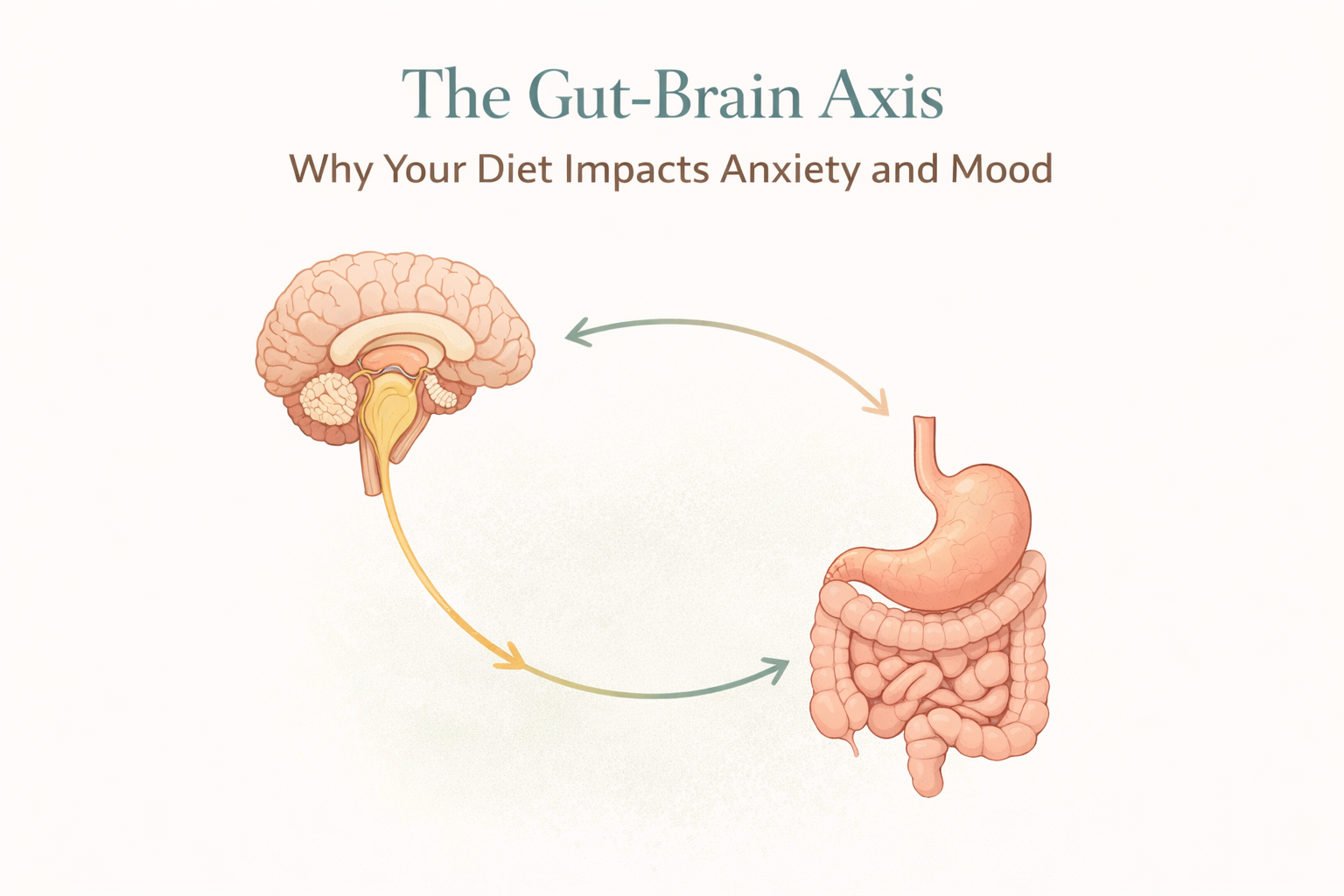
The connection between what you eat and how you feel is regulated by the Gut-Brain Axis.
The connection between what you eat and how you feel is regulated by the Gut-Brain Axis—a direct communication line between your digestive system and your brain, heavily influenced by the Vagus Nerve.
Impact of Diet: When you consume highly processed foods, excess sugar, or inconsistent meals, it stresses the gut. An inflamed gut sends distress signals directly to your brain, which your brain interprets as anxiety or low mood(Source: Neurogastroenterology research).
The Goal: Consistent, balanced nutrition helps stabilize blood sugar and gut health, which in turn leads to more consistent energy and emotional regulation, helping you better cope with transition stress.
2. Sleep: The Essential Regulator of Emotional Health

Sleep hygiene or routines help quiet the anxious mind before bed, turning off the stress response and preparing the body for rest.
If your mind is racing with anxiety (a common symptom of high-functioning anxiety or transition stress), sleep is often the casualty. Yet, sleep is the single most important time for your brain's emotional "reset."
The Impact of Poor Sleep: During sleep, your brain consolidates memories and regulates mood chemicals. Chronic sleep deprivation dramatically increases irritability, amplifies worry, and reduces your ability to cope with stress (Source: APA Sleep and Mental Health Guidelines).
The BH Approach: We help clients implement "sleep hygiene" techniques and use mindfulness and breathing exercises (like Vagus Nerve stimulation) to quiet the anxious mind before bed, turning off the stress response and preparing the body for rest.
3. The Holistic Toolkit: Simple Changes for Big Impact

One small sustainable adjustment at a time.
We understand you can't overhaul your entire life overnight. Our approach focuses on small, sustainable adjustments that respect the demands of your life here in Central Arkansas.
Nutrition Focus: Aim for consistent meals (to stabilize blood sugar) and increase your intake of fiber and protein(to feed the gut and sustain energy). You don't need a perfect diet, just a reliable one.
Sleep Focus: Create a "Digital Sunset"—turn off screens 30-60 minutes before bed. Use that time for quiet transition, like reading a physical book or practicing a gentle stretch.
Consistency: Consistency is more important than intensity. Doing something small every day to honor your sleep and nutrition is a powerful act of self-care and resilience.
Ready to Invest Holistically in Your Well-Being?

If the stress of your life transition is eroding your energy, your mood, and your ability to sleep, it's time to address the foundations.
BH Counseling Clinic provides specialized, holistic, and accessible therapy to help Little Rock individuals and families integrate mental and physical wellness, ensuring you have the strength and clarity needed to navigate your challenges.
Nourish your mind by nourishing your body. Book your free 15-minute consultation today to start your holistic journey.
References
Cryan, J. F., & Dinan, T. G. (2012). Mind-altering microorganisms: the impact of the gut microbiota on brain and behaviour. Nature Reviews Neuroscience, 13(10), 701-712.
American Psychological Association (APA) guidelines on the bidirectional relationship between sleep deprivation and mood disorders/anxiety.
Porges, S. W. (2011). The Polyvagal Theory: Neurophysiological Foundations of Emotions, Attachment, Communication, and Self-regulation. W. W. Norton & Company.

The Vagus Nerve: Simple Body-Based Techniques to Calm Your Nervous System
When you feel overwhelmed by a life transition, your anxiety doesn't just stay in your head—it floods your body. This powerful, whole-body reaction is controlled by your Vagus Nerve (Latin for "wandering nerve"). If the emotional weight of your life transition is showing up as chronic physical anxiety, it's time to integrate these body-based tools into your healing journey.
Author: Britney Hardin, MBA, MS, LAC, LAMFT
When you feel overwhelmed by a life transition, your anxiety doesn't just stay in your head—it floods your body. Your heart pounds, your breath quickens, and you feel that familiar knot in your stomach.
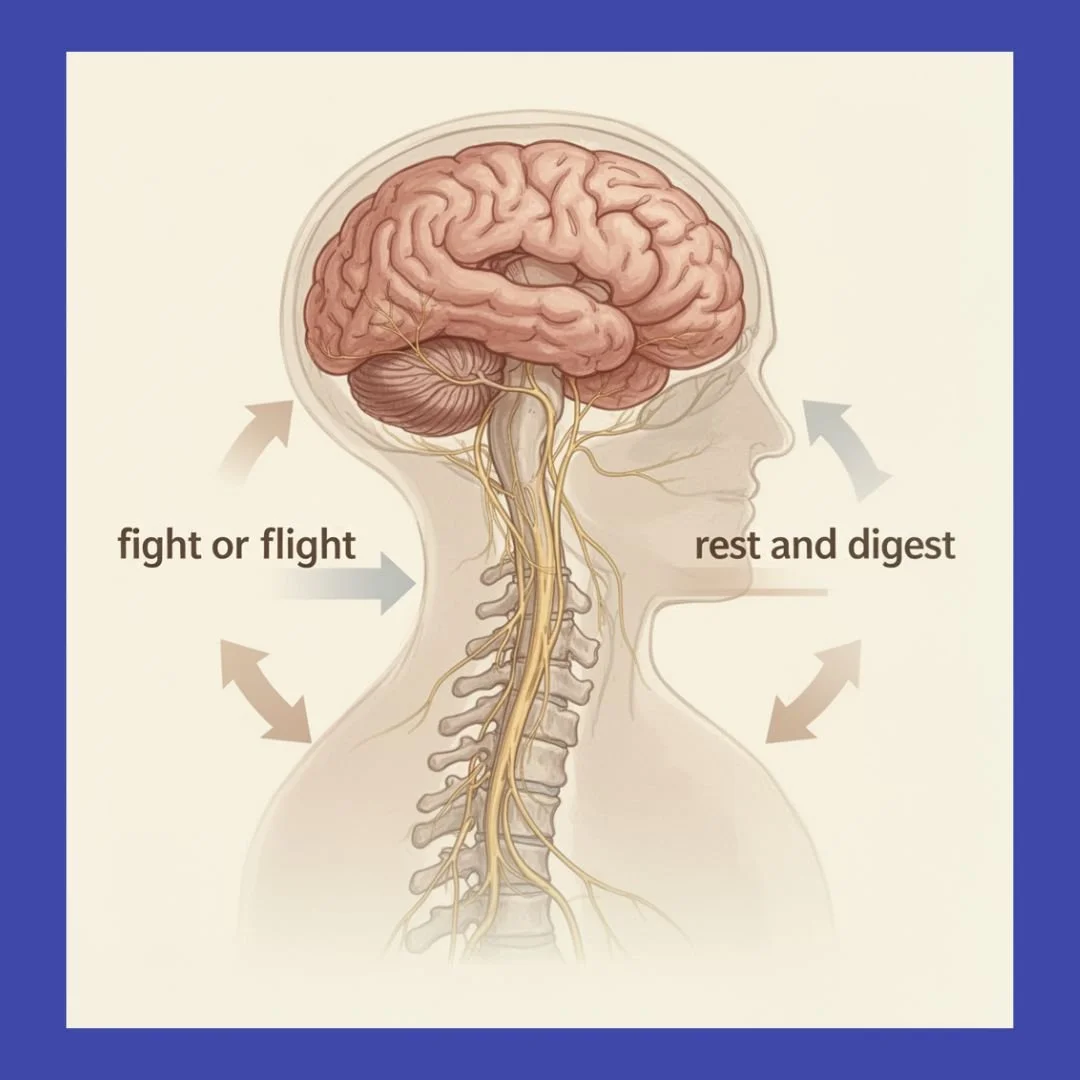
This powerful, whole-body reaction is controlled by your Vagus Nerve (Latin for "wandering nerve"). It's the longest nerve in your body, running from your brainstem all the way down to your colon, acting as the main pathway between your mind and your body. Crucially, it governs your body’s "rest and digest" system.
As a counselor who practices holistic therapy, I know that talk therapy alone is sometimes not enough. You must regulate the nervous system first. At BH Counseling Clinic in Little Rock, AR, we teach clients these simple, body-based techniques to access the Vagus Nerve and quickly shift from panic to peace.
Understanding Your Nervous System

The Vagus Nerve is key to understanding why stress feels physical:
Sympathetic State ("Fight or Flight"): When you're stressed (e.g., job loss anxiety, relationship conflict), your Vagus Nerve signals a threat, activating your stress response.
Parasympathetic State ("Rest and Digest"): Vagal tone refers to the nerve's ability to quickly pull you out of the stress state and return you to calm. Strong vagal tone means high resilience.
The goal is to strengthen this vagal tone, making your nervous system more flexible.
Tool 1: The Hum & Sing (Vocal Vibration)

Singing in car before a difficult phone call, or when trying to calm down before sleep is one of the easiest ways to stimulate the Vagus Nerve.
One of the easiest ways to stimulate the Vagus Nerve is through your vocal cords, as the nerve runs right next to them.
The Technique: Sit up straight and take a slow, deep breath. As you exhale, make a loud, sustained humming sound (like "mmmmm") or sing a low note. Sustain the vibration for the entire exhale.
Why It Works: The low-frequency vibration mechanically stimulates the Vagus Nerve, sending a direct signal to the brain that you are safe (Source: Neuroscience and Polyvagal Theory research).
When to Use It: In the car during heavy Little Rock traffic, before a difficult phone call, or when trying to calm down before sleep.
Tool 2: The Cold Water Splash (Temperature Regulation)
Sudden, intense changes in temperature are a quick way to shock the Vagus Nerve into shifting the nervous system state.

The Technique: Go to the sink and splash ice-cold water directly onto your face, paying special attention to the area around your eyes and temples. Hold the sensation for 10-15 seconds.
Why It Works: This triggers the "mammalian dive reflex," which instantly slows the heart rate and shifts the system from high alert to calm (Source: Physiological studies on the dive reflex).
When to Use It: During an acute panic attack or moments of high emotional intensity. It’s an immediate reset button.
Tool 3: The Slow, Measured Breath (Respiration Rate)
While all breathing is important, controlled, slow breathing specifically targets the Vagus Nerve by prolonging the exhale.
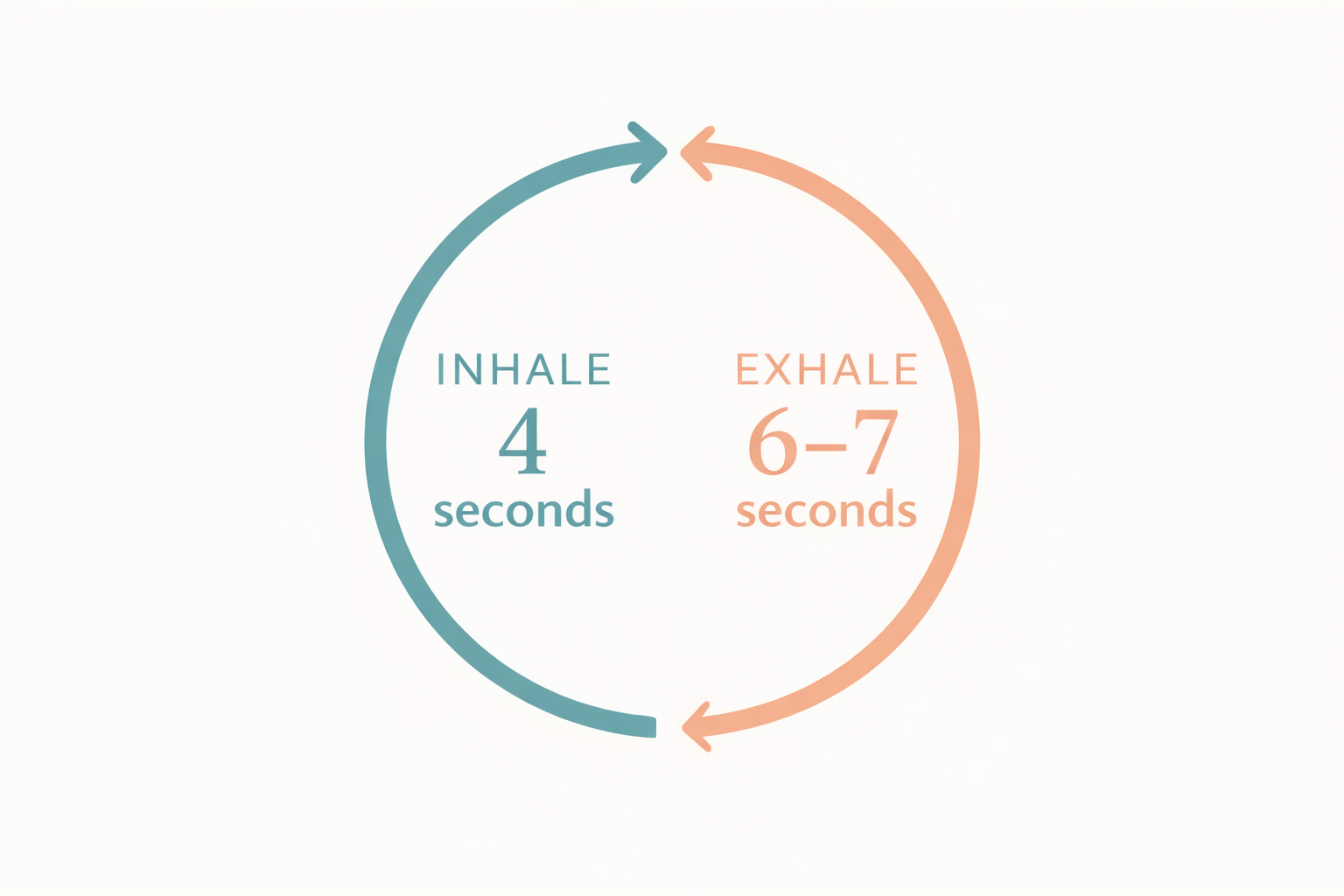
The Technique: Inhale slowly through your nose for a count of 4. Exhale slowly through pursed lips (as if blowing through a straw) for a count of 6 or 7. Repeat for 90 seconds.
Why It Works: The extended exhale is the primary signal to the Parasympathetic Nervous System to activate. It is a fundamental mechanism for reducing heart rate variability and improving vagal tone.
When to Use It: During moments of general anxiety, before a big decision, or as a daily practice for stress prevention.
Ready to Regulate Your Well-Being?
If the emotional weight of your life transition is showing up as chronic physical anxiety, it's time to integrate these body-based tools into your healing journey.
At BH Counseling Clinic in Little Rock, AR, our holistic, client-led therapy combines mind work with these physical techniques to create resilience that lasts.

Take control of your nervous system, not just your thoughts. Book your free 15-minute consultation today to start regulating your journey to peace.
FAQs
What is the vagus nerve and how does it affect anxiety?
The vagus nerve connects the brain to the heart, lungs, and digestive system. When activated properly, it helps shift the body from fight-or-flight mode into a calm, regulated state.
How can I quickly calm my nervous system during anxiety?
Techniques such as slow exhale breathing, humming, and cold water exposure stimulate the vagus nerve and reduce physical anxiety symptoms within minutes.
Does therapy help regulate the nervous system?
Yes. Holistic therapy combines cognitive techniques with body-based nervous system regulation to build long-term resilience.
References
Porges, S. W. (2011). The Polyvagal Theory: Neurophysiological Foundations of Emotions, Attachment, Communication, and Self-regulation. W. W. Norton & Company.
Ogden, P., Minton, K., & Pain, C. (2006). Trauma and the Body: A Sensorimotor Approach to Psychotherapy. W. W. Norton & Company.
Lehrer, P. M., & Woolfolk, R. L. (2007). Principles and Practice of Stress Management (3rd ed.). Guilford Press.
Britney Hardin, MBA, MS, LAC (A2503009), LAMFT (F2510001) is the founder of BH Counseling Clinic in West Little Rock, Arkansas. She holds dual specialization in General Counseling and Marriage and Family Therapy from John Brown University and brings over a decade of licensed ministry experience to her clinical practice. Supervised by Wade Fuqua (Arkansas License M1508006).

Beyond Journaling: Mindfulness Techniques for High-Functioning Anxiety
If your high-functioning anxiety is costing you your peace, it's time to shift your approach. Our holistic, client-led therapy at BH Counseling Clinic helps you move from relentless doing to grounded being. We provide the specialized tools to manage anxiety and successfully navigate your life transitions here in Little Rock, AR.

“Success on the outside. Exhaustion on the inside.”
Author: Britney Hardin, MBA, MS, LAC, LAMFT
You manage complex projects, meet every deadline, and appear completely composed. Yet, beneath the professional veneer, your mind is a perpetual motion machine—constantly planning, worrying, and fearing the moment you might drop the ball.
This is the reality of High-Functioning Anxiety (HFA). It's anxiety that drives performance, leaving you successful on the outside but utterly exhausted on the inside.
While journaling is a great start, managing HFA requires deeper techniques to interrupt that internal motor. As a counselor specializing in the holistic management of anxiety and life transitions, I know that simply thinking about calming down doesn't work.
At BH Counseling Clinic in Little Rock, AR, we teach specific mindfulness tools that anchor your mind and body to the present, giving you a powerful off-switch for the constant inner critic.
Why HFA Requires Specific Mindfulness
HFA is often fueled by a constant future-focus ("What if...?") and a drive for perfection. Traditional relaxation often fails because it clashes with the mind’s need to do something.

“When your mind is always three steps ahead.”
Mindfulness is not about clearing your mind; it's about observing it without judgment. This subtle shift allows you to gain distance from the frantic thoughts.
Tool 1: The Three-Breath Anchor (Mind/Body)

“Three breaths. One reset.”
High-functioning people often breathe shallowly. This keeps the nervous system perpetually activated, signaling danger. The Three-Breath Anchor is a quick, discreet tool to regulate your system.
The Technique:
First Breath: Notice your inhale and exhale. Simply observe.
Second Breath: Notice the change in temperature as the air enters and leaves your body. This brings you into the present physical moment.
Third Breath: Intentionally let your shoulders drop on the exhale. Say silently: "I am here now."
When to Use It: Before opening your email, before a work meeting, or when you feel the first knot of anxiety tightening in your chest.
Tool 2: Non-Judgmental Observation (Mind)

“Notice the thought. Don’t become the thought.”
HFA is fueled by harsh self-judgment ("I should be doing more," or "I must be perfect"). This technique uses curiosity to disarm the inner critic.
The Technique: When an anxious thought arises (e.g., "I'm going to fail that presentation"), don't argue with it. Instead, label it neutrally:
"Ah, there is a thought about the future."
"That is a familiar worry about perfection."
The Result: By observing the thought as data rather than truth, you create distance. You don't eliminate the thought, but you eliminate its power over your emotional state (Source: Mindfulness-Based Cognitive Therapy principles).
Tool 3: Spiritual and Value Grounding (Spirit/Action)

“Your worth is not your workload.”
For those seeking spiritual grounding, HFA can be managed by focusing on purpose over performance. Your true self-worth is not tied to your output.
The Technique: When you finish a big task, pause. Instead of immediately jumping to the next project, ask: "Did I act in line with my values (e.g., Integrity, Compassion, Service)?"
The Goal: If the answer is yes, you rest in the quality of your effort, not the outcome. This shifts the anchor of your worth from external validation to internal purpose, providing genuine resilience (Source: Acceptance and Commitment Therapy/Values work).
Ready to Ground Your Success in Little Rock?

“From constant striving to grounded presence.”
If your high-functioning anxiety is costing you your peace, it's time to shift your approach. Our holistic, client-led therapy at BH Counseling Clinic helps you move from relentless doing to grounded being. We provide the specialized tools to manage anxiety and successfully navigate your life transitions here in Little Rock, AR.
It's time to give yourself the same compassionate attention you give your deadlines. Book your free 15-minute consultation today to start finding your off-switch.
References
Williams, M., & Penman, D. (2011). Mindfulness: An Eight-Week Plan for Finding Peace in a Frantic World. Rodale Books.
Porges, S. W. (2011). The Polyvagal Theory: Neurophysiological Foundations of Emotions, Attachment, Communication, and Self-regulation. W. W. Norton & Company.
Hayes, S. C., Strosahl, K. D., & Wilson, K. G. (2011). Acceptance and Commitment Therapy: The Process and Practice of Mindful Change (2nd ed.). Guilford Press.
Britney Hardin, MBA, MS, LAC (A2503009), LAMFT (F2510001) is the founder of BH Counseling Clinic in West Little Rock, Arkansas. She holds dual specialization in General Counseling and Marriage and Family Therapy from John Brown University and brings over a decade of licensed ministry experience to her clinical practice. Supervised by Wade Fuqua (Arkansas License M1508006).

What is Holistic Therapy, Really? A Deep Dive into the BH Approach
In today's mental health landscape, you'll hear many terms, but few are as crucial to lasting change as Holistic Therapy. It's more than just a buzzword; it's a commitment to seeing you as a complete person, not just a set of symptoms or problems.

“True healing happens when mind, body, and purpose work together.”
Author: Britney Hardin, MBA, MS, LAC, LAMFT
In today's mental health landscape, you'll hear many terms, but few are as crucial to lasting change as Holistic Therapy.It's more than just a buzzword; it's a commitment to seeing you as a complete person, not just a set of symptoms or problems.
At BH Counseling Clinic in Little Rock, AR, "holistic" is at the core of our brand. We understand that stress, anxiety, or challenges related to life transitions don't just exist in your thoughts—they impact your physical health, your relationships, and your sense of purpose.
As a counselor with a background in Marriage & Family Therapy, I believe true, resilient healing requires addressing the interconnectedness of your Mind, Body, and Spirit. Here is a deep dive into what the BH approach means for your therapeutic journey.
1. The Mind: Challenging Thoughts and Building Tools

“Understanding your thoughts is the first step toward emotional clarity.”
The Mind component is the traditional cornerstone of counseling, focusing on the cognitive and emotional processes that drive behavior.
Focus: Identifying anxious thought patterns, challenging limiting beliefs, and processing past experiences (like relationship conflicts or career disappointments).
Techniques: We draw upon evidence-based methods like Cognitive Behavioral Therapy (CBT) and Narrative Therapy to help you reframe your story and build practical coping skills.
The Goal: Gaining emotional literacy and developing the mental agility to manage stress, especially during major life transitions.
2. The Body: Listening to Your Physical Self

“Your body carries stress — but it also holds the pathway to calm.”
The body is often the storehouse for unprocessed trauma and stress. When you are overwhelmed or anxious, your nervous system responds with physical symptoms—tension, poor sleep, or digestive issues. Ignoring the body hinders complete healing.
Focus: Bridging the mind-body gap. We teach you to tune into physical sensations as cues for emotional need.
Techniques: We integrate mindfulness, deep breathing exercises, and simple movement to help regulate your nervous system. By tending to your physical well-being (sleep, nutrition, gentle activity), we create the biological capacity for emotional processing (Source: Somatic Experiencing principles on trauma release).
The Goal: Moving from constant fight-or-flight mode to a state of grounded, regulated calm.
3. The Spirit: Finding Purpose and Anchor

“Purpose provides stability when life feels uncertain.”
The Spirit component refers to your sense of purpose, values, connection, and belonging. This is what sustains you through difficult transitions.
Focus: Clarifying your core values, exploring questions of purpose, and building meaningful connections.
Techniques (Optional): For clients who desire it, we integrate faith-based counseling to explore how spiritual beliefs can serve as an unshakeable anchor during life’s inevitable storms. We help you align your decisions and actions with your deepest sense of self (Source: Pargament’s work on spiritually integrated psychotherapy).
The Goal: Ensuring your growth is resilient and meaningful—not just fixing a problem, but building a life that feels authentic and deeply satisfying.
4. The BH Counseling Difference: Integration and Accessibility

“Healing is not one-dimensional — it’s integrated.”
In our practice, these three elements are not separate; they are interwoven into every session. Whether you are navigating an empty nest, starting a new career, or struggling with relationship dynamics, we assess the situation through a holistic lens.
Individualized Care: Our client-led approach ensures the "toolkit" we build together is tailored specifically to your needs, honoring your unique journey.
Local Focus: We are dedicated to providing this high-quality, specialized care to the Little Rock community at an accessible rate.
Ready to Experience Holistic Healing?
If you feel like you've been focused only on one piece of your well-being, or if you're navigating a transition that demands comprehensive support, the BH approach can help you find deep, lasting clarity.
Book your free 15-minute consultation today to discuss how our holistic method can support your next step in growth.
References
Pargament, K. I. (2013). Spiritually Integrated Psychotherapy: Understanding and Addressing the Sacred. Guilford Press.
Van der Kolk, B. A. (2014). The Body Keeps the Score: Brain, Mind, and Body in the Healing of Trauma. Penguin Books.
Beck, J. S. (2011). Cognitive Behavior Therapy: Basics and Beyond (2nd ed.). Guilford Press.
Britney Hardin, MBA, MS, LAC (A2503009), LAMFT (F2510001) is the founder of BH Counseling Clinic in West Little Rock, Arkansas. She holds dual specialization in General Counseling and Marriage and Family Therapy from John Brown University and brings over a decade of licensed ministry experience to her clinical practice. Supervised by Wade Fuqua (Arkansas License M1508006).

Pre-Marital Counseling: More Than Just Planning a Wedding
Pre-marital counseling isn’t just about wedding logistics—it’s about building a strong, lasting partnership. Topics include communication, family expectations, faith, and conflict resolution. Little Rock couples benefit from general and faith-based sessions, strengthening marriage foundations and preparing for a joyful future together.

“Don’t just plan a wedding — prepare for a marriage.”
Author: Britney Hardin, MBA, MS, LAC, LAMFT
The engagement ring is dazzling, the venue is booked, and your Pinterest boards are full. Wedding planning can be exhilarating, but amidst the catering choices and seating charts, it's easy to overlook the most important piece of the puzzle: the marriage itself.
Pre-marital counseling is often viewed as a requirement or a quick formality. In reality, it is a crucial act of proactive self-care for your future partnership.
As a counselor specializing in Marriage & Family Therapy, I believe that pre-marital counseling is the most valuable investment a couple can make. At BH Counseling Clinic in Little Rock, AR, we help couples build a strong, lasting foundation that is prepared for life's inevitable transitions.
1. Decoding the Hidden Issues (Beyond Logistics)

“The strongest marriages are built on conversations most couples avoid.”
Couples often come to us thinking they have everything figured out, only to find the core issues are not about who cleans the dishes, but about deeper, unresolved themes:
Family Expectations: How will you handle holidays, money, and conflicting advice from your families of origin? This is a primary source of early marital stress.
Money and Values: It's not about the dollar amount, but what money means—security, freedom, or control. We help couples align their core financial values.
Conflict Resolution: Every couple fights. Pre-marital counseling teaches you how to fight fairly, turning conflict into an opportunity for growth rather than a source of relational damage (Source: The Gottman Method of Couples Therapy).
2. It's a Life Transition for the System

“Money, family, and expectations — better discussed now than discovered later.”
Marriage is a major life transition that fundamentally restructures two individuals into a new family unit. The stress comes from merging two separate lives, routines, and expectations.
Defining Boundaries: Who makes the final decision? How much time is spent with friends versus family? We help you collaboratively define boundaries that honor both your individual needs and the new needs of the partnership.
Holistic Wellness: We look at your individual and shared well-being. How will you holistically support each other's mind, body, and spirit when life gets stressful? We help you build these support systems before the crisis hits.
3. Strengthening Foundations with Faith (Optional Guidance)

“Marriage isn’t just a milestone — it’s a new system.”
For couples seeking to center their spiritual life in their marriage, we offer a safe, collaborative space to integrate those values.
Shared Spiritual Vision: We guide you through conversations about your combined spiritual goals, how you will handle differences in belief, and how faith can serve as a non-anxious anchor during marital challenges.
Purpose Beyond Partnership: Exploring the shared mission or purpose that unites you both beyond daily tasks helps create a resilient, future-oriented foundation.
4. Why Seek Local Support in Little Rock?

“Shared values create shared direction.”
Engaging in pre-marital counseling in Little Rock ensures you have an established, local resource familiar with your community dynamics, should you need support later in your marriage.
We are here to provide the tools and confidence you need to shift your focus from planning the perfect day to building a healthy, resilient, and joyful future together.
Don't just plan a wedding—prepare for a marriage. BH Counseling Clinic offers specialized, accessible, client-led sessions designed to fortify your bond against future challenges.
Invest in your future happiness. Book your free 15-minute consultation today to discuss scheduling your pre-marital sessions.
References
Gottman, J. M., & Silver, N. (2015). The Seven Principles for Making Marriage Work: A Practical Guide from the Country’s Foremost Relationship Expert. Harmony.
Bowen, M. (1978). Family Therapy in Clinical Practice. Jason Aronson, Inc.
American Association for Marriage and Family Therapy (AAMFT) literature on the preventive benefits of pre-marital education.
Britney Hardin, MBA, MS, LAC (A2503009), LAMFT (F2510001) is the founder of BH Counseling Clinic in West Little Rock, Arkansas. She holds dual specialization in General Counseling and Marriage and Family Therapy from John Brown University and brings over a decade of licensed ministry experience to her clinical practice. Supervised by Wade Fuqua (Arkansas License M1508006).

Empty Nest Syndrome is Real: Counseling Support for Parents in Transition
When children leave home, parents often experience grief, loss of identity, and loneliness. Counseling supports this transition by validating feelings, helping parents rediscover purpose, and offering faith-based hope for the future, if desired. Our practice in Little Rock guides parents to create a fulfilling new chapter

“When the house gets quiet, the emotions get louder.”
Author: Britney Hardin, MBA, MS, LAC, LAMFT
For decades, your life was structured around your children: carpools, homework, school events, and late-night talks. Then, often suddenly, the house goes quiet. The bedrooms are empty, the schedule is clear, and the routine you relied on is gone.
This shift isn't just an adjustment—it’s a profound life transition that often triggers Empty Nest Syndrome—a very real form of grief, loss of identity, and loneliness.
As a counselor specializing in Marriage & Family Therapy, I want to assure you: Your feelings are valid. At BH Counseling Clinic in Little Rock, AR, we guide parents through this transition, helping you honor your past role while confidently creating your next fulfilling chapter.
1. Acknowledging the Grief and Loss of Identity

“You’re not just missing your kids — you’re grieving a role that mattered deeply.”
Empty Nest Syndrome is often minimized by friends who say, "Now you can finally relax!" But the feelings are complex and painful:
The Loss of the Primary Role: For many parents, "Mom" or "Dad" was the primary, defining identity. Losing the daily necessity of that role can feel like losing a piece of yourself.
The Grief of Unseen Labor: You are grieving the loss of daily interactions, the sounds of the home, and the purpose that structured your weeks. This is a legitimate form of loss that must be acknowledged to begin healing.
The MFT Lens: We help parents process this shift by validating the significance of the years spent parenting. We gently guide you to separate your self-worth from your role as a primary caregiver.
2. Rediscovering Purpose Beyond the Nest

“This chapter isn’t an ending — it’s a rediscovery.”
The quiet house is an invitation to redefine what purpose means in this season of life. This requires courage and intentionality.
Mindfulness and New Routines: We help you fill the void left by your children's absence not with distraction, but with intentional structure. This involves using mindfulness to recognize your present needs and creating new routines that prioritize your well-being (Source: Cognitive Behavioral Therapy principles on structure).
Reactivating Personal Interests: What activities did you put on hold while parenting? This is the time to explore those passions. Whether it's volunteering in the Little Rock community or finally taking that class, reclaiming your interests fuels a new sense of identity.
3. Reinvesting in the Marital Relationship

“After the kids leave, couples often meet each other again — differently.”
If you are married or partnered, the departure of the children shifts the focus entirely back to the couple. This can be stressful if the relationship has revolved solely around parenting for years.
Communication Reset: Many couples find they need to re-learn how to communicate as partners, not just co-managers of a household. We offer tools to revitalize intimacy, shared hobbies, and emotional connection.
Shared Vision: Counseling helps the couple create a shared vision for the next chapter, moving beyond the empty nest to a shared purpose that strengthens the marriage.
4. Finding Hope and Renewal (Optional Faith-Based Support)

“Letting go can also be a season of renewal.”
For parents seeking spiritual guidance, the empty nest can be viewed as a time of spiritual transition and renewal.
Spiritual Grounding: We provide a safe space to explore the concept of letting go and redefining your purpose through a lens of hope and faith. We focus on finding inner peace that is independent of external factors like your children's presence.
Ready to Create a Fulfilling New Chapter?
You are not alone in navigating the difficulty of the empty nest. It is a genuine life transition that deserves compassion and expert guidance.
BH Counseling Clinic is here to support Little Rock parents through this process. We offer specialized, holistic, accessible therapy to help you process grief, rediscover purpose, and confidently step into this exciting, albeit challenging, new phase.
Book your free 15-minute consultation today to start designing your fulfilling next chapter.
References
Worden, J. W. (2018). Grief Counseling and Grief Therapy: A Handbook for the Mental Health Practitioner (5th ed.). Springer Publishing Company. (Cited to validate Empty Nest Syndrome as a legitimate form of life transition grief).
Nichols, M. P. (2018). The Essentials of Family Therapy (7th ed.). Pearson. (Cited to reinforce the importance of reinvesting in the marital dyad during the empty nest phase).
Frankl, V. E. (2006). Man's Search for Meaning. Beacon Press. (Cited to support the concept of finding purpose and meaning as central to psychological well-being, especially during periods of identity loss).
Britney Hardin, MBA, MS, LAC (A2503009), LAMFT (F2510001) is the founder of BH Counseling Clinic in West Little Rock, Arkansas. She holds dual specialization in General Counseling and Marriage and Family Therapy from John Brown University and brings over a decade of licensed ministry experience to her clinical practice. Supervised by Wade Fuqua (Arkansas License M1508006).

The Hidden Stress of Moving Cities (or Neighborhoods) and How Therapy Helps
Relocation is more than logistics—it involves emotional upheaval, loss, and stress. Therapy provides space to process these feelings, rebuild social support, and navigate the changes ahead. Little Rock offers vibrant, welcoming spaces for newcomers—counseling can anchor your transition.

“Moving changes more than your address — it changes your sense of stability.”
Author: Britney Hardin, MBA, MS, LAC, LAMFT
The excitement of a new beginning—a new job, a beautiful home, or the promise of adventure—often overshadows a hidden emotional truth: Moving is one of the most stressful life events.
While you're focused on logistics, boxes, and closing dates, your emotional and psychological self is processing profound change, loss, and the fear of the unknown. This often leads to feelings of isolation, anxiety, and exhaustion that can persist long after the last box is unpacked.
As a counselor who specializes in Life Transitions, I want to validate that the emotional upheaval you're feeling is real. At BH Counseling Clinic in Little Rock, AR, we help individuals and families process this profound shift, turning a stressful relocation into a grounded new beginning.
1. Acknowledge the Ambiguous Loss of the "Old Life"

“Leaving doesn’t mean you stopped caring. It means life shifted.”
Relocation involves intense feelings of ambiguous loss—grief without a clean ending. You didn't lose your friends or your favorite coffee shop, but you lost the easy access to them. You lost the familiar route, the comfortable routine, and the community that knew you.
The Emotional Toll: This loss can manifest as sadness, irritability, and a sense of disconnection, often disguised as "moving fatigue."
The BH Approach: We provide a dedicated space to process this grief. We help you honor the life you left behind so you can fully commit to building the new one without guilt or emotional drag.
2. Rebuilding Your Identity and Social Anchor

“Loneliness after a move is common — even in welcoming cities.”
Your identity is often interwoven with your physical environment, your work routine, and your social circle. A move shatters all three, forcing you to start from scratch.
The Loneliness Factor: Loneliness is common for newcomers. Even in a friendly place like Little Rock, it takes time and courage to rebuild a supportive social network.
The Holistic Tool: We focus on re-establishing your foundation:
Mind: Developing a realistic timeline for social integration (it doesn't happen in a month!).
Body: Using calming techniques to manage the anxiety of constantly driving unfamiliar routes.
Spirit: Reconnecting with your core values to guide where you invest your energy locally.
3. The Relocation Impact on the Family System

“Relocation affects the whole family — not just the address.”
When a family relocates, the stress is multiplied across every member, often leading to conflict in the couple or acting out in children.
Uneven Transition: One partner often moves for their job, leaving the other partner to handle the majority of the settling-in stress, leading to resentment.
MFT Perspective: As Marriage and Family Therapists, we address the systemic stress. We help the family unit process the loss collectively and create a shared vision for their new life in Central Arkansas, turning the relocation into a unifying challenge rather than a divisive one.
4. Finding Your Place in Little Rock: An Anchored Transition
Little Rock is a city known for its vibrant, welcoming spaces, but tapping into that community takes effort. Counseling can serve as the emotional anchor during this period of intense flux.
Focus on the Controllable: We help you stop worrying about the vast unknown and focus on small, intentional steps: finding a local community group, exploring a new neighborhood trail, or committing to one local activity per week.
Spiritual Grounding (Optional): If you are transitioning your faith community, we provide guidance to help you find a secure spiritual home that grounds you during the instability.
Ready to Anchor Your New Life in Little Rock?

“Relocation affects the whole family — not just the address.”
If the stress of your recent relocation is overwhelming the excitement of your new beginning, you don't have to carry that burden alone.
BH Counseling Clinic provides the specialized, holistic, accessible therapy you need to process the losses, manage the anxiety, and fully embrace your new life here in Little Rock, AR.
Don't let the stress of moving overshadow your future. Book your free 15-minute consultation today to start grounding your transition.
References
Holmes, T. H., & Rahe, R. H. (1967). The Social Readjustment Rating Scale. Journal of Psychosomatic Research, 11(2), 213–218.
Boss, P. (1999). Ambiguous Loss: Learning to Live with Unresolved Grief. Harvard University Press.
Carter, B., & McGoldrick, M. (1999). The Expanded Family Life Cycle: Individual, Family, and Social Perspectives (3rd ed.). Allyn & Bacon.
Britney Hardin, MBA, MS, LAC (A2503009), LAMFT (F2510001) is the founder of BH Counseling Clinic in West Little Rock, Arkansas. She holds dual specialization in General Counseling and Marriage and Family Therapy from John Brown University and brings over a decade of licensed ministry experience to her clinical practice. Supervised by Wade Fuqua (Arkansas License M1508006).

Finding Your Voice: Navigating Friendship Transitions as a Little Rock Adult
Friendships evolve in adulthood—sometimes fading or growing apart. Managing changes requires communication, boundary-setting, and self-compassion. Counseling helps adults navigate friendship transitions, drawing on local community and faith to build lasting, supportive relationships.
“Not all losses come with goodbyes. Some friendships fade — and that grief still matters.”
Author: Britney Hardin, MBA, MS, LAC, LAMFT
In childhood, friendships are often based on proximity. In adulthood, however, they become based on intentional connection and shared values. This transition means that friendships, like all relationships, will change—they might deepen, shift in priority, or quietly fade away.
While we often prioritize support for romantic relationships or family stress, the grief and confusion associated with friendship transitions are equally significant. When a close friendship changes, it shakes your sense of belonging and even your identity.
As a counselor specializing in Life Transitions, I recognize that navigating these shifts requires honesty, resilience, and a clear voice. At BH Counseling Clinic in Little Rock, AR, we help you move through this process holistically.
1. Acknowledge the Grief of the Fade

“Some friendships don’t end — they shift. And that still deserves space to grieve.”
When a friendship ends, there are no formal rituals. It can just "fade away," leaving you with silent questions and unresolved feelings.
The Ambiguous Loss: This lack of closure leads to ambiguous loss—grief without a clear ending. You may cycle through feelings of sadness, guilt, and self-doubt, wondering what you did wrong.
The BH Approach: We encourage you to validate your grief. Losing a long-term friend, even if it’s through natural drifting, is a real loss of shared history and future dreams. Acknowledging this is the first step toward healing (Source: Worden’s Tasks of Mourning adapted for non-death losses).
2. Communicating the Change: Finding Your Voice

“Boundaries aren’t rejection. They’re clarity.”
When you feel a friendship is consistently out of balance—or needs to end—you must find the courage to communicate your needs. This is where many adults struggle.
The Boundary Conversation: Boundaries are not walls; they are guardrails for healthy relationships. If you need to scale back the friendship due to other life demands (career, family, etc.), gently communicate the change in capacity: "I love you, but right now I can only commit to catching up once a month."
The MFT Perspective: We use communication tools to help you express your needs without blame, strengthening your assertiveness muscle for all relational transitions.
3. Rebuilding Your Community Connection

“Community is built — not found.”
A friendship transition often leaves a relational void. Your holistic toolkit must include proactive steps to connect with supportive community members.
Intentional Investment: Rather than waiting for new friends to appear, intentionally invest in existing relationships that bring you joy and energy. Prioritize those who are also aligned with your current life stage.
Local Engagement: Engage with the Little Rock community through local groups, classes, or volunteer opportunities. New interests naturally lead to new connections that align with your evolving identity.
4. Self-Compassion and Spiritual Grounding (Optional)

“Your worth isn’t defined by who stays — it’s anchored in who you are.”
It is easy to blame yourself during a friendship transition. Your most essential tool is self-compassion.
The Self-Compassion Toolkit: Treat yourself with the same kindness and understanding you would offer a struggling friend. Remind yourself that relationships evolve, and that is not a failure.
Faith and Connection: For clients desiring a faith-based lens, we explore finding stable connection and worth outside of relational outcomes. This provides an inner peace that stabilizes you during times of relational change.
Ready to Navigate Your Friendships with Confidence?
Friendship transitions are a necessary part of adult growth, but navigating them requires intentional support.
If you are struggling to communicate your needs, process grief, or feel lost after a friendship has changed, BH Counseling Clinic is here to help. We provide specialized, holistic, and accessible therapy to help Little Rock adultsclarify their needs and build supportive, lasting relationships.
Find your voice and strengthen your connections. Book your free 15-minute consultation today to start your journey.
References
Boss, P. (1999). Ambiguous Loss: Learning to Live with Unresolved Grief. Harvard University Press.
McKay, M., Davis, M., & Fanning, P. (2011). Messages: The Communication Skills Book (4th ed.). New Harbinger Publications.
Neff, K. (2011). Self-Compassion: Stop Judging Yourself and Start Embracing Who You Are. William Morrow.
Britney Hardin, MBA, MS, LAC (A2503009), LAMFT (F2510001) is the founder of BH Counseling Clinic in West Little Rock, Arkansas. She holds dual specialization in General Counseling and Marriage and Family Therapy from John Brown University and brings over a decade of licensed ministry experience to her clinical practice. Supervised by Wade Fuqua (Arkansas License M1508006).